You see a photo of a stunning cat with deep blue eyes, a cream-colored body, and dark "gloves" on its paws. It looks almost mythical. That's a Birman, and there's a reason they're often called the "Sacred Cat of Burma." But what exactly sets them apart from the fluffy crowd? Is it just their looks, or is there something more? Having lived with and written about cats for over a decade, I've found that Birmans occupy a unique niche. They combine the serene presence of a Ragdoll with the pointed colors of a Siamese, but their temperament and history create a package that's entirely their own. Let's move past the basic breed description and uncover what truly makes a Birman special, from their legendary origin to the realities of sharing your home with one.
What You'll Discover About Birman Cats
- The Legend and History: More Than Just a Story
- The Enchanting Appearance of the Birman Cat
- The Gentle and Affectionate Birman Temperament
- How to Care for Your Birman Cat’s Gorgeous Coat?
- Birman Cat Health: What to Watch For
- Is a Birman Cat the Right Choice for You?
- Your Birman Cat Questions Answered
The Legend and History: More Than Just a Story
Every cat breed has a history, but the Birman has a legend. The tale goes that pure white cats lived in the temples of Burma as guardians. When the temple was attacked and a priest killed, his loyal cat placed its paws on him. As the cat did so, its fur turned golden, its eyes a deep sapphire blue, and its paws—which touched the priest—remained pure white as a symbol of purity. All temple cats thereafter bore this marking.
It's a beautiful story, but the documented history is murkier. Most cat associations, like the Cat Fanciers' Association (CFA), agree the breed likely originated from crosses between Siamese and long-haired cats (possibly Persians or Angoras) in France in the early 20th century. A pair was allegedly smuggled from Burma to France in 1919. World War II nearly wiped them out, but dedicated breeders rebuilt the population. The key takeaway? The legend isn't just marketing fluff; it perfectly encapsulates the breed's essence: devotion, serenity, and a touch of the divine. This narrative has shaped how people perceive and value the Birman, making them more than just pets to many owners.
The Enchanting Appearance of the Birman Cat
Let's get specific about what you're actually looking at. A Birman isn't just a "colorpoint cat." The breed standard is precise, and deviations are common in pet-quality cats, which is perfectly fine.
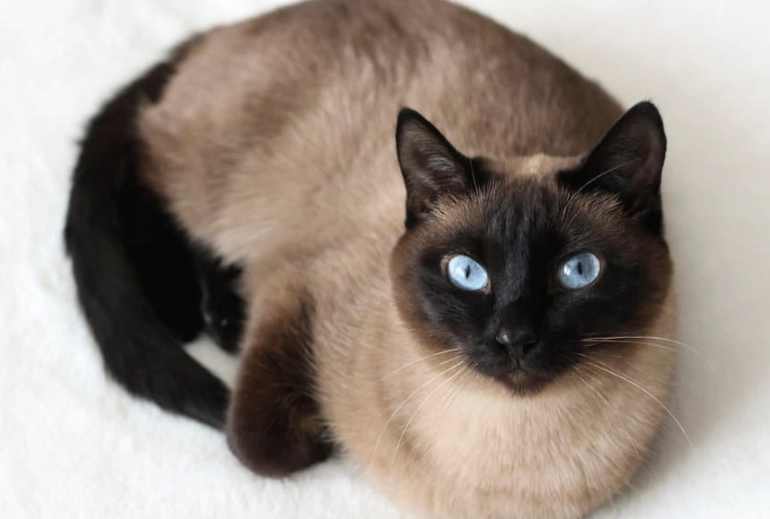
The Coat and Color: They have a semi-longhaired coat, but it's uniquely silky and single-coated. This means less matting compared to a Persian, but still substantial fluff. The signature is the colorpoint pattern with a crucial distinction: their body color is a light, golden-beige (not stark white), and the points (ears, face mask, legs, tail) are a darker color like seal, chocolate, blue, or lilac. Unlike a Siamese, there should be no striping in the points.
The Eyes: Always, always a deep, vivid sapphire blue. No other eye color is acceptable in the breed standard. It's one of their most mesmerizing features.
The Gloves: This is the non-negotiable trademark. All four paws must have pure white, symmetrical "gloves" on the toes. The back gloves have a characteristic "laces" or inverted V shape extending up the back of the hock. Getting this marking genetically correct is a major focus for ethical breeders.
A Personal Observation: Many new owners are surprised that Birman kittens are born all white. Their points and gloves develop over the first few weeks. Watching that contrast slowly emerge is one of the joys of getting a Birman kitten.
The Gentle and Affectionate Birman Temperament
If the looks draw you in, the personality makes you stay. Describing them as "sweet" is an understatement. Here’s the reality of living with one.
They are famously people-oriented without being needy. Expect a shadow. My Birman, Jasper, doesn't demand constant lap time, but he's always in the same room, often perched on a nearby chair or desk corner, just watching. They want to be involved. They greet you at the door, follow you around, and will "talk" with a soft, melodic voice—much quieter than a Siamese's rasp.
Playfulness and Intelligence: They retain a playful side well into adulthood. A feather wand or a puzzle feeder will engage them. They're smart enough to learn tricks but aren't typically as mischievously inventive as a Bengal or Abyssinian. Their play is gentle, matching their overall demeanor.
With Children and Other Pets: This is where they truly shine. Their patient, tolerant nature makes them excellent companions for gentle children. They are not prone to scratching or biting when handled. They usually coexist peacefully with other cats and even cat-friendly dogs, preferring to avoid conflict.
One subtle mistake new owners make is assuming their calmness means they're lazy. A bored Birman can become sedentary. Interactive play sessions are crucial to keep them mentally and physically stimulated.
How to Care for Your Birman Cat’s Gorgeous Coat?
Here's some good news: that beautiful coat is easier to maintain than you might think. Because it's single-coated and silky, it resists matting far better than a Persian or Maine Coon.
Grooming Routine: A thorough brushing 2-3 times a week is usually sufficient. Use a stainless steel comb and a slicker brush. Focus on the armpits, belly, and behind the ears where tangles can form. During seasonal sheds (spring and fall), you might need to brush daily to manage loose hair.
Bathing: They rarely need baths unless they get into something messy. Their coat tends to stay fairly clean.
Other Care: Like all cats, regular nail trims, ear checks, and dental care are essential. Those stunning blue eyes are generally healthy, but keep the corners clean with a damp cloth if needed.
Birman Cat Health: What to Watch For
Birmans are generally robust, but like all purebreds, they have some predispositions. A responsible breeder will screen for these.
Hypertrophic Cardiomyopathy (HCM): This is a form of heart disease that is the most significant health concern in the breed. Reputable breeders will have their breeding cats regularly scanned by a veterinary cardiologist. Ask to see these records.
Kidney Issues: There is some incidence of kidney conditions, including a form of cystitis. Ensuring they have a high-moisture diet (wet food) and plenty of fresh water is a proactive step.
Genetic Diversity: Due to the post-WWII bottleneck, the gene pool can be narrow. This is why choosing an ethical breeder who performs genetic testing and outcrosses responsibly is non-negotiable. It's not just about avoiding problems; it's about supporting the long-term health of the breed.
The International Cat Association (TICA) and other registries provide resources on recommended health screenings for breeders.
Is a Birman Cat the Right Choice for You?
Let's be practical. A Birman isn't for everyone. Here’s a quick comparison to help you decide.
| Consideration | Great Fit for a Birman | Might Be a Challenge |
|---|---|---|
| Lifestyle | Homebodies, families, people working from home. They thrive on consistent companionship. | Those who travel constantly or are away 12+ hours a day. They can get lonely. |
| Home Environment | Relatively calm households. They adapt well to apartments. | Extremely chaotic, loud environments with no quiet retreats. |
| Expectations | A gentle, affectionate, interactive companion that's part of the family. | A completely independent, aloof cat, or a highly athletic, demanding performance animal. |
| Allergies | Some allergy sufferers tolerate Birmans better than other breeds due to their coat type, but no cat is truly hypoallergenic. | Individuals with severe cat allergies. Always spend time with the breed first. |
| Budget | Willing to invest in a kitten from a health-tested breeder ($1200-$2500+), plus quality food and routine vet care. | Looking for a low-cost or free cat. The initial and long-term costs are significant. |
The biggest mistake I see? People falling for the looks without being prepared for the emotional dependency. This cat will form a deep bond with you. If you want a piece of living decor, get a statue, not a Birman.
Your Birman Cat Questions Answered
Are Birman cats really hypoallergenic?
This is a major point of confusion. No cat breed is 100% hypoallergenic. Allergies are primarily triggered by a protein (Fel d 1) in cat saliva and skin oils, not just fur. Birmans produce this allergen like any other cat. However, their single, silky coat may trap less dander and shed less noticeably than double-coated breeds, which some people with mild allergies find more manageable. It's not a guarantee. If you have allergies, the only way to know is to visit a breeder and spend an extended period with their cats.
How vocal are Birman cats compared to Siamese?
They are communicative but in a completely different register. A Siamese has a loud, raspy, demanding voice. A Birman's voice is soft, sweet, and melodic. They might chirp to greet you or meow politely for food, but they are not known for constant, loud yowling. They communicate more through presence and gentle touch than through noise.
Can Birman cats be left alone during the workday?
They can, but with caveats. An adult Birman left alone for a standard 8-9 hour workday will likely sleep most of the time. However, they are social and will miss you. It's highly recommended to provide enrichment (puzzle toys, bird feeders by the window) and, if possible, get a second pet for companionship. A kitten should never be left alone for long periods. For people with long or irregular hours, a different, more independent breed might be a better fit.
What's the biggest misconception about their personality?
That they are completely docile and limp like a Ragdoll. While they are gentle and often enjoy being held, many Birmans have a moderate activity level and enjoy playful interaction. They are not always "floppy"; they have their own will and can be quite curious and engaged. Assuming they are just couch ornaments does them a disservice.
Where is the best place to find a responsible Birman breeder?
Avoid classifieds sites and pet stores. Start with the major cat registry websites like the Cat Fanciers' Association (CFA) or The International Cat Association (TICA). They have breeder directories. Look for breeders who: 1) Have their cats screened for HCM and other genetic issues. 2) Raise kittens in-home with plenty of socialization. 3) Ask you as many questions as you ask them. 4) Provide a health guarantee and contract requiring you to return the cat to them if you can't keep it. Be prepared to be on a waiting list; good breeders don't always have kittens available.