Let's clear this up right away. No, not every cat with black and white fur is a tuxedo cat. It's one of the most common mix-ups I see, even among long-time cat lovers. People see a striking black and white coat and immediately think "tuxedo." But the term "tuxedo cat" refers to a very specific and charming pattern, not just any two-tone combo.
I've lived with cats my whole life and fostered dozens. You start to notice the subtleties. The placement of white on the paws, the shape of the bib, the symmetry of the face mask—it all tells a story. Calling every black and white cat a tuxedo is like calling every spotted dog a Dalmatian. It misses the beautiful diversity of feline coat genetics.
What You'll Discover in This Guide
What Exactly Is a Tuxedo Cat? The Real Criteria
A true tuxedo cat pattern is defined by its elegant, formal appearance, reminiscent of a dinner suit. It's not a breed; it's a bicolor coat pattern that can appear in many breeds and moggies. The Cat Fanciers' Association (CFA) has standards for bicolor patterns, and while they're strict for show cats, the general "tuxedo" look in the public eye hinges on a few key features.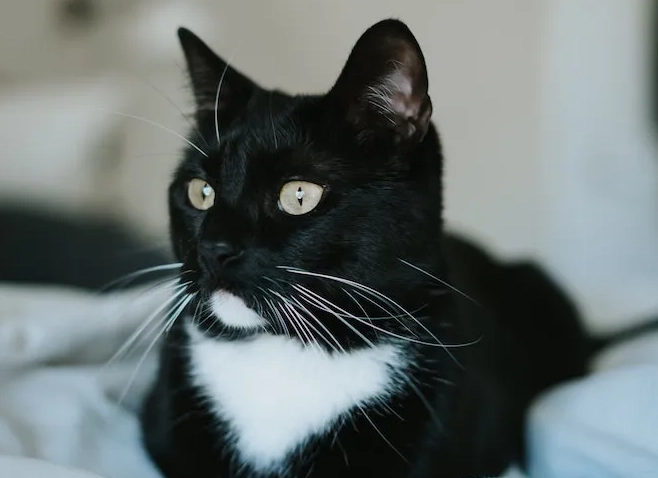
The Tuxedo Hallmarks: Primarily black fur with distinct, crisp white markings in specific areas. Think of it as the cat wearing a tuxedo: a white shirt front (bib/chest), white spats (paws), and sometimes a white bowtie area (chin). The white is usually confined to the underside.
Here’s the breakdown most cat experts and enthusiasts agree on:
- A Solid Black "Jacket": The back, sides, top of the head, and tail are predominantly black.
- A Crisp White "Shirt Front": A clean white patch covering the chest, belly, and often running up to the chin. It should look deliberate, not splattered.
- White "Spats" or Gloves: White on all four paws is classic. Some may have white just on the front paws, but the full set is the ideal.
- Possible Facial Markings: A white muzzle, chin, or a narrow white blaze on the face can occur, but it's not required. The key is that the white doesn't dominate the face.
The overall effect is one of balanced contrast. If the white spreads up the sides, over the shoulders, or covers most of the face, you're likely looking at a different bicolor pattern.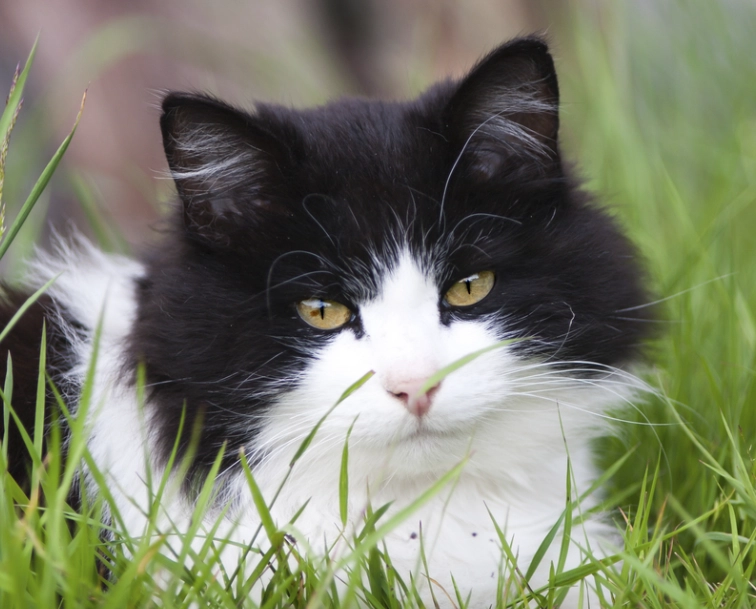
Other Black and White Cat Patterns (That Aren't Tuxedos)
This is where confusion sets in. The world of black and white cats is wonderfully varied. Let's put them side-by-side so you can spot the difference.
| Pattern Name | Key Description | How It Differs from a Tuxedo |
|---|---|---|
| Mask-and-Mantle / Cow Cat | Black "mask" over head and ears, black "cape" over back and tail, white everywhere else (sides, legs, underside). | White is the dominant color. The cat looks like it's wearing a black cloak, not a black suit on a white shirt. |
| Cap-and-Saddle | Similar to mask-and-mantle, but the black on the back is more isolated, like a saddle blanket. | Again, white is the primary background color. The black appears as isolated patches. |
| Locket | Almost entirely black with just a small, isolated white spot on the chest. | Far less white than a tuxedo's full bib. It's a locket, not a shirt. |
| Mitted | A solid color cat (often black) with white only on the paws, like mittens. May have a small white chin spot. | Lacks the expansive white chest and belly of a tuxedo. |
| Van Pattern | Color is restricted to the head (and sometimes the tail), with an almost entirely white body. | The extreme opposite of a tuxedo. Color is minimal on a white canvas. |
See the pattern? The tuxedo is defined by black as the dominant color with specific, limited white accents. If the white takes over large portions of the body or is randomly splashed, it's a different, equally beautiful, bicolor pattern.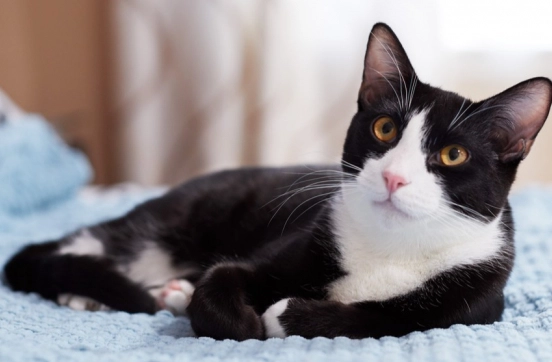
The Genetics Behind Black and White Coats
You don't need a biology degree to get this. It boils down to one main player: the White Spotting gene (often symbolized as S).
Think of a cat embryo as starting out all black (or another solid color). The White Spotting gene acts like an eraser, preventing pigment cells from migrating to certain areas of the developing skin. The strength of this gene determines how much gets "erased."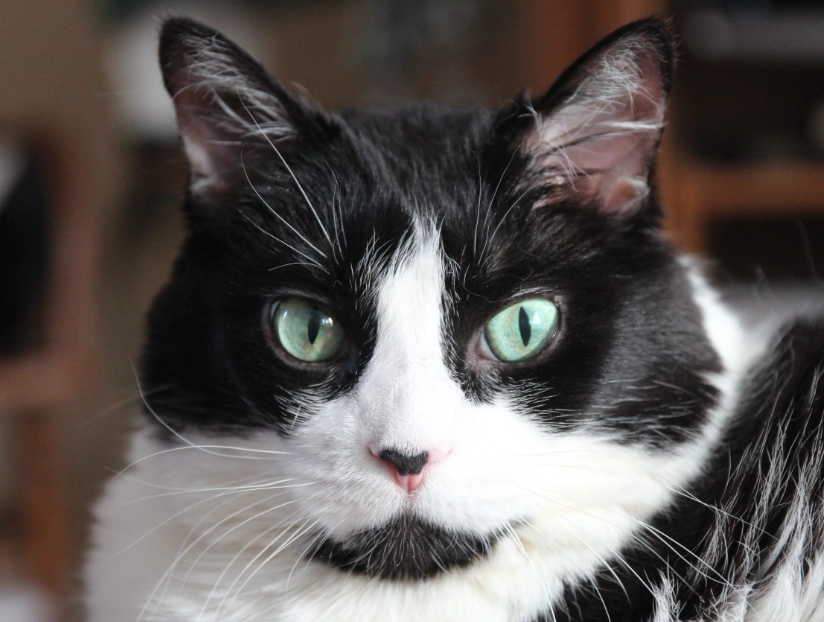
- Low expression (s): A tiny white spot, like a locket.
- Medium expression (S): This is the tuxedo sweet spot. It creates the classic bib, belly, and paws while leaving the back black.
- High expression (S^W or similar): Erases most pigment, leading to a Van pattern or a mostly white cat with colored head patches.
The randomness comes from how those pigment cells migrate. That's why even two tuxedo kittens from the same litter can have slightly different bib shapes or paw markings. It's not perfectly predictable, which is part of the magic.
One nuance rarely discussed: the line between the black and white isn't always razor-sharp. You might see a few black hairs in the white bib or some white flecks in the black fur, especially in domestic shorthairs. Purists might scoff, but I think it adds character. It doesn't make your cat any less of a tuxedo in spirit.
The Tuxedo Cat Personality: Myth or Reality?
Here's where I'll offer a non-consensus view. You'll read everywhere that tuxedo cats are exceptionally smart, social, and playful. The internet is full of anecdotes about their "gentlemanly" or "clownish" behavior.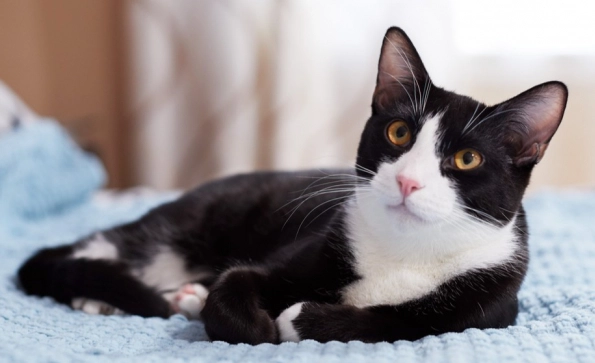
My take? There's zero scientific evidence linking coat color to personality in cats. Personality is shaped by genetics (breed tendencies, individual lineage), early socialization, and life experiences.
However, I've observed something that might explain the stereotype. Because the tuxedo pattern is so striking and common in mixed-breed domestic shorthairs—a group known for being adaptable, friendly, and robust—people may be associating the traits of the hearty "moggy" with the coat. It's a correlation, not a causation.
I've known aloof tuxedos and velcro-like solid black cats. The sweetest cat I ever fostered was a cow-patterned black and white girl who acted like a dog. Basing your expectations for a cat's personality on its coat is a recipe for misunderstanding the individual in front of you.
How to Know If Your Cat Is a True Tuxedo
Forget complex charts. Ask yourself these two simple questions while your cat is relaxing on its back:
1. Is the belly and chest mostly white, like a shirt?
2. Is the back, from neck to tail tip, mostly a solid black "jacket"?
If you answered yes to both, you've got a tuxedo cat. Celebrate it! If not, you have a stunning bicolor cat with its own unique pattern name. Neither is better; they're just different expressions of the same fascinating genetics.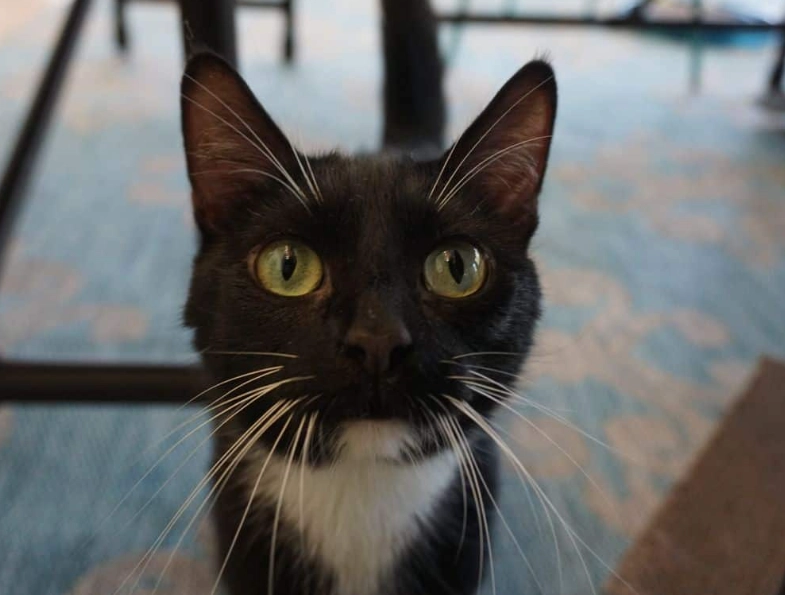
Your Black and White Cat Questions, Answered
So, the next time you see a dapper black and white cat, take a closer look. Is it a formal tuxedo, a cow-patterned sweetheart, or a cap-and-saddle adventurer? Each pattern tells a tiny genetic story. Appreciating the difference doesn't make any cat less special—it just deepens our understanding of the amazing diversity in our feline friends.
And if you're still not sure? Just call them handsome. They'll never correct you.