Let's get straight to the point. A black Turkish Angora cat isn't just a "black cat." It's a living paradox—a sleek, dark silhouette moving with impossible grace, draped in a coat that feels like silk but demands a commitment that many first-time owners underestimate. I've lived with a black Angora named Shadow for over a decade, and while I wouldn't trade him for the world, I wish someone had given me the real, unfiltered guide I'm about to give you. Forget the generic breed profiles. We're diving into what it's *actually* like to live with this specific, stunning color variation of an ancient breed.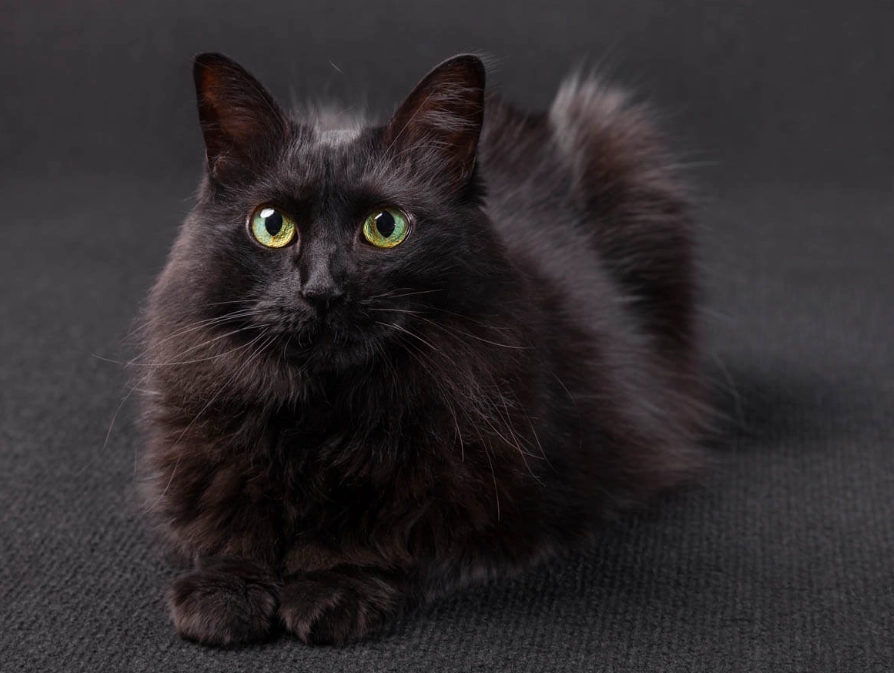
In This Article
The Genetics Behind the Gloss: Why a Black Turkish Angora is Special
Most people see a black cat and think "common." With Turkish Angoras, that's far from the truth. The breed's foundation colors in its native Turkey are white, and solid black is a less common expression. The black coat is produced by a dominant gene (the "B" allele). But here's the nuance most sites miss: a true, jet-black Turkish Angora should have no ghost tabby markings or rusty tinges *at the skin level*. However, sun exposure can bleach the tips of the hair, giving a reddish-brown sheen in summer—a feature many owners (myself included) find beautiful, not a fault.
This isn't just about aesthetics. That single, fine coat (unlike the double coat of Persians) has historical purpose. It evolved in the harsh climate of Ankara to provide insulation without matting easily. When you look at a black Angora, you're seeing a functional adaptation, not just a pretty color. Reputable breeders, like those registered with the Cat Fanciers' Association (CFA) or The International Cat Association (TICA), carefully select for this correct, healthy coat texture alongside color.
Key Takeaway: The rarity of a well-bred, solid black Turkish Angora isn't a marketing gimmick. It's genetics and breed history. Be wary of anyone selling "rare black Angoras" at an extreme premium without showcasing proven, health-tested lineage.
Looks & Personality: The Velvet Ninja
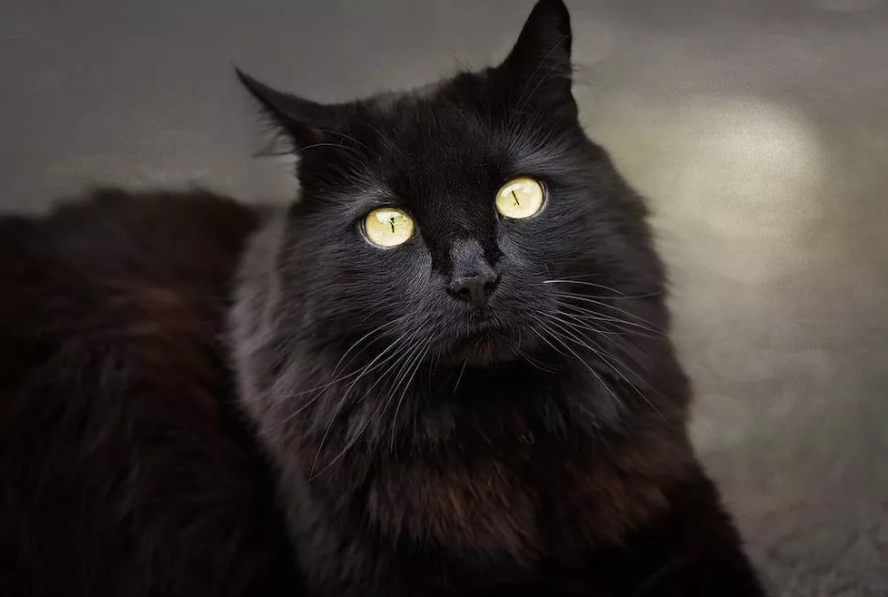
Imagine spilled ink taking the form of a cat. The ideal black Turkish Angora is a study in contrasts: that dense, obsidian fur against often large, copper, gold, or green eyes (blue or odd-eyed is possible but less common in non-white cats). The body is long, elegant, and muscular—think ballerina, not bodybuilder. The tail is a magnificent plume.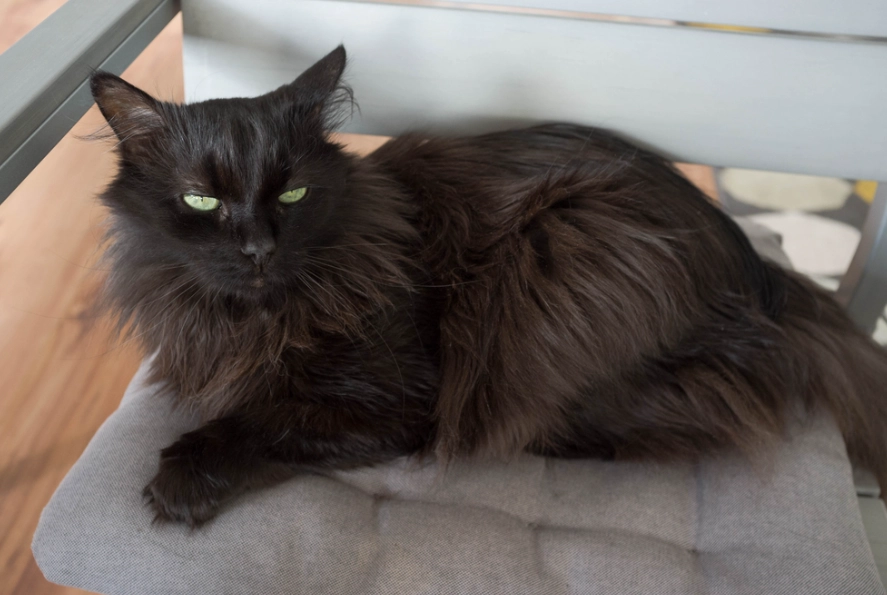
But the personality is where they steal your heart. The term "dog-like" is overused, but with Angoras, it fits. Shadow follows me from room to room, not in a needy way, but like a curious supervisor. They are famously intelligent, often learning to open doors or fetch. They crave interaction and conversation, responding with soft chirps and trills. This is not an aloof, decorative cat. A bored Angora is a mischievous Angora. They need puzzle toys, high perches, and most importantly, your engagement.
One non-consensus opinion I'll offer: many describe them as "graceful." What they don't mention is the sheer, clumsy enthusiasm they can have during play. That elegant creature will launch itself off a wall after a toy with the grace of a falling bowling ball. It's endearing.
The Grooming Reality Check for a Black Long-Haired Cat
Let's be real. You're considering a black, long-haired cat. You will see fur. On your clothes, your sofa, in your coffee. The myth is that their single coat doesn't shed much. The truth is it sheds *differently*. Fine hairs float everywhere and are brilliantly visible on every light-colored surface. Invest in a good vacuum.
How to Groom a Black Turkish Angora (Without Losing Your Mind)
Matting is less common than in double-coated breeds, but neglect leads to knots, especially under the arms and in the britches. Here’s the toolkit that actually works, born from a decade of trial and error:
| Tool | Purpose | Frequency |
|---|---|---|
| Wide-toothed metal comb | First pass to work out tangles gently. The gold standard. | Every other day |
| Fine-toothed comb or slicker brush | Follow-up to remove loose undercoat and smooth. | 2-3 times a week |
| Boar bristle brush | Final polish to distribute skin oils for that signature gloss. | Once a week |
| Blunt-tipped scissors | ONLY for carefully snipping out small mats if they form. Never cut blindly. | As needed |
The biggest mistake I see? People start with a brush on a dry coat and create static and breakage. Always comb first, gently, from the tips toward the skin. For bath time, which is only needed a few times a year, use a clarifying shampoo to prevent oil buildup (which can dull the black to brownish) followed by a luxurious conditioner. Dry thoroughly with a low-heat dryer to prevent chill.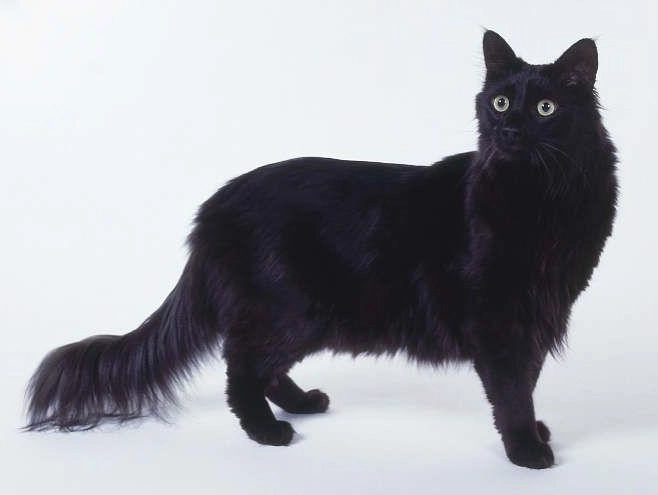
Black Turkish Angora Health and Lifespan
Generally robust, a well-bred Turkish Angora can live 12-18 years, sometimes longer. Their black coat has no specific health link, but the breed has a few known predispositions. A responsible breeder will screen for these, and you should ask for proof.
Hypertrophic Cardiomyopathy (HCM): This is the big one. It's a form of heart disease. Reputable breeders test their breeding cats via annual echocardiograms. Ask to see the results (from a veterinarian, not just the breeder's word).
Ataxia: A rare genetic neurological condition seen in some lines, causing lack of coordination in kittens. Ethical breeders test for and eliminate this gene.
Another often-overlooked point for black cats: dental health. Dark gums can sometimes make it harder to spot early signs of gingivitis (red lines). Get them used to tooth brushing early. I use a finger brush and poultry-flavored toothpaste—Shadow thinks it's a treat.
For authoritative information on these conditions, the VCA Animal Hospitals website is an excellent resource.
Finding and Choosing a Black Turkish Angora Kitten
This is where patience is non-negotiable. You are unlikely to find a purebred, healthy black Angora kitten at a shelter (though always check—adult cats are sometimes surrendered). Your primary path is a dedicated, ethical breeder.
What to Expect:
- Price: $800 to $2,500 USD. The higher end reflects extensive health testing, champion bloodlines, and breeding for specific traits like a dense black coat and copper eyes.
- Waitlist: You may wait 6 months to a year. Good breeders don't have litters constantly.
- The Interview: A good breeder will interrogate you about your home, lifestyle, and cat knowledge. This is a good sign.
Red Flags: Multiple litters always available; multiple rare colors advertised; unwillingness to show health certificates; kittens leaving before 12-16 weeks; no contract; no take-back guarantee.
When you visit, look at the environment and the mother cat. Are they clean, social, and healthy? A kitten's personality starts to show. Play with them. A confident, curious kitten who approaches you is a better bet than the one hiding constantly.
Your Black Turkish Angora Questions, Answered
 My black Angora's coat looks brown in the sun. Is something wrong?