Quick Identification Guide
- More Than Just a Pretty (White) Face: Core Breed History
- The Blueprint: Physical Traits That Don't Lie
- Personality: The Living Proof
- The Comparison Table: Turkish Angora vs. Common Look-Alikes
- Paper Trail and Provenance: The Ultimate Verification
- Answering Your Burning Questions
- Wrapping It Up: Trust Your Eyes (and Hands)
Let's be honest, the internet is full of gorgeous white cats labeled as Turkish Angoras. I can't tell you how many times I've seen a friend's fluffy domestic shorthair proudly introduced as one. Nine times out of ten, it's not. The real deal is something else entirely—a creature of grace, history, and specific, sometimes subtle, traits. Knowing how to identify a Turkish Angora cat isn't just about satisfying curiosity; it's about appreciating a living piece of feline history and avoiding the heartache (and wallet-ache) of buying a misrepresented pet.
I remember visiting a breeder years ago, thinking I knew what to look for. I was fixated on the white coat and blue eyes. The kitten was beautiful, no doubt. But something felt off. The proportions were just a little... different. It wasn't until I spent a day at a cat show, talking to actual breed stewards, that the penny dropped. The differences are in the details.
This guide is that day at the cat show, condensed. We're going beyond the obvious. We'll dig into the stuff that really matters when you're trying to figure out if that elegant creature is a genuine Turkish Angora.
More Than Just a Pretty (White) Face: Core Breed History
You can't really know how to identify a Turkish Angora cat without understanding where it came from. This isn't a breed cooked up in a lab last century. Their story is woven into history. We're talking about a natural breed from the Ankara region of Turkey (historically Angora), with documented references going back centuries. They're considered one of the progenitors of modern longhaired cats in the West.
This long, isolated development is key. It gave the breed a specific set of physical adaptations and a temperament refined over generations, not by human design for looks alone, but for survival and companionship in a specific place. The Cat Fanciers' Association (CFA) notes their history as a "natural treasure" of Turkey, which says a lot about their significance. You can read more about their fascinating journey to recognition on the CFA's Turkish Angora breed profile.
Why does this matter for identification? Because a true Turkish Angora carries this legacy in its bones and behavior. A cat bred solely for a fluffy white coat in the last 20 years won't have the same foundational blueprint.
The Blueprint: Physical Traits That Don't Lie
This is where we get into the nitty-gritty. Forget just "long hair." It's about the type of hair, the shape underneath it, and how everything comes together.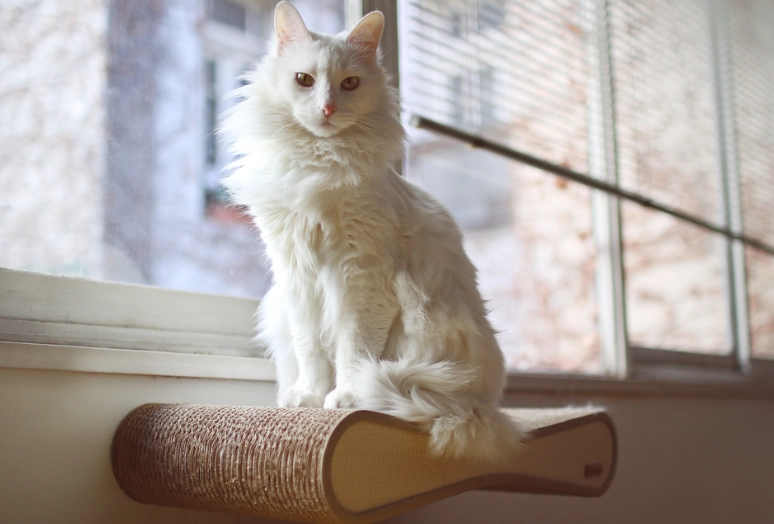
The Silhouette and Build
Think ballerina, not bodybuilder. The Turkish Angora is medium-sized but feels surprisingly light when you pick one up. They're finely boned with a long, slender, and tubular body. The hind legs are slightly longer than the front, giving them a distinctive, poised posture—like they're permanently ready to spring onto the highest shelf in your house.
Their neck is long and graceful, flowing into a slender torso. It's a build designed for agility and height, not for brute strength. This is a major differentiator from other white, longhaired cats like some Persian mixes, which tend to be much more cobby and solid.
The Head: A Modified Wedge with Personality
The head is a defining feature. It's a medium-sized, modified wedge shape—smooth lines from the ears down to a firm chin. No sharp angles or extreme flatness. The profile is essentially straight, maybe with the gentlest of curves. Cheekbones are high and cheekbones are pronounced.
And the ears. Oh, the ears! They are large, pointed, wide at the base, and set high and close together on the head. They look alert, almost constantly listening. It's one of their most expressive features. The inside of the ears often has lovely tufts of hair, like little feathery decorations.
The Eyes: Windows to the Breed's Soul
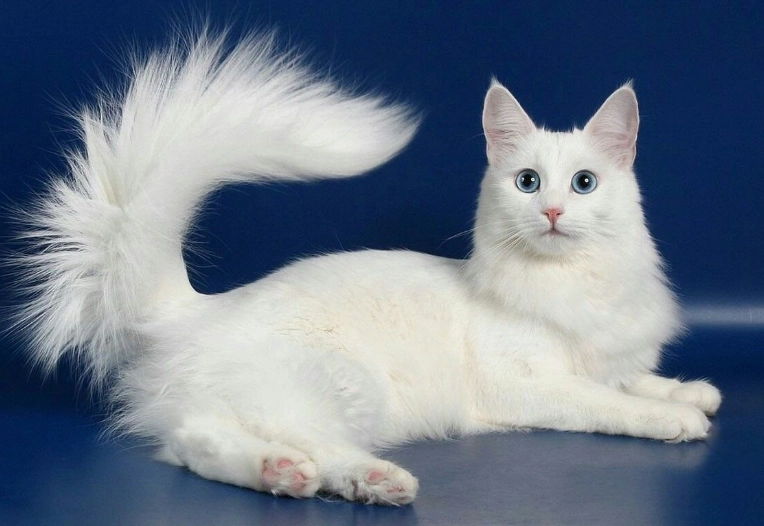
This is the trait everyone romanticizes, and for good reason. The eyes are large, almond-shaped, and set at a slight slant. The color can be breathtaking: blue, green, amber, or gold. But the real showstopper is the odd-eyed (heterochromia) combination, often one blue and one amber/green, which is highly prized and common in the white varieties.
But here's a personal opinion—don't get *only* hung up on eye color. I've seen stunning amber-eyed Angoras that are every bit as legitimate and captivating. The shape and expressive slant are more consistent breed markers than the color itself.
The Coat: The Misunderstood Marvel
This is where most people get tripped up. The coat is *semi-longhaired*, not massively floofy like a Persian or a Maine Coon. It's single-coated, meaning there's little to no dense, woolly undercoat. This has huge practical implications.
The texture is silky and fine. It lies flat against the body and has a wonderful sheen. Because there's no undercoat, it doesn't mat easily. Seriously, compared to other longhairs, their grooming needs are relatively minimal—a good combing once or twice a week usually does it. The tail is a glorious plume, often carried high and proud, like a feather boa.
The coat is also seasonal. In winter, they develop a magnificent full ruff around the neck and fuller "britches" on the hind legs. In summer, they can look almost like a shorthaired cat, with just the tail, ruff, and belly fur remaining noticeably long. This transformation trips up a lot of people who see a summer Angora and think it's not longhaired enough.
And about color: yes, white is the classic. But modern cat registries accept a rainbow of colors and patterns (black, blue, tabby, tortoiseshell, etc.). However, for many enthusiasts and in its homeland, the white Angora remains the iconic standard. The Fédération Internationale Féline (FIFe), another major international cat registry, provides detailed breed standards that include these color variations, which you can explore in their breed standards section.
Personality: The Living Proof
You can fake looks to a degree with selective breeding, but faking a centuries-old temperament is much harder. How a cat acts is a huge part of learning how to identify a Turkish Angora cat.
These are not wallflowers. They are famously people-oriented, intelligent, and active. They form deep bonds with their humans and often choose one favorite person. They want to be involved in everything you're doing—whether it's reading, working on the computer (they will help by walking on the keyboard), or cooking dinner.
They are playful well into adulthood, often described as "kitten-like." They love high places and will find the top of your bookcase, fridge, or door. Many are fascinated by water—don't be surprised if one tries to join you in the shower or plays with dripping taps.
They're also vocal, but not in a yowly, demanding way. It's more of a soft, chirping conversational tone. They'll talk to you about their day. This combination of dog-like loyalty and acrobatic grace is pretty unique. If you have a aloof, independent, quiet cat that happens to be white and fluffy, it's likely not an Angora.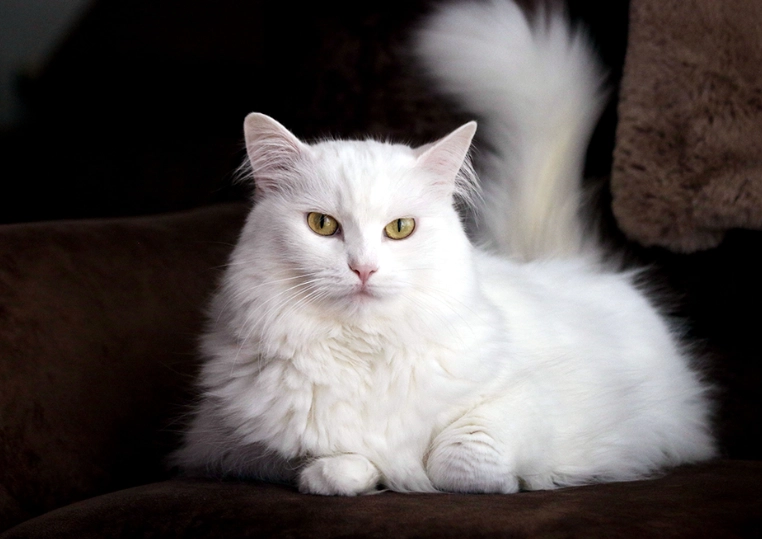
The Comparison Table: Turkish Angora vs. Common Look-Alikes
This is where it all comes together. Let's put the Turkish Angora side-by-side with the cats it most commonly gets confused with. Seeing the differences laid out is the fastest way to learn.
| Trait | Turkish Angora | White Domestic Longhair | Persian / Himalayan | Balinese / Siamese |
|---|---|---|---|---|
| Body Type | Long, slender, fine-boned. Hind legs longer. | Variable, often more moderate or stocky. | Cobby, massive, low to the ground. | Long, svelte, tubular (like the Siamese). |
| Head Shape | Modified wedge, straight profile, strong chin. | Rounded or undefined. | Extremely brachycephalic (flat face). | Long, triangular wedge. |
| Coat | Semi-long, silky, single coat (no undercoat). Lies flat. | Often double-coated, thicker, can be cottony. | Extremely long, thick, double-coated. Prone to matting. | Fine, silky, medium-long. Lies close to body. |
| Tail | Long, tapering, full plume. | Variable, often bushy but less tapered. | Short, very bushy, proportional to body. | Long, thin, whippy like a feather. |
| Eyes | Large almond, slanted. Blue, green, amber, odd-eyed. | Rounder, color varies. | Large, round, copper/blue (Himmy). | Almond-shaped, deep blue only. |
| Personality | Active, social, dog-like, vocal, playful. | Highly variable. | Calm, sweet, docile, quiet. | Extremely vocal, social, demanding, active. |
See? The Persian is almost the polar opposite in build and coat type. The domestic longhair is a wild card. The Balinese shares the svelte build and voice but is locked into point coloration and blue eyes. The Turkish Angora sits in its own unique spot.
Paper Trail and Provenance: The Ultimate Verification
Let's say you've found a cat that ticks every physical and behavioral box. The final, non-negotiable step for a purebred is documentation. Reputable breeders provide a pedigree tracing the cat's lineage back many generations, registered with a major cat registry like CFA, FIFe, or The International Cat Association (TICA).
This paperwork isn't just snobbery. It's a health and authenticity guarantee. It means the breeder has committed to following the breed standard and likely screens for known genetic issues (though Turkish Angoras are generally healthy, one concern can be hereditary ataxia in some lines).
If there are no papers, you have a lovely cat that may *look* and *act* like a Turkish Angora—a "look-alike" or "Angora-type"—but you cannot ethically call it a purebred Turkish Angora. And that's perfectly okay! Most cats are wonderful companions without a pedigree. The problem is misrepresentation and selling a pet under false pretenses.
Answering Your Burning Questions
Wrapping It Up: Trust Your Eyes (and Hands)
Learning how to identify a Turkish Angora cat is a journey of paying attention to details. It's not just one thing you look for—it's a combination of the silky texture, the lack of undercoat, the specific body structure that allows for that agile grace. A confused person might see a fluffy white cat and think "Angora," but a knowledgeable eye sees the length of the leg, the set of the ear, the slant of the eye, and the drape of the fur.
The breed carries itself with a certain aristocratic air, a confidence born of ancient lineage. They're not just pets; they're participants. If you find one, you'll have a companion that will challenge you, entertain you, and claim the highest spot in your home—both physically and in your heart.
The goal of this guide was to move you from "I think that's an Angora" to "I know why that is, or isn't, an Angora." It takes practice. Go to cat shows, look at breeder websites with critical eyes, and use this checklist. The more you look, the clearer the beautiful, unique picture of the Turkish Angora becomes.