Your Quick Guide
- Where Did This "Unfriendly" Myth Even Come From?
- What Does Science Say About Coat Color and Cat Personality?
- The Real-World Experience: What Black Cat Owners Actually Say
- Dispelling Specific Myths: Aloof, Scary, or Just Misunderstood?
- Considering Adopting a Black Cat? Here's Your Practical Guide
- Common Questions About Black Cat Behavior (The FAQ We All Need)
- A Quick Look: Factors Influencing Friendliness vs. The Color Myth
- Final Thoughts: It's Time to See the Cat, Not the Color
You've probably heard the rumors. You might have seen them in movies, lurking around corners as a spooky omen. The question pops up all the time in shelters, online forums, and among friends considering a new pet: are black cats very friendly? The short, simple, and maybe surprising answer is: absolutely, they can be. But like any cat—orange, gray, calico, or white—their friendliness isn't a checkbox determined by the color of their fur. It's a complex, wonderful mix of genetics, upbringing, and individual personality. The idea that a sleek, black coat indicates a less affectionate cat is one of the most persistent and damaging myths in the pet world. It's a superstition that, sadly, affects real lives, leading to what shelters call "Black Cat Syndrome," where these beautiful felines wait longer for homes and face higher euthanasia rates. So let's put the folklore aside and look at what science, experts, and countless black cat owners actually say.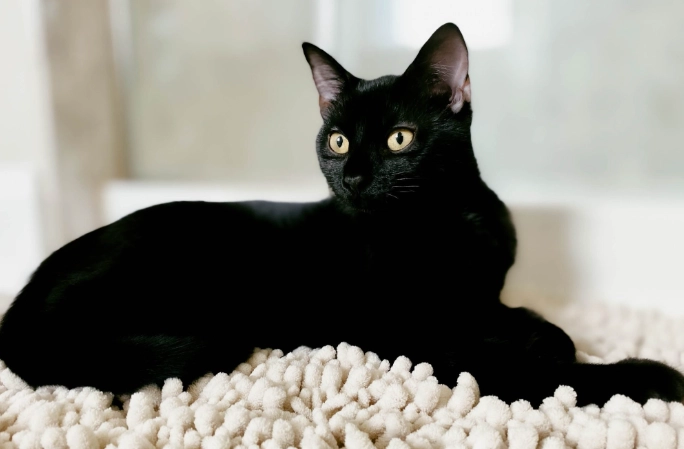
Let's be clear from the start: judging a cat's personality by its color is like judging a book by its cover—you'll miss the whole story. The belief that black cats are less friendly is a superstition, not a fact. It has more to do with human history and fear of the dark than with feline behavior.
Where Did This "Unfriendly" Myth Even Come From?
To understand why anyone would ask "are black cats very friendly?" with suspicion, we have to take a quick, unfortunate trip through history. The association of black cats with bad luck, witchcraft, and general spookiness is deeply rooted in Western culture. In the Middle Ages, particularly during the witch hunts, black cats were often seen as "familiars"—demonic companions of witches. This association stuck. Fast forward to modern media, and black cats are still the go-to animal for Halloween decor and horror movie scenes. This cultural baggage creates a subconscious bias before a person even meets the cat. We're primed to see mystery or aloofness where there might just be a curious, quiet observer.
Contrast this with some other cultures! In Japanese folklore, a black cat crossing your path is considered good luck. In Scottish tradition, a strange black cat arriving at your home signifies prosperity. In the sailing world, black cats were often seen as bringing fair weather and safe passage. So, the "unlucky" tag is far from universal—it's a specific cultural stain that has unfairly stuck to these animals.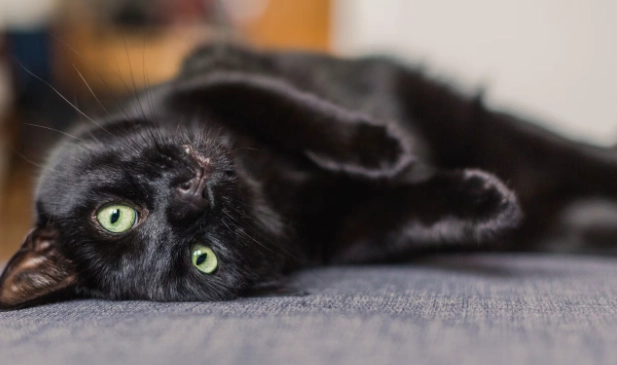
I've fostered a few black cats over the years. One of them, a little guy named Shadow, was the most persistent lap cat I've ever met. The moment you sat down, he was there, purring like a motorboat, demanding chin scratches. He completely shattered any silly notion I might have unconsciously held. His coat color had zero to do with his desire for cuddles.
What Does Science Say About Coat Color and Cat Personality?
Okay, so superstition is nonsense. But is there any scientific link between a cat's coat color and its temperament? Researchers have actually looked into this, and the findings are fascinating—and they generally debunk the idea of a monolithic "black cat personality."
One of the most cited studies comes from the University of California, Berkeley. Researchers surveyed over 1,200 cat owners about their pets' behaviors. While they did find some very broad statistical tendencies linked to color, the key takeaway is the massive variation within each color group. The study suggested that orange cats were more likely to be rated as "friendly," while white cats were often seen as more aloof. But where did black cats fall? Often, they were described as having more "extreme" personalities—meaning you could find incredibly social, outgoing black cats and also very shy, reserved ones. They didn't cluster in the middle. This makes the question "are black cats very friendly?" impossible to answer with a simple yes or no. Some are phenomenally friendly, some are independent, and most are a unique blend.
The science points to genetics, but not in the way you might think. The gene responsible for black fur (the melanistic gene) is separate from the complex set of genes that influence behavior. However, the genes for coat color can sometimes be linked to other traits on a chromosomal level. More importantly, the ASPCA and other animal behavior organizations emphasize that factors like early socialization, life experiences, breed (if known), and individual neurology play overwhelmingly larger roles in shaping a cat's friendliness than the pigment in its hair.
Breaking Down the Factors That Really Matter
If you want to predict how friendly a cat might be, look at these things, not its color:
- Early Socialization (The Kitten Phase): Kittens handled gently and positively by humans between 2 and 7 weeks old are far more likely to grow up comfortable and friendly around people. This is the golden window.
- Life History and Trauma: A cat that was abused, neglected, or never properly socialized may be fearful or defensive, regardless of color. This is about experience, not coat.
- Breed Tendencies: If your black cat is a specific breed (like a Bombay, which is always black), you might see breed-specific traits. Bombays are famously dog-like and social. But most black cats are domestic shorthairs, a wonderful genetic mix.
- Individual, Quirky Personality: Just like people, cats are individuals. Some are introverts, some are extroverts, some are bold, some are cautious. This is the magic of getting to know an animal.
So, are black cats very friendly? Science says the color isn't the script. It's just the costume.
The Real-World Experience: What Black Cat Owners Actually Say
Forget the studies for a minute. The most compelling evidence comes from the people who live with black cats. Spend any time on cat owner forums, subreddits, or social media groups, and you'll find a common theme: black cat owners are often evangelical about their pets' affection. They talk about "velcro cats" that follow them from room to room. They share stories of loud, demanding purrs and cats that insist on sleeping curled into their necks every night.
Anecdotal? Sure. But when you hear the same stories over and over, a pattern emerges that directly contradicts the myth. Many owners of multiple cats report that their black cat is the most affectionate of the bunch. They describe a particular, deep loyalty and a calm, steady presence. Of course, you'll also find owners who say their black cat is a bit of a loner—but you'll find that for every cat color. The point is, the spectrum of personality is fully represented. The idea that black cats are inherently less friendly simply doesn't hold up in the face of lived experience.
Fun (and Important) Fact: Some shelter workers have noted that black cats can be harder to photograph well. In poorly lit kennels, their features can get lost, making them look less expressive in online adoption profiles. This isn't a personality flaw—it's a photography challenge! It's one more silly reason these great cats get overlooked.
Dispelling Specific Myths: Aloof, Scary, or Just Misunderstood?
Let's tackle some of the specific sub-myths that feed into the main question, are black cats very friendly?
Myth: Black cats are more aloof and independent than other cats.
Reality: Aloofness is a personality trait, not a color trait. I've known aloof orange cats and clingy black cats. A cat's level of independence is shaped by its confidence and experiences. Many black cats are incredibly social and hate being left alone for long periods.
Myth: Their "mysterious" look means they have a mysterious, unfriendly personality.
Reality: This is pure human projection. Their striking yellow or green eyes against a black coat might look intense to us, but the cat isn't trying to be mysterious. It's just looking at you. Often, that look is one of curiosity or a request for food!
Myth: Black cats are more "wild" or less domesticated.
Reality: This is completely false. A domestic black cat is as domesticated as a white or tabby one. Coat color mutation is a natural variation that has been present in domestic cat populations for millennia.
Considering Adopting a Black Cat? Here's Your Practical Guide
If you're asking "are black cats very friendly?" because you're thinking of bringing one home, that's fantastic. Here’s how to focus on what really matters.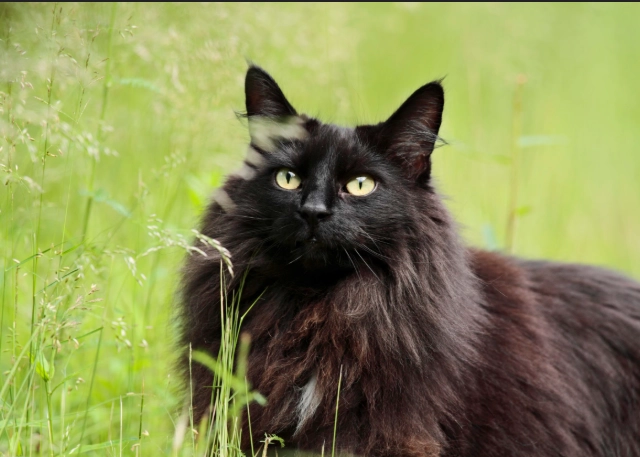
At the Shelter: How to Choose Your Friend
Don't look for a color. Look for a connection. Spend time in the visiting room. See which cat approaches you, rubs against the cage, or seems curious. A friendly cat will often show interest. But also, don't ignore the shy one hiding in the back. Sometimes, the most affectionate cats just need a quiet, safe home to blossom. Ask the shelter staff! They know the cats' personalities intimately. You can ask: "Who is your biggest lovebug?" or "Which cat is always first at the front for attention?" You might be surprised how often they point to a black cat.
Setting Up for Success at Home
Friendliness flourishes in a secure environment. Provide vertical space (cat trees), hiding spots, consistent routines, and positive interactions. Use treats, gentle play, and quiet talking to build trust. Let the cat set the pace for cuddles. Forcing interaction is the fastest way to make any cat seem unfriendly.
A piece of advice I wish I'd known earlier: that initial hiding period? Totally normal. My first adopted black cat, Luna, lived under the bed for three days. I thought I'd made a huge mistake, that she was terrified of me. On day four, she jumped on the bed, sat on my chest, and started purring. She just needed time to map her new kingdom and decide I was safe.
Challenges (Let's Be Honest)
It's not all perfect. One practical, non-personality challenge: black fur on light-colored furniture or clothing is very visible. You'll become a lint-roll expert. Also, in low light, you might accidentally step on a tail or trip over a sleepy void on a dark carpet. It's a hazard of the job! But these are minor inconveniences, not reasons to doubt their capacity for friendship.
Common Questions About Black Cat Behavior (The FAQ We All Need)
A Quick Look: Factors Influencing Friendliness vs. The Color Myth
| What ACTUALLY Influences Friendliness | The Black Cat Myth (What Doesn't Matter) |
|---|---|
| Early Socialization with Humans Positive exposure as a kitten is the #1 predictor. |
Coat Color Genetics The gene for black fur doesn't code for personality. |
| Past Experiences & Trauma A history of kindness or abuse shapes trust. |
Cultural Superstitions Medieval folklore and Halloween decor are not cat guides. |
| Individual Genetic Personality The unique mix from the cat's parents. |
"Mysterious" Appearance Human perception of their eyes/fur is not their intent. |
| Current Environment & Care A safe, enriching home fosters a confident, social cat. |
Photogenic Challenges Being hard to photograph in a shelter doesn't mean unfriendly. |
Final Thoughts: It's Time to See the Cat, Not the Color
Look, I get it. We're hardwired to look for patterns. But the question "are black cats very friendly?" is asking the wrong thing. It's like asking "are people with brown hair very friendly?" The answer is a resounding, "Some are, some aren't, and most are wonderfully in between."
The next time you see a black cat—whether in a shelter, a friend's house, or a meme—try to see past the cultural noise. See the individual. You might be looking at a fearless adventurer, a serene lap-warmer, a playful goofball, or a wise old soul. Their capacity for friendship, loyalty, and love is boundless and has absolutely nothing to do with the darkness of their coat. In fact, choosing to love a black cat is a small act of rebellion against silly old myths. It's a choice to see beauty and personality where others might just see a shadow.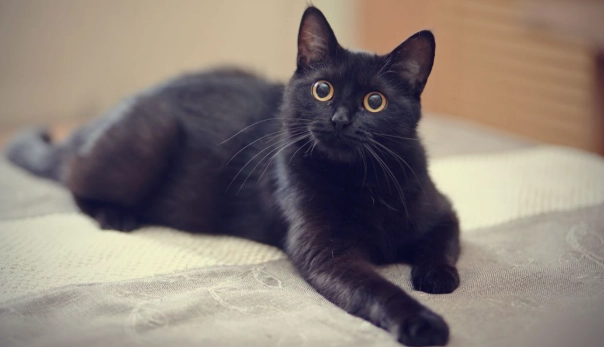
If you take one thing from this, let it be this: The best way to know if a specific black cat is friendly is to meet them. Give them a chance, a quiet hand, a moment of your time. You might just find your new best friend—one who happens to wear a gorgeous, sleek, black tuxedo every single day.
So, are black cats very friendly? The evidence from history, science, and thousands of happy owners says the potential is absolutely there, waiting to be discovered in each unique individual. The real magic is in finding out for yourself.