You've seen them everywhere—in memes, starring in movies, probably lounging on your neighbor's windowsill. That sharp black-and-white coat that looks perpetually ready for a gala. Tuxedo cats have a certain undeniable charm. But here's the question that often pops up, sometimes tinged with a bit of pride from owners: are tuxedo cats common? The short, straightforward answer is yes, they are one of the most common coat patterns you'll encounter. But stopping there misses the fascinating story. The real intrigue isn't just in their prevalence, but in the why behind it—a tale woven from genetics, history, and a few stubborn myths we need to clear up.
I've lived with cats for over two decades, and my own tuxedo, Felix, has been holding court in my home for 12 years. In that time, I've heard every claim under the sun about these cats, from them being a specific breed (they're not) to having uniformly regal personalities (it's more complicated). Let's unpack what "common" really means for the tuxedo cat.
What's Inside This Guide
What Exactly is a Tuxedo Cat?
First, a crucial clarification that even many seasoned cat lovers get wrong: "Tuxedo" is not a breed. It's a bicolor coat pattern. This pattern can appear in almost any cat breed, from the common Domestic Shorthair to purebreds like the British Shorthair or the Maine Coon. The defining characteristic is a solid black coat with sharp, clean white markings that typically resemble a formal tuxedo suit—white paws (spats), a white chest and belly (shirt), and sometimes a white chin or blaze on the face.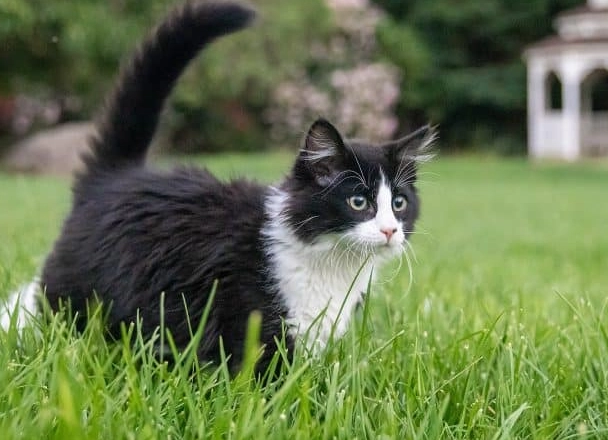
Think of it like human hair color. You wouldn't call someone a "Blonde Person" as their nationality; it's just a trait. Similarly, a tuxedo is a trait a cat wears. This is why they're so common; the genetic recipe for this look isn't tied to a rare breed but is widespread in the general cat population.
Key Takeaway: If you're asking "are tuxedo cats common," you're asking about a coat color, not a breed. This is the fundamental reason for their widespread presence.
Just How Common Are Tuxedo Cats?
Let's put some perspective on "common." In the world of cat coat colors and patterns, bicolor cats (which include tuxedos) are incredibly prevalent. While there's no official worldwide census for cat coats, observations from major animal shelters and veterinary associations consistently rank bicolor cats as one of the top patterns, often alongside tabbies and solid blacks.
In a random sampling of a typical shelter's population, you're very likely to find several tuxedo cats. Their prevalence is a direct function of the genetics involved, which are dominant and not linked to harmful traits, allowing the pattern to propagate freely. They're common in the same way brown hair is common in humans—it's a standard, widely distributed variation.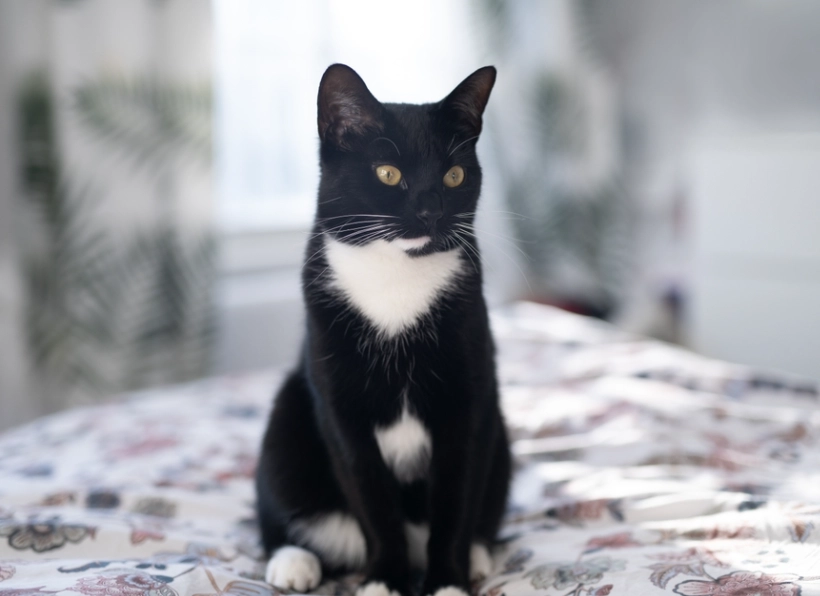
The Genetics Behind the Tuxedo Coat
This is where it gets interesting. The tuxedo pattern is governed by what's called the white spotting gene (denoted by the letter 'S'). This gene doesn't add white; it prevents color from being expressed in certain areas during embryonic development. The amount of white is on a spectrum, controlled by different alleles of this gene.
A classic tuxedo cat usually has a low to medium grade of white spotting. The gene tells the pigment cells (melanocytes) "don't go here" on specific parts of the developing kitten. The result is those crisp white areas. Because it's a simple autosomal gene (not sex-linked), it's easily passed on and maintained in large populations.
| White Spotting Level (Gene) | Resulting Coat Pattern | Approximate White Coverage |
|---|---|---|
| No white spotting (s/s) | Solid color (all black) | 0% |
| Low white spotting (S/s) | Classic Tuxedo Pattern | 10%-40% |
| Medium white spotting (S/S) | More white, like a mask & mantle | 40%-60% |
| High white spotting (Sw/Sw) | Mostly white with colored patches | 60%-90% |
This genetic simplicity is the engine behind their commonality. Two non-tuxedo parents can produce tuxedo kittens if they carry the gene, and tuxedo parents will very likely pass it on.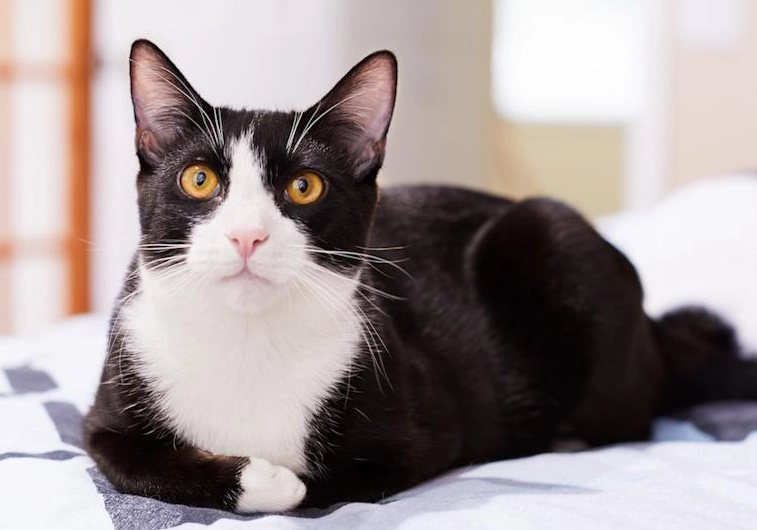
Tuxedo Cat Personality: Fact vs. Fiction
Now, the million-dollar question that follows "are tuxedo cats common": do they have a common personality? This is a minefield of anecdote and confirmation bias.
The pervasive myth is that all tuxedo cats are exceptionally intelligent, playful, and dog-like in their loyalty. I've seen this repeated endlessly online. From my experience with Felix and dozens of fosters, I can tell you this is a massive oversimplification. Coat color does not determine personality. Personality is a complex soup of genetics (breed, if known), early socialization, individual temperament, and life experiences.
However, there might be a tiny kernel of skewed perception here. Because tuxedos are so visually distinct and "cute," their antics might be more memorable. A tabby cat knocking a cup off the table is just a cat being a cat. A tuxedo cat doing it looks like a little butler committing a perfectly timed act of sabotage—it sticks in your mind. We anthropomorphize their formal wear.
That said, many tuxedo cat owners, myself included, will swear by their cat's unique charm. Felix is incredibly communicative with specific chirps for food, play, and affection. He's also stubborn as a mule. But is that the tuxedo? Or is it just Felix? I've met aloof tuxedos and clingy tabbies. The breed (if it's a purebred) is a far better personality predictor than the color of its fur.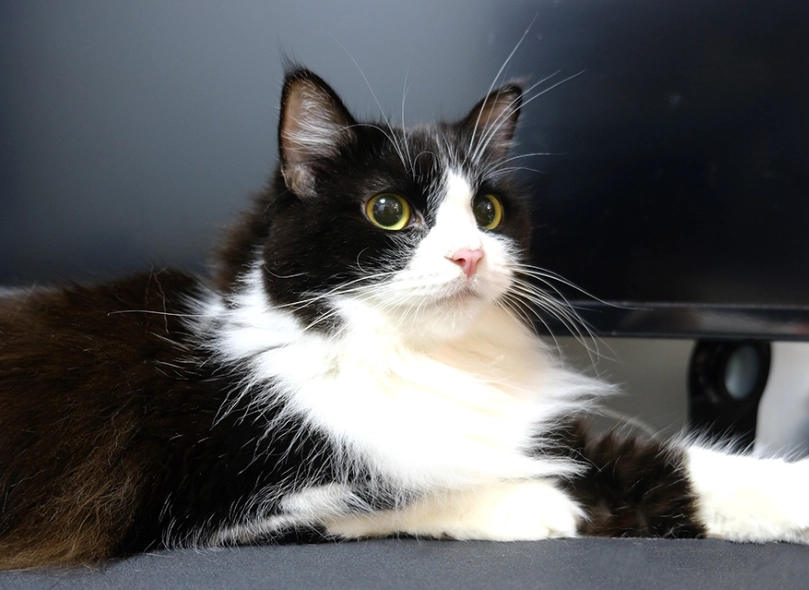
The "Cow Cat" and Other Variations
Not every black-and-white cat is a tuxedo. The term "cow cat" often refers to black-and-white cats with more random, patchy white spotting, rather than the symmetrical "suit." There's also the "mask and mantle" pattern, where the cat has a black "mask" over the head and a black "cape" over the back, with white elsewhere. These are all variations on the bicolor theme, governed by the same white spotting gene but expressing differently. They're all equally "common" in the genetic sense.
Caring for Your Tuxedo Cat
Caring for a tuxedo cat is no different from caring for any other cat of its breed and age. Their coat is generally low-maintenance. However, that sharp white fur can be a magnet for visible dirt.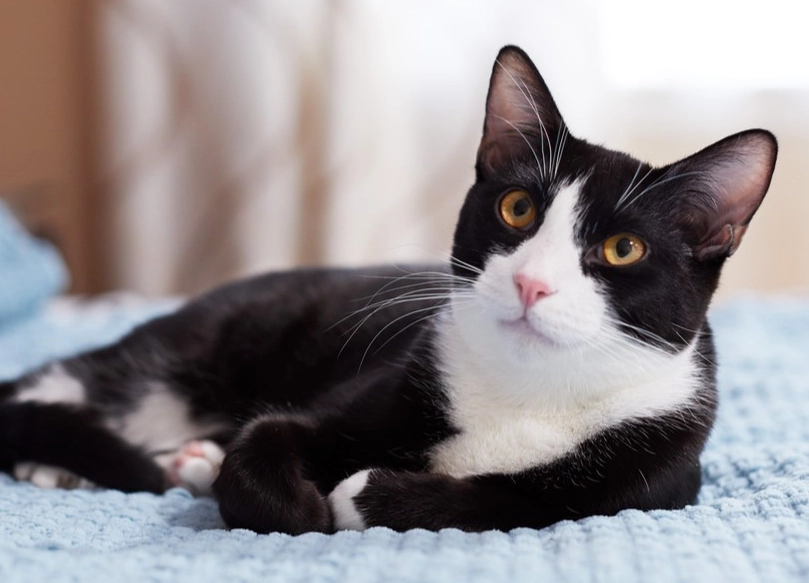
Grooming: Regular brushing is key. It reduces shedding and helps keep the white areas bright by distributing natural skin oils. For stubborn tear stains or chin dirt (common in all cats), a damp cloth wipe-down works wonders. Don't use human cleaning products.
Health: There are no health conditions specifically linked to the tuxedo pattern itself. Their health concerns are breed-related or general feline concerns. However, the white spotting gene, in its highest expression, can be linked to congenital deafness, particularly if the cat has blue eyes and a mostly white coat. This is rarely an issue for the classic tuxedo pattern with limited white. Always prioritize regular vet check-ups, a quality diet, and dental care.
One personal note: Felix developed a sensitivity to certain fish-based foods, leading to mild skin irritation. Switching to a novel protein diet cleared it up. It had nothing to do with his tuxedo, but it's a reminder that every cat is an individual.
Your Tuxedo Cat Questions Answered
Is a tuxedo cat just a mixed breed cat?
Why does my tuxedo kitten have a few white hairs in the black patches?
Are tuxedo cats more prone to obesity because they look portly in their "suit"?
I've heard tuxedo cats are more vocal. Is there any truth to this?
Where can I learn more about official cat coat color genetics?
So, are tuxedo cats common? Absolutely. Their prevalence is a testament to a simple, elegant genetic trick. But common doesn't mean mundane. Each tuxedo cat, from the shelter adoptee to the champion purebred, carries that signature look that sets them apart. Their commonality is their superpower—it means more people get to enjoy the particular joy of living with a feline that always looks dressed for the occasion. Whether yours is a quiet intellectual or a chaotic goofball (like Felix during his 3 AM "zoomies"), their personality is theirs alone, unfettered by the formal wear they were born in.