Quick Navigation
- Getting the Definitions Straight: What Are We Actually Talking About?
- The Genetics Behind the Beauty: Why Almost All Are Female
- Side-by-Side Comparison: A Practical Visual Guide
- Beyond the Basics: Dilutes, Tabby Patterns, and Other Twists
- Personality Myths and Realities: Do "Tortitude" and "Calico Sass" Exist?
- Health Considerations: Is There Anything Special to Watch For?
- Naming and Cultural Significance
- Wrapping It Up: How to Confidently Identify Your Cat
You're scrolling through cat pictures online, or maybe you're staring at your own wonderfully patterned feline friend, and the question pops into your head. Is a tortoiseshell cat a calico? It seems like everyone uses these terms interchangeably at the local pet store or on social media. I've been there too, scratching my head while my own patchy cat, Mosaic, looks at me like I'm the confused one. The truth is, this is one of the most common mix-ups in the cat world, and even some vets occasionally use the terms loosely, which doesn't help.
Let's get the direct answer out of the way first, because I know that's what you came for. It's a firm no. A tortoiseshell cat is not a calico cat. They are distinct patterns governed by specific, fascinating genetics. But saying "they're different" isn't very helpful if you can't tell *how* they're different. That's where most articles stop, leaving you just as puzzled as before.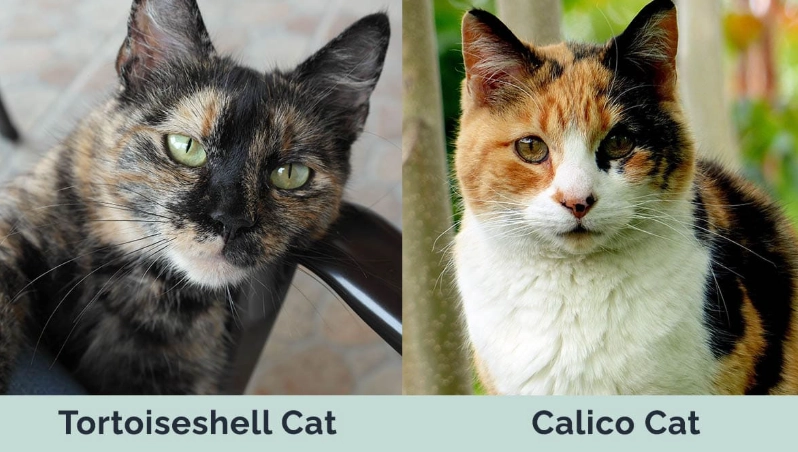
This guide is going to dig deep. We'll look at them side-by-side, talk about the science in a way that actually makes sense, and I'll even share some of the quirky personality traits often linked to these coats (with a big disclaimer that every cat is an individual). By the end, you'll not only know the answer to "is a tortoiseshell cat a calico?", but you'll be able to spot the difference from across the room and impress your friends with some solid cat knowledge.
The Core Difference in One Sentence
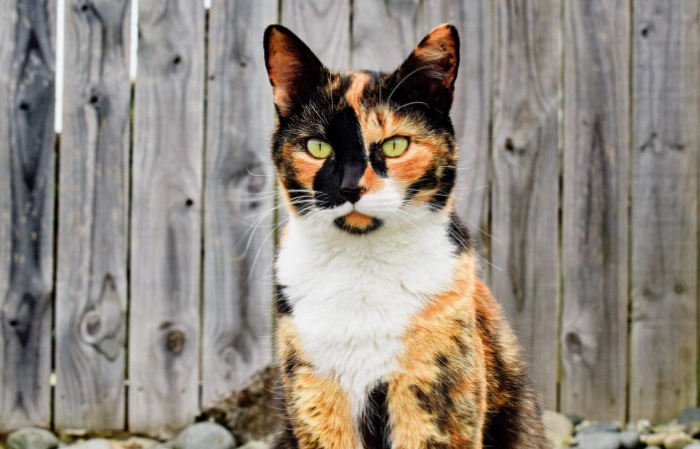
If you remember nothing else, remember this: Tortoiseshells are a brindled mix of black and orange (or their diluted forms) with little to no white, while calicos are distinct, separate patches of black, orange, and white. The presence and amount of white spotting is the biggest visual clue.
Getting the Definitions Straight: What Are We Actually Talking About?
Before we dive into genetics and color charts, let's paint a clear picture with words. These aren't breeds like Siamese or Maine Coon. "Tortoiseshell" and "Calico" are coat color patterns that can appear in many different cat breeds, as well as in your standard domestic shorthair. The Cat Fanciers' Association (CFA), a major cat registry, treats them as specific color classes. It's all about the arrangement of pigments in the fur.
Tortoiseshell ("Tortie")
Imagine the mottled, marbled appearance of a tortoiseshell material (like an old-fashioned hair comb). That's your visual. The black (or chocolate, cinnamon, grey) and red (orange) hairs are intimately mixed together in a brindled, swirled pattern. There's no clear separation into blocks. A "classic" tortie has minimal to no white fur. When you pet one, it feels like petting a living, breathing autumn leaf pile. My friend's cat, Ember, is a perfect example—from a distance she looks muddy brown, but up close she's a stunning tapestry of charcoal and ginger threads woven together.
Calico ("Tricolor" or "Patched Tabby")
Now imagine someone took solid patches of black and solid patches of orange, cut them into puzzle pieces, and placed them on a white canvas. That's calico. The colors are in distinct, separate blocks with sharp(ish) boundaries. White is a required and significant component. It's not just a little locket on the chest; it's often a major part of the underside, legs, and face. They look like they're wearing a patchwork quilt. The white acts as a background that allows the colored patches to appear isolated from each other.
See the problem already? Language gets messy. People see patches of color and call it calico. People see a mix of black and orange and call it tortie. But the devil—and the answer to "is a tortoiseshell cat a calico?"—is in the details.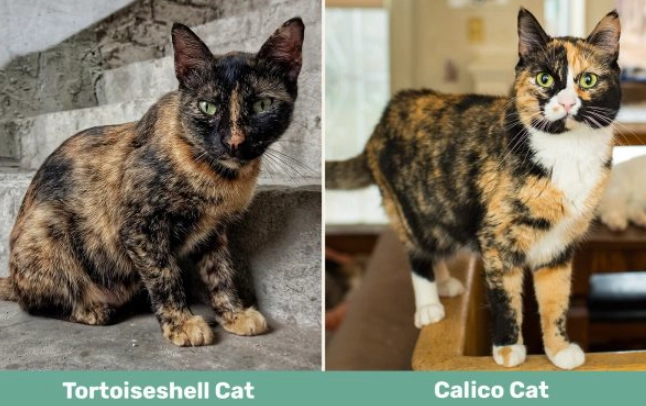
The Genetics Behind the Beauty: Why Almost All Are Female
This is where it gets cool, I promise. The reason this question is so complex ties directly into cat genetics, specifically the X chromosome. It's also why you almost never see a male calico, and male tortoiseshells are incredibly rare treasures (often with health challenges).
The gene for orange fur (producing phaeomelanin) is on the X chromosome. The gene for non-orange (black, brown, etc., producing eumelanin) is also on the X chromosome. A female cat has two X chromosomes (XX). In her cells, very early in development, one of those X chromosomes gets randomly inactivated—it's silenced. This is called X-inactivation. If the "orange" X is active in a skin cell, that patch of fur grows orange. If the "black" X is active, that patch grows black.
In a tortoiseshell, this inactivation happens on a very fine, cellular scale. The two cell types (orange-producing and black-producing) get all jumbled up as the skin grows, creating that fine brindle. In a calico, there's another gene at play: the White Spotting gene (often called the piebald gene). This gene causes areas of the skin to lack pigment cells entirely. Where this gene acts, the fur grows white. The X-inactivation then creates larger, distinct patches of color on the areas that still have pigment cells. So you get islands of tortoiseshell-like color (which can themselves be brindled!) floating on a sea of white.
So, is a tortoiseshell cat a calico genetically? Not quite. A calico is essentially a tortoiseshell cat with the addition of the dominant white spotting gene. It's a layer on top. This is a simplified version, of course. Resources like the UC Davis Veterinary Genetics Laboratory's cat coat color page go into beautiful, nerdy detail if you want to fall down that rabbit hole.
A male cat is XY. He only has one X chromosome. So, he can be orange (if his X has the orange gene) OR black (if his X has the non-orange gene). He can't be both... unless he has a genetic anomaly like Klinefelter syndrome (XXY), making him a rare, usually sterile, male tortie or calico.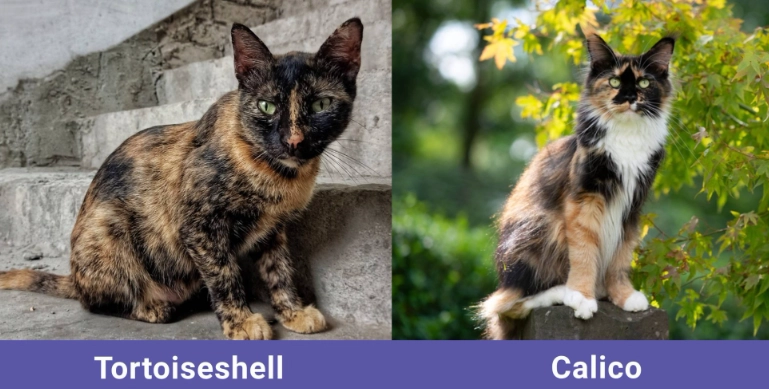
Side-by-Side Comparison: A Practical Visual Guide
Words are good, but a comparison table can really cement the ideas. Let's break down the key points you can use to identify any cat.
| Feature | Tortoiseshell (Tortie) | Calico |
|---|---|---|
| Primary Colors | Black & Red/Orange (and their dilutes: grey/blue & cream) | Black, Red/Orange, AND White |
| Pattern | Brindled, marbled, swirled. Hairs of different colors are interwoven. | Distinct, solid patches or blocks of color separated by white. |
| White Fur | Minimal to none. Maybe small spots on paws, chest, or face. | Abundant and a defining feature. Covers 25%-75% of the body. |
| Genetic Basis | X-inactivation in a female (XX) cat. | X-inactivation plus the White Spotting (piebald) gene. |
| Nicknames | "Tortie," "Tortie-shell." | "Tricolor," "Patched" (if tabby stripes are visible in patches). |
| Common Sex | Almost exclusively female. | Overwhelmingly female. |
That white column is the biggest giveaway. If you see a cat with significant white socks, a white belly, and a white face blaze, and it has separate blocks of black and orange, you're looking at a calico. If the cat is mostly covered in a salt-and-pepper-like mix of dark and orange fur with maybe just a tiny white medallion, it's a tortie.
 It's not always black and white. Or rather, it's not always black, orange, and white. Let's talk about the variations.
Beyond the Basics: Dilutes, Tabby Patterns, and Other Twists
Now that you've got the core idea, the real world throws in some curveballs. The base colors can be modified by other genes, creating a stunning array of looks that can confuse even seasoned cat people.
Dilute Tortoiseshell and Dilute Calico
The Dilution gene softens the colors. Black becomes a soft grey (often called blue in cat fancy), and orange becomes a pale cream. So a dilute tortoiseshell is a beautiful, pastel brindle of blue and cream—it can look almost lavender or peach from a distance. A dilute calico has patches of blue and cream on a white background. They are incredibly elegant. I sometimes think the dilute versions make the "is a tortoiseshell cat a calico?" question easier, because the softer patches on calicos stand out more clearly against the white.
Torbies and Calibies: When Tabby Stripes Join the Party
Here's a real brain-tickler. What if the cat has the classic tabby "M" on the forehead or stripes on the legs? The tabby pattern (agouti gene) can express itself within the colored areas. A Torbie (or patched tabby) is a tortoiseshell where the black areas (or blue, etc.) show clear tabby stripes. A Caliby (or patched tabby-and-white) is a calico where the colored patches are tabby-striped. This is where you get those stunning cats with swirled marble patterns inside their orange patches, or mackerel stripes in their grey patches. The Cat Fanciers' Association has breed standards that meticulously categorize these combinations, showing just how detailed this gets.
Chocolate, Cinnamon, and More
It's not just black. The black can be modified to chocolate (a rich brown) or cinnamon (a lighter reddish-brown). So you can have a chocolate tortoiseshell or a cinnamon calico. These are rarer and often seen in specific purebred lines.
The point is, the core principle holds: mixed, interwoven colors with little white = tortoiseshell family. Separate color patches on a white field = calico family. The specific shades are just variations on a theme.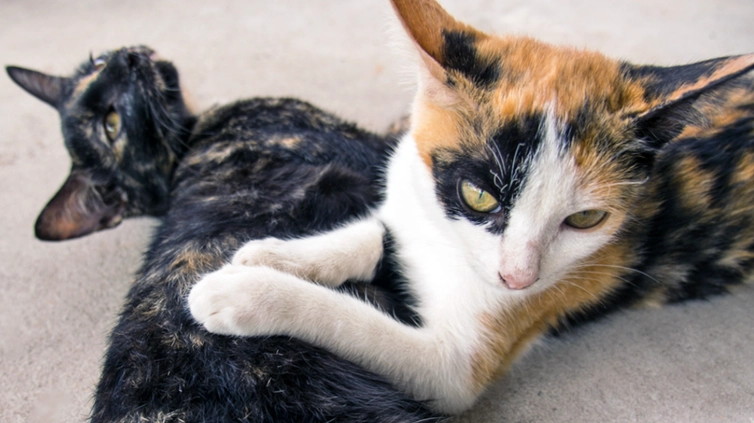
I once volunteered at a shelter where we had a stunning long-haired dilute calico named Opal. Everyone called her a tortie because she was so fluffy the patches seemed blended. It took a careful belly inspection (which she graciously allowed) to see the clear line where the cream patch met the white fur, confirming her calico status. It's a lesson in looking closely!
Personality Myths and Realities: Do "Tortitude" and "Calico Sass" Exist?
This is the fun, controversial part. Ask any group of cat owners, and you'll hear strong opinions. Many, many people swear that tortoiseshell and calico cats have unique, fiery personalities—often dubbed "tortitude" for torties and a general bold sass for calicos. The idea is that they can be fiercely independent, moody, strongly bonded to one person, and full of 'tude.
Is there scientific proof? Not really. There's no peer-reviewed study that conclusively links coat color to personality in a direct, causative way. Personality is shaped by genetics (beyond color genes), early socialization, environment, and individual experience.
However... the anecdotal evidence is massive. It's a cultural phenomenon in the cat world. Why might this be? One theory is confirmation bias: we hear about the stereotype, so we notice when our tortie is being sassy and forget the hours she spent sweetly purring in our lap. Another, more intriguing theory relates back to those X chromosomes. The same complex genetics that determine their coat might have subtle, linked effects on brain chemistry and development. It's not proven, but it's a fascinating thought.
My totally unscientific, personal take? I've met cuddly torties and shy calicos. But I've also met enough spicy ones to think there might be a grain of truth to the stereotype, even if it's just a statistical correlation, not a rule. If you're considering adopting one, go in with an open mind. Don't expect a specific personality based on fur. Expect a cat, with all the wonderful unpredictability that entails.
Health Considerations: Is There Anything Special to Watch For?
Since we're covering all bases, let's talk health. The coat pattern itself isn't a disease. However, there are a couple of associated points: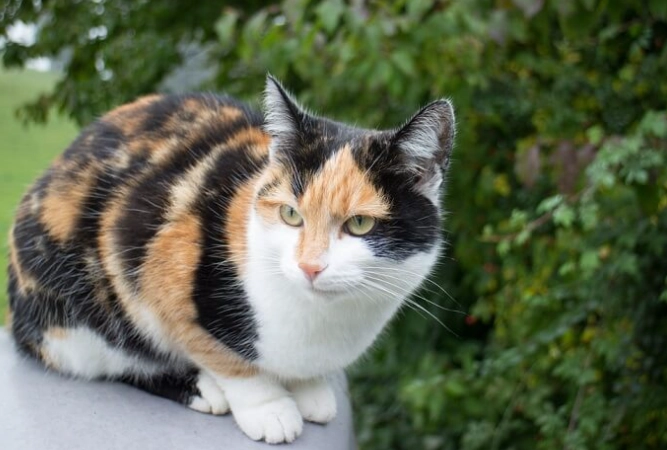
- Male Tortoiseshells/Calicos: As mentioned, they are extremely rare and are almost always XXY. This condition (Klinefelter syndrome) can lead to sterility and may be associated with other health concerns. A responsible owner of such a rare male should work closely with their vet.
- White Fur and Deafness: This is a well-documented correlation, especially in cats with blue eyes and large amounts of white fur (like many calicos). The gene responsible for dominant white fur and blue eyes can sometimes affect the development of the inner ear. Not all white-furred cats are deaf, but the incidence is higher. It's something to be aware of, not afraid of. Deaf cats live perfectly full, happy lives with some minor adjustments.
For the vast majority of female torties and calicos, their coat pattern confers no specific health advantage or disadvantage. They need the same excellent care as any other cat: good nutrition, regular vet check-ups, and lots of love. Organizations like the International Cat Care provide fantastic, vet-backed resources on general feline wellbeing.
Naming and Cultural Significance
Ever wondered where the name "calico" came from? It's from "Calicut," a city in India, and originally referred to a type of cheap, brightly printed cotton cloth. The patchwork pattern reminded people of this fabric. "Tortoiseshell" is more straightforward, named after the material from turtle shells.
In some cultures, these cats are considered lucky. In Japan, the Maneki-neko (beckoning cat) figurine is often a calico, believed to bring good fortune. Sailors once considered tortoiseshell cats to be talismans against storms and ghosts. So not only are they beautiful, but they also come with a rich history.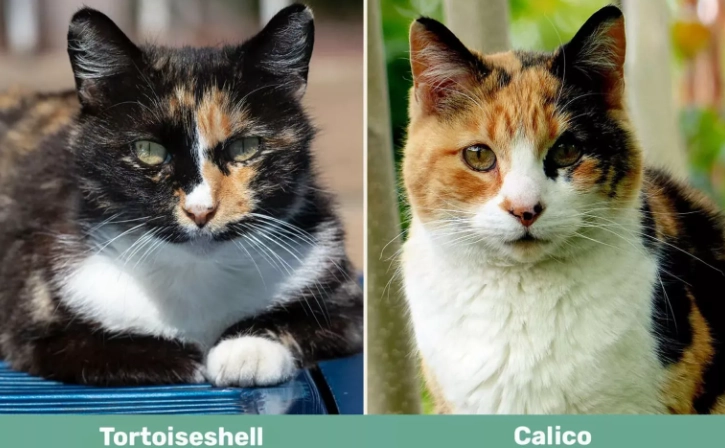
Your Questions, Answered (The FAQ Section)
Wrapping It Up: How to Confidently Identify Your Cat
So, let's bring it all home. Next time you're wondering, "Is a tortoiseshell cat a calico?" or, more importantly, "What is MY cat?", walk through this mental checklist: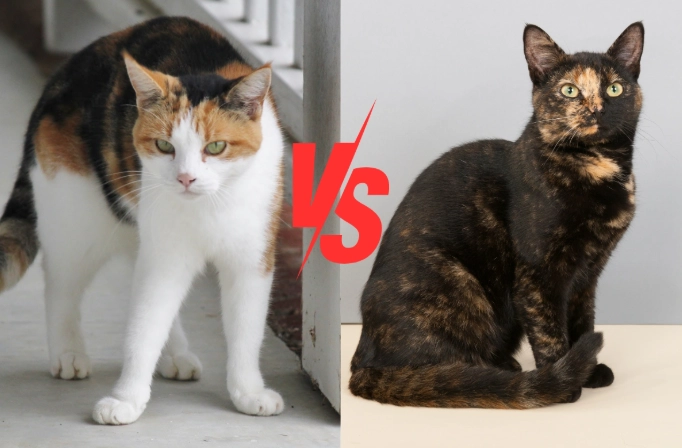
- Look for White: Is there a lot of it, covering major sections like the belly, legs, and face? If yes, think calico.
- Look at the Colored Areas: Are the black/grey and orange/cream hairs swirled together like a fine grain (tortie), or are they in solid, distinct blocks (calico)?
- Check for Tabby Stripes: Do the colored areas have stripes? Then you might have a Torbie or Caliby.
- Check the Colors: Are they dark black and bright orange, or soft grey and cream (dilute)?
Remember, these patterns are a celebration of feline genetic diversity. They're random, beautiful works of art. Whether your cat is a marbled tortoiseshell, a patchwork calico, or something gloriously in-between, they're one of a kind.
The bottom line is clear. A tortoiseshell cat is not a calico. They are close cousins in the colorful cat family, sharing a genetic root but expressing it in visually and genetically distinct ways. One is a brindled mix; the other is a patchwork quilt on a white sheet. Knowing the difference doesn't make you a pedant—it makes you someone who appreciates the incredible, detailed science behind your pet's gorgeous coat. And that's a pretty cool thing to know.
Now go give your tortie or calico a scratch behind the ears. They probably don't care what you call them, as long as the treats keep coming.