Quick Guide
- What Actually Determines How Big a Savannah Cat Gets?
- Savannah Cat Size & Weight By Generation: A Realistic Breakdown
- Beyond the Numbers: What This Size Means for YOU
- The Legal and Practical Hurdles of Owning a Large Hybrid Cat
- Your Savannah Cat Size FAQ: Real Questions, Real Answers
- So, What's the Right Savannah Cat Size For You?
Let's be real. You're probably here because you saw a picture of a Savannah cat online—this leggy, spotted, miniature cheetah-looking thing—and your first thought was, "Whoa, how big is that cat?"
And then maybe your second thought was, "Could I actually live with something that size?"
You're not alone. The Savannah cat size is the single biggest factor that draws people in and, honestly, the thing that gives most potential owners serious pause. It's not just about having a big cat; it's about understanding what that size means. The space it needs, the food it devours, the vet bills it might generate, and whether it's legal for you to own one at all.
I've talked to breeders, owners, and even a few exasperated spouses who weren't fully prepared. The information out there is a mess. You'll see forums where people claim their F5 is the size of a Maine Coon, and others where someone says their F1 is "not that big." It's confusing.
So let's cut through the noise. This isn't just a list of heights and weights. We're going to break down exactly what determines a Savannah cat's size, what you can realistically expect from each generation, and—most importantly—what that size translates to in your day-to-day life.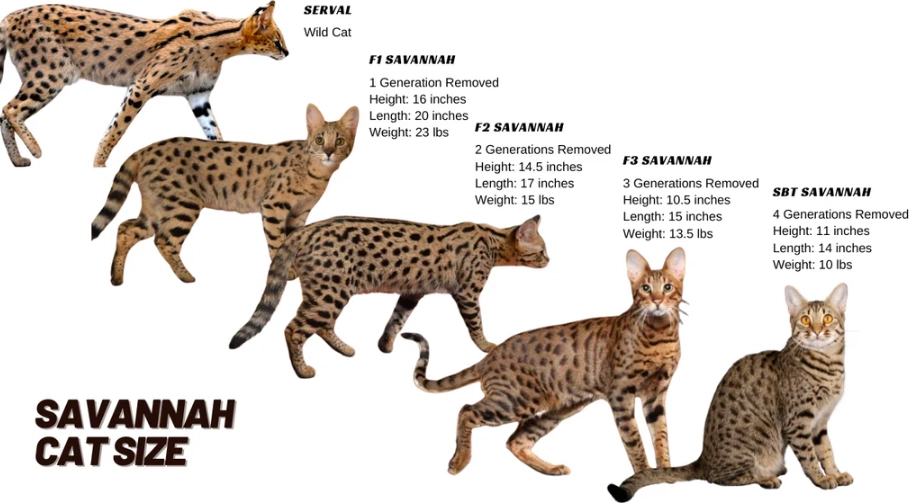
Bottom Line Up Front: There is no single Savannah cat size. It's a spectrum, heavily dependent on one key factor: how many generations removed the cat is from its wild African Serval ancestor. An F1 is a different beast (literally) from an F5.
What Actually Determines How Big a Savannah Cat Gets?
If you take away one thing, let it be this: Generation is everything. When people throw around terms like F1, F2, F3, that "F" stands for "filial" generation. It tells you how many steps away from the wild Serval you are.
- F1 Savannah: Direct offspring of a Serval and a domestic cat (usually a Savannah itself). Maximum wild genetics, maximum Savannah cat size potential.
- F2 Savannah: Offspring of an F1 and a domestic cat. Still very large, but a step down.
- F3 Savannah: Offspring of an F2 and a domestic cat. You're starting to get into what many consider a more "manageable" large cat size.
- F4 & F5 Savannahs: Several generations removed. Size becomes more consistently in the large domestic cat range, though they retain the look.
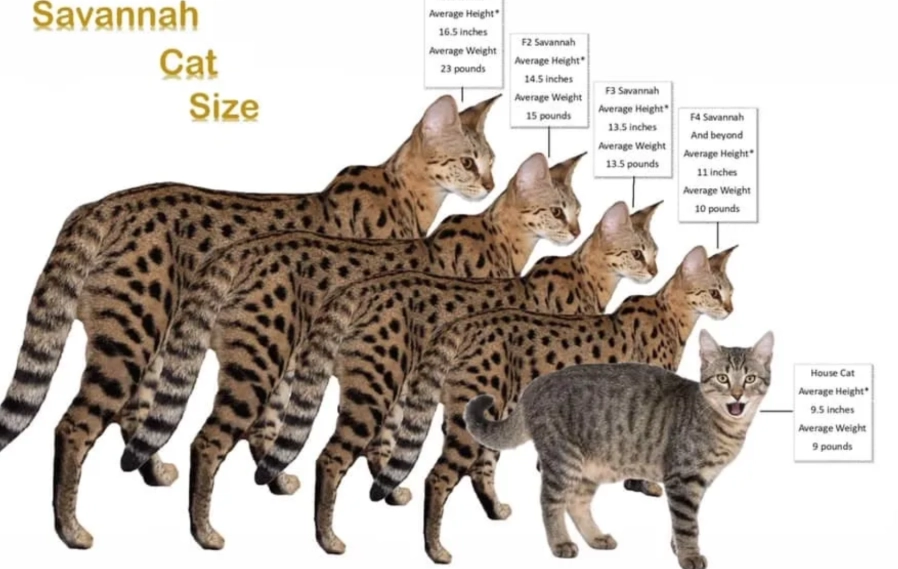
But it's not just the generation. That's the framework. Within that, you've got two other huge players:
Gender: The Boy vs. Girl Size Gap is Real
Male Savannahs are almost always significantly larger than females. We're talking a difference of 5 to 15 pounds depending on the generation. An F2 male can easily outweigh an F1 female. If space is a major concern, a female will generally have a smaller physical footprint.
Bloodline & Individual Variation: The Genetic Lottery
Here's where breeders get secretive and owners get surprised. Even within the same litter of the same generation, you can have a huge spread in final Savannah cat size. Some bloodlines are selectively bred for a more substantial, robust frame. Others might emphasize a sleeker, taller look. There's no guarantee.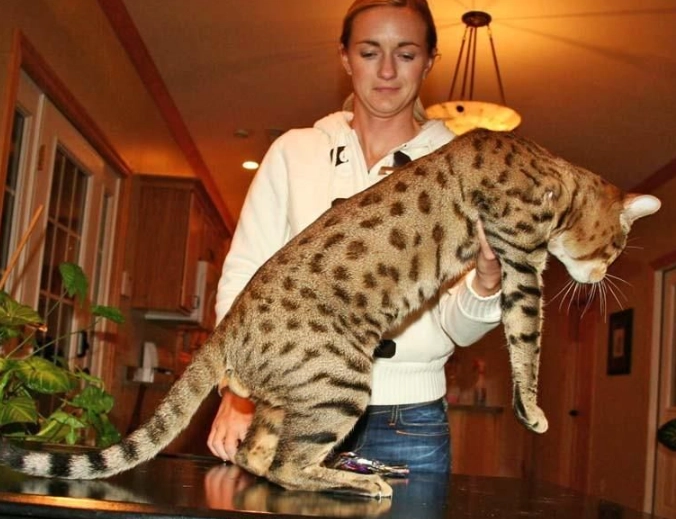
I remember talking to an owner of two F4 brothers from the same litter. One topped out at a sturdy 14 pounds, a solid big cat. The other? A leggy, slender 11-pounder. They looked related, but their presence in the room was totally different.
So when a breeder gives you a size estimate, treat it as a well-informed guess, not a promise.
Savannah Cat Size & Weight By Generation: A Realistic Breakdown
Alright, let's get to the numbers you actually want. The chart below is a composite based on breed standards, breeder data, and owner reports. Think of it as the most likely range, not the absolute extremes.
| Generation | Average Weight (Male) | Average Weight (Female) | Height at Shoulder | Key Size Characteristics |
|---|---|---|---|---|
| F1 Savannah | 15 - 25 lbs (6.8 - 11.3 kg) | 12 - 18 lbs (5.4 - 8.2 kg) | 14 - 17 inches (36 - 43 cm) | Extremely long legs, deep chest, substantial bone structure. Can look and feel like a medium-sized dog. |
| F2 Savannah | 14 - 22 lbs (6.4 - 10 kg) | 10 - 15 lbs (4.5 - 6.8 kg) | 13 - 16 inches (33 - 41 cm) | Still very leggy and tall. Often the "sweet spot" for those wanting dramatic size but slightly more domestic traits. |
| F3 Savannah | 12 - 18 lbs (5.4 - 8.2 kg) | 9 - 13 lbs (4 - 5.9 kg) | 12 - 15 inches (30 - 38 cm) | Clearly a large domestic cat. The leggy appearance is pronounced, but the overall bulk is reduced. |
| F4 / F5 Savannah | 10 - 16 lbs (4.5 - 7.3 kg) | 8 - 12 lbs (3.6 - 5.4 kg) | 11 - 14 inches (28 - 36 cm) | Size overlaps with large breeds like Maine Coons. The height and slender build often make them seem larger than their weight suggests. |
A quick note on height: Savannahs are tall, not necessarily bulky. That shoulder height measurement is a big deal. A 16-inch-tall cat can easily reach kitchen countertops without jumping. It changes your whole environment.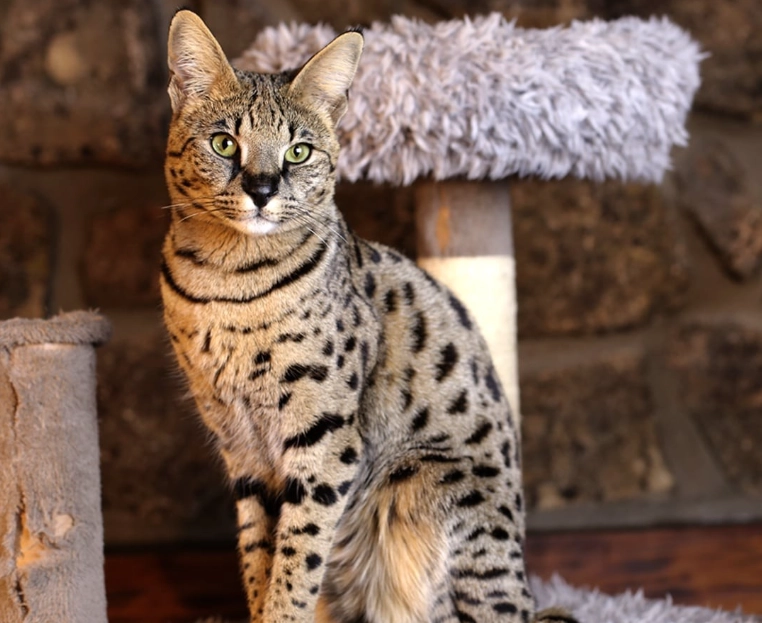
Watch Out For: Anyone guaranteeing a specific Savannah cat size or weight, especially for early-generation cats (F1-F3). Genetics are unpredictable. Also, be wary of breeders who focus only on size. A good breeder prioritizes health and temperament first.
Beyond the Numbers: What This Size Means for YOU
This is the part most guides skip. They give you the stats but not the practical impact. Let's fix that.
Space & Environment: It's Not Just About Square Footage
You might think, "I have a two-bedroom apartment, that's enough space." For an F5? Probably. For an F1? It's about more than floor space.
- Vertical Space is Non-Negotiable: These cats are climbers and perchers. A tall, sturdy cat tree (6+ feet) isn't a luxury; it's a necessity for their mental health and to save your curtains and bookshelves. Your Savannah cat size demands vertical territory.
- Everything is a Platform: Your fridge top, the top of your kitchen cabinets, the top of your door—they will get up there. You need to assess your home's "climbability" and either secure valuables or make peace with it.
- The "Running Start": A large Savannah, particularly an F1 or F2, doesn't just hop onto things. They can take a running leap from across the room. You need clear pathways, or you'll have a 20-pound cat using your sofa as a launchpad.
I visited a friend with an F2 male. Beautiful cat. But I watched him clear the distance from the floor to the top of a seven-foot armoire in one fluid motion. It was impressive and a little terrifying. My friend just shrugged and said, "Yeah, that's his spot." You have to be that kind of relaxed.
Food & Budget: The Fuel for a Big Engine
Big cats eat more. It's simple. But it's not just quantity; it's quality.
- High-Protein Diet: Their metabolism and muscle mass require premium, high-protein food. We're talking high-quality wet food and/or raw diets. Cheap kibble won't cut it and can lead to health issues.
- Cost: Be prepared to spend significantly more on food than you would for a typical domestic cat. For an F1, you could be looking at $150-$250+ per month on food alone.
- Water, Water Everywhere: Many Savannahs love water. Don't be surprised if they play in their water bowl, tip it over, or demand to drink from the tap. A heavy, tip-proof bowl or a cat water fountain is a must.
Health Considerations for a Large Feline Frame
Their unique structure comes with some watch points. The International Cat Association (TICA) notes their conformation in the breed standard, but it's good to be aware of practical health links.
- Hypertrophic Cardiomyopathy (HCM): A heart condition found in all cats, but responsible breeders screen their breeding stock. Ask for proof of HCM scans (from a veterinary cardiologist) for the parents.
- Joint Health: Carrying more weight on a tall, slender frame can stress joints. Maintaining a lean, healthy weight is crucial. No letting them get chubby.
- Anesthesia Sensitivity: Some vets note that Savannahs, especially earlier generations, can be sensitive to anesthesia. You must find a vet experienced with large, hybrid, or exotic breeds. The American Veterinary Medical Association (AVMA) has resources on finding specialists, which is a good starting point.
Pro Tip: Start a "Savannah Vet Fund" from day one. Put aside $50-100 a month. When you need a vet who understands hybrid cat metabolism or an emergency visit happens, you'll be thankful you did. Routine care for a large cat often costs more.
The Legal and Practical Hurdles of Owning a Large Hybrid Cat
This might be the most critical section. Your dream of a specific Savannah cat size could be over before it starts due to laws.
Generation-Based Restrictions
Many states and cities have laws that specifically target early-generation hybrids. Common restrictions:
- F1-F3 Bans: Places like New York City, Hawaii, Georgia, and Massachusetts restrict or outright ban ownership of early-generation Savannahs (often F1-F3 or F1-F4). They are often classified similarly to wild animals.
- F4 and Later Allowed: Many of these places allow F4, F5, and later generations, as they are considered "domesticated."
- Total Bans: A handful of states, like Nebraska, have total bans on all Savannah generations.
You must check your specific city, county, and state laws. Do not rely on a breeder's word unless they provide you with the actual statute. A good starting point for understanding wildlife regulations is your state's Department of Natural Resources or Fish & Wildlife website. The USDA also has information on state animal welfare regulations that can point you in the right direction.
Homeowners & Renters Insurance
Call your insurance company. Seriously. Many policies have exclusions for "exotic" or "hybrid" pets. If your F2 Savannah scratches a visitor, you could be personally liable for all medical costs if your insurance denies the claim. Some companies will add a rider for an additional fee, others will refuse coverage altogether.
It's a headache, but skipping this step is financial Russian roulette.
Your Savannah Cat Size FAQ: Real Questions, Real Answers
Let's tackle the stuff people are secretly Googling at 2 AM.
Tall tales abound. The most commonly cited record-holder was an F1 male named "Scarlett's Magic" who was said to be over 18 inches tall and 30+ pounds. However, these claims are often anecdotal and not officially verified by a body like Guinness. It's safe to assume a very large male F1 could approach 25-28 pounds, but that's the extreme end. Most won't get that big.
Alarmingly fast for the early generations. F1 and F2 kittens can gain half a pound or more per week in their first few months. They often reach 90% of their adult Savannah cat size by 12-18 months, but can continue filling out (getting more muscular, broader in the chest) until they are 2-3 years old.
This is about temperament, not size, but size amplifies everything. A Savannah with a dog-like personality can be a wonderful, playful companion for older, respectful children. However, their play can be rough—those long legs pack a punch. A swat from a 20-pound cat is not the same as a swat from a 8-pound cat. Similarly, they may see small pets (birds, rodents, even small cats or dogs) as prey due to their high prey drive. Introductions must be slow and supervised.
Many owners do! Their size and intelligence make them good candidates for harness training. Start young. Use a secure, escape-proof harness designed for cats (not a small dog harness that they can back out of). It's fantastic mental stimulation for them. Just be prepared for attention—you will be stopped constantly by people asking, "What kind of dog is that?"
So, What's the Right Savannah Cat Size For You?
This isn't a decision to make based on which Savannah cat size looks the coolest in photos. It's a practical, lifestyle choice.
Ask yourself these questions honestly:
- Space & Setup: Do I have the vertical space and a secure home environment for a cat that is essentially a world-class athlete?
- Budget: Can I afford premium food, higher vet costs, and potential insurance riders?
- Legality: Have I verified with local authorities that the generation I want is legal?
- Lifestyle: Do I have the time and energy for a highly intelligent, active cat that needs engagement? A bored Savannah is a destructive Savannah, and a large, bored Savannah can do real damage.
- Experience: Have I owned active, demanding cat breeds before? Jumping straight from a laid-back Persian to an F1 Savannah is a recipe for overwhelm.
My personal, somewhat biased opinion? For most people living in typical suburban or urban settings, the F3 to F5 generations offer the perfect balance. You still get that stunning, wild look and a large, active cat, but in a package that's more compatible with domestic life, legal in more places, and less likely to come with the extreme challenges of the earliest generations.
I know a family with an F4 female. She's 13 pounds of pure elegance and mischief. She can reach every countertop, plays fetch like a pro, and has the personality of a tiny, spotted tornado. But she also curls up on the couch at night and doesn't require a zoo permit. For them, it was the perfect choice.
Ultimately, choosing a Savannah is a commitment to living with a small piece of the wild. Their size is the most visible expression of that. Respect it, plan for it, and you'll have an unforgettable companion. Underestimate it, and you'll both be miserable.
Do your homework. Visit breeders, meet cats of different generations if you can. Feel their weight in your arms, watch them move. Let that, more than any chart or article, guide your decision.