Quick Navigation
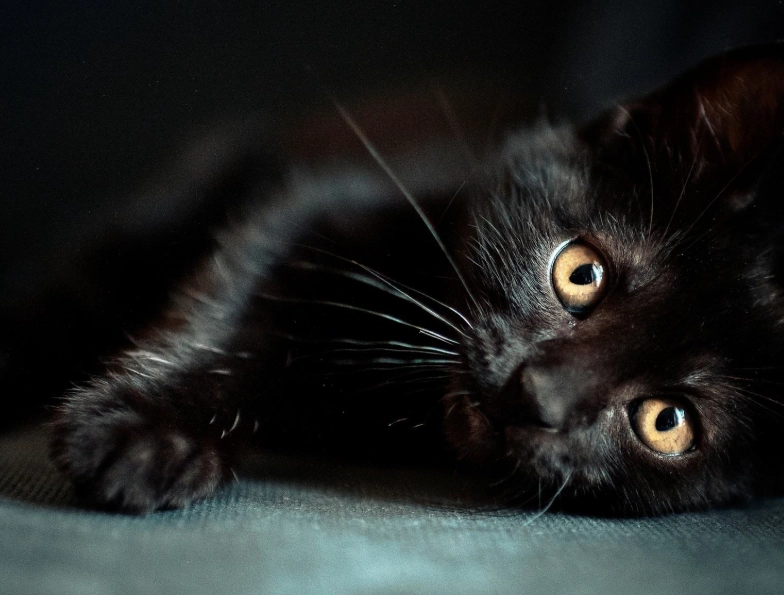
Let's cut to the chase. You've probably seen a picture—a creature of pure shadow and angles, with ears that could pick up satellite signals and eyes that see right through you. That's the ebony Oriental cat. It's not just a black cat. Calling it that is like calling a Ferrari "a car." It misses the point entirely. This is a specific, intense, and frankly, demanding breed wrapped in the most elegant black velvet you can imagine.
I remember the first time I met one at a friend's house. It wasn't the color that struck me first, though the pure, glossy black was stunning. It was the presence. The cat didn't just enter the room; it conducted a survey. It looked at me, chirped (not meowed, chirped), and then proceeded to follow me around, offering a running commentary on my activities. I was hooked, but I also knew this wasn't a pet for someone who just wants a furry paperweight.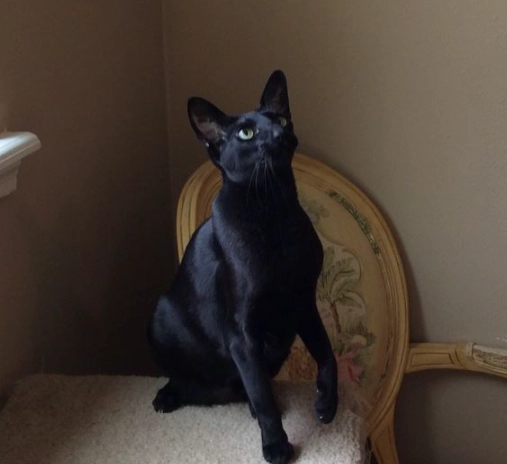
This guide is for you if you're past the "ooh, pretty" phase and into the "what would my life actually be like with one of these?" phase. We're going to dig into everything: the history that made them this way, that infamous personality, the good, the bad, the noisy, and the absolutely magical. By the end, you'll know if an ebony Oriental Shorthair is your dream companion or a beautiful nightmare waiting to happen.
What Exactly Is an Ebony Oriental Cat?
This is where people get confused. "Ebony" isn't a separate breed. It's the color classification for a solid, jet-black Oriental Shorthair. Think of the Oriental breed as the template—the sleek, slim, triangular-headed, big-eered archetype. The ebony coat is one of the many, many colors and patterns this template comes in. But there's something about the black one. The lack of pattern focuses all your attention on those extraordinary lines. Every curve of the ribcage, every angle of the cheekbone is on display. It's feline architecture.
The Cat Fanciers' Association (CFA), one of the major pedigree cat registries, describes the Oriental as "a cat of outstanding elegance." That's an understatement. For the ebony variety, the standard demands a coat that is "dense black from roots to tip of fur. Free from any tinge of rust on tips or smoke undercoat. Nose leather and paw pads: black." No ghost stripes, no rusty sun-bleaching. Just pure, unadulterated black. It's harder for breeders to achieve than you might think.
They are, essentially, a Siamese in a different coat. Same family, same origins, same chatty DNA. The Oriental breed was developed by outcrossing Siamese with other shorthaired cats (like the Russian Blue and Abyssinian) to introduce all the colors and patterns the Siamese gene pool didn't have, while keeping the iconic body type and personality.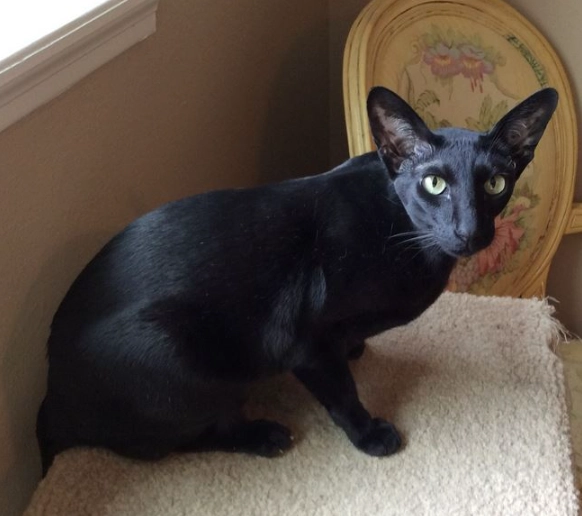
A Peek into Their History: From Siam to Your Sofa
It all starts in Southeast Asia. Cats resembling the modern Siamese and Oriental appear in ancient manuscripts, like the Tamra Maew (The Cat-Book Poems), which is believed to be from Ayutthaya period in Siam (1350-1767). These cats were treasured. They weren't mousers in barns; they lived in temples and royal palaces. That royal treatment might explain a bit of their... let's call it "self-assuredness."
The modern story kicks off in the 1950s and 60s in Britain and the US. Breeders loved the Siamese personality and look but wanted to play with a bigger color palette. By carefully introducing other breeds, they stabilized the genes for solid colors (like ebony), tabbies, torties, and everything in between. The key was keeping that svelte, muscular body, the wedge-shaped head, and, crucially, that outgoing, intelligent temperament. The Cat Fanciers' Association (CFA) began recognizing the Oriental Shorthair in 1977. Today, they're a well-established, if not ultra-common, breed.
That historical link to the Siamese is non-negotiable for understanding an ebony Oriental cat. It's in their blood. It's why they talk. It's why they form such intense bonds. You're not getting a generic cat; you're getting a cat with a centuries-old pedigree of being someone's dedicated companion.
That Iconic Look: Breaking Down the Ebony Oriental Standard
What makes an ebony Oriental Shorthair look so... different? It's a combination of exaggerated features that somehow create a harmonious whole. Let's break it down with a table, because it's easier to see how all the parts fit together.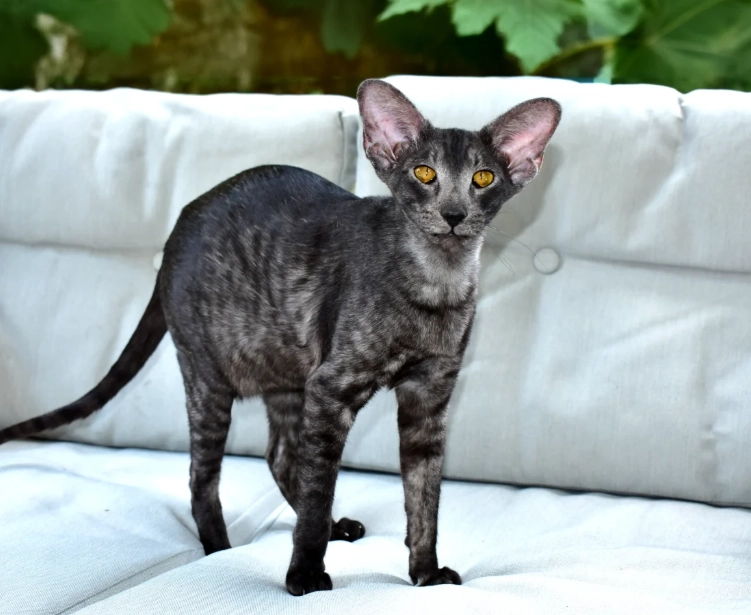
| Feature | Breed Standard Description | What It Means in Plain English |
|---|---|---|
| Body | Long, tubular, and slender. Firm musculature, not bony. A combination of delicate appearance and surprising weight. | They feel heavier than they look ("dense" is the word). They're not fragile, but they are built like feline athletes—long jumpers, not weightlifters. |
| Head | A long, tapering wedge. Straight lines from the nose to the wide-set ears. No break at the whiskers. A straight profile. | That classic "alien" or "modern" look. The head is a perfect triangle from the front. No puffy cheeks whatsoever. |
| Ears | Strikingly large, pointed, and wide at the base. They continue the lines of the wedge. | This is their trademark. The ears are alarmingly, wonderfully big. They use them for expression, like radar dishes. |
| Eyes | Almond-shaped, slanted towards the nose. Any shade of green is accepted for ebonies; no blue or yellow. | The green eyes against the black fur are mesmerizing. The slant gives them a keen, intelligent expression. |
| Coat (Ebony) | Short, fine, glossy, and lying close to the body. Color must be solid black to the roots, no white lockets. | It feels like polished satin. The "ebony" term means it's a cool, jet black, not a warm, brownish black. |
| Legs & Paws | Long, slender legs. Hind legs higher than front. Small, dainty, oval paws. | They walk with a distinctive, graceful gait. Those back legs are like springs for jumping. |
| Tail | Long, thin, and tapering to a fine point (a "whip" tail). | It's often carried high or used for balance during their acrobatics. It's another line in their sleek silhouette. |
When all these pieces come together in an ebony Oriental cat, the effect is breathtaking. The monochrome palette highlights the form in a way no patterned coat can. It's minimalist feline art.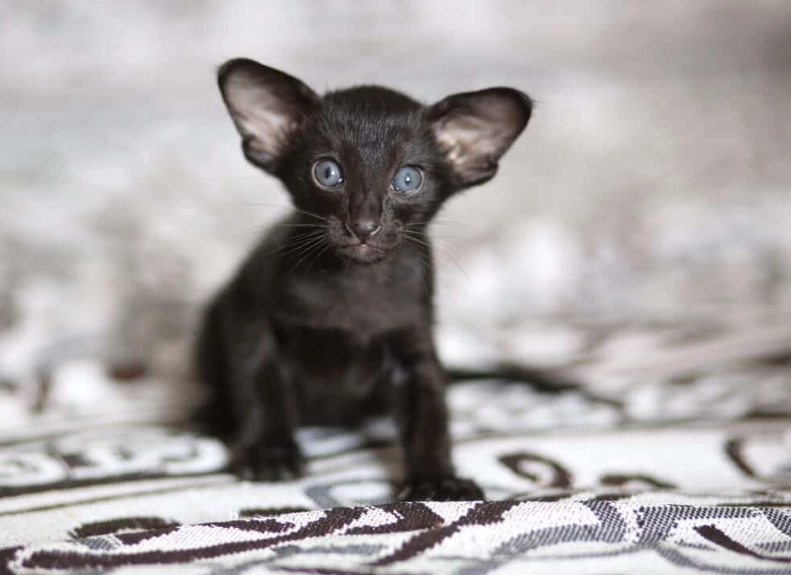
Personality Deep Dive: The Good, The Loud, and The Velcro
Okay, the looks get you in the door. The personality is what makes you stay—or run for the hills. Describing an Oriental as "dog-like" is a cliché, but it's also the fastest shorthand. They fetch. They follow you from room to room. They greet you at the door. They need to be involved in everything. I'm talking sitting on your keyboard while you work, inspecting groceries, supervising toilet time. There is no activity too mundane for their commentary.
The Symphony of Sounds
Let's talk about the voice. Siamese are known for being vocal. Orientals took that trait and added a few octaves and a bigger vocabulary. It's not just meowing. It's a range of chirps, trills, yodels, and full-volume opinions. They talk to tell you they're hungry, happy, bored, that the sunbeam moved, that a leaf fell outside. A common question from prospective owners is, "Are ebony Oriental cats really that loud?" The honest answer? Yes. But it's not random yowling. It's conversational. They expect you to talk back. If you live in an apartment with thin walls or crave absolute silence, this is not your cat. My friend's ebony Oriental has a specific, insistent chirp for "the water in my bowl is five minutes old and therefore suspect."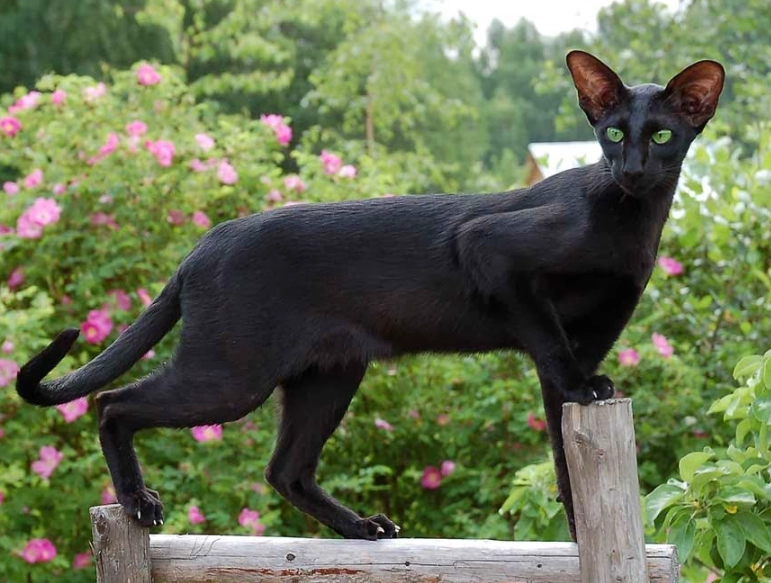
Intelligence and Need for Stimulation
Their brain is always on. This is a pro and a con. Pro: They learn tricks (like fetch, high-five) with frightening ease. Puzzle feeders are a must, not a luxury. Con: A bored Oriental is a destructive Oriental. They will find ways to entertain themselves, and you might not like their choices (cupboards opened, items knocked off shelves, intricate attempts to disassemble door handles).
You need to provide structured play. Not just waving a wand for two minutes. I'm talking 20-30 minute interactive sessions, twice a day. Think of it as mandatory mental gym time. Here’s a quick list of what works and what doesn't:
- Great: Feather wands, laser pointers (always end with a physical toy they can "catch"), treat-dispensing puzzles, clicker training sessions, cat agility sets, leash training for outdoor exploration.
- Not Enough: A few toys scattered on the floor. They'll ignore them after figuring them out in 30 seconds.
The Bond: Velcro Cat Syndrome
They pick a person. Sometimes two. They will be your shadow. This intense bond means they are prone to separation anxiety. Leaving an ebony Oriental cat alone for long, regular workdays can lead to stress, which manifests as over-grooming, inappropriate urination, or excessive, mournful vocalization. They often do better in pairs, so they have feline company when you're gone. Getting two Oriental kittens together is a common and wise recommendation from breeders.
It's not neediness, exactly. It's partnership.
Living with an Ebony Oriental: Care, Health, and Reality
So you've decided you can handle the personality. What does daily life actually entail?
Grooming: Surprisingly Easy
Here's a bright spot. That short, sleek coat is low-maintenance. A weekly rub-down with a chamois cloth or soft grooming mitt is usually enough to remove loose hairs and bring out an incredible shine. It's more like polishing a car than brushing a cat. They shed, but the hairs are short and fine, so they tend to be less obvious than the fur from a fluffier breed—though they'll still show up on dark clothes.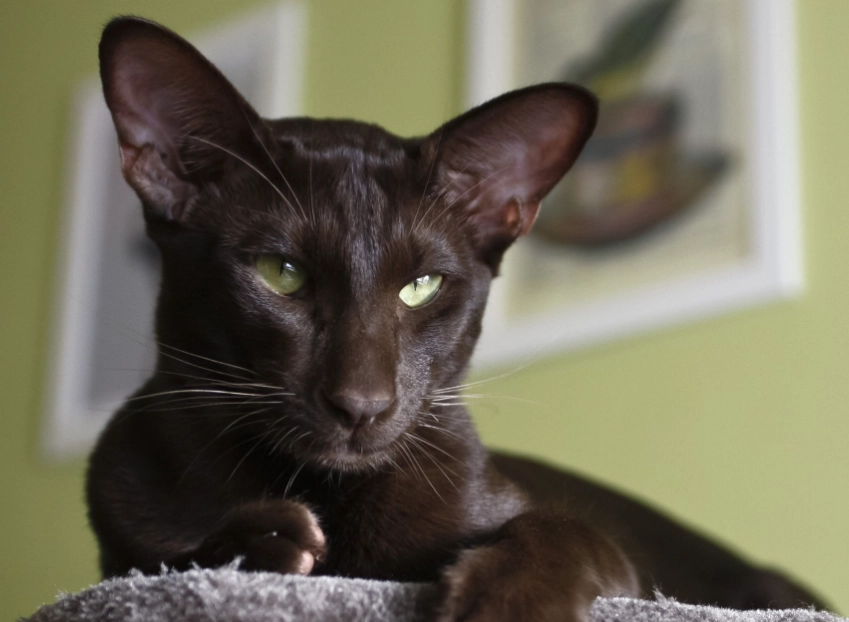
Other basics: nail trims every few weeks, weekly teeth brushing (start young!), and keeping those magnificent ears clean with a vet-approved solution. No special baths needed unless they get into something.
Diet and Nutrition: Fueling the Furnace
These are active cats with a high metabolism. They need quality food rich in animal protein. Many owners find they do well on a combination of high-quality wet and dry food. The wet food ensures hydration (Orientals can be prone to urinary issues, like many active breeds), and the dry food can help with dental health. Obesity is rarely a problem with this breed—they burn it off. The goal is to maintain that lean, muscular physique.
Health Considerations: What to Watch For
Generally, they are a robust breed. But being a Siamese derivative, they share some genetic predispositions. Reputable breeders test for these. You must ask for proof.
- Progressive Retinal Atrophy (PRA): A genetic disease that causes blindness. A responsible breeder will have their breeding cats DNA tested for the specific gene. The Cornell Feline Health Center has excellent resources on genetic conditions in cats.
- Amyloidosis: A disease where abnormal protein deposits damage organs, particularly the liver. It has a genetic component in Orientals/Siamese.
- Dental Issues: They can be prone to gingivitis. Hence, the importance of dental care from the start.
- Heart Conditions: Like many purebreds, some lines may have a higher incidence of certain heart murmurs or conditions like hypertrophic cardiomyopathy (HCM). Good breeders screen their cats with regular echocardiograms.
The key takeaway? Go to a breeder who does health testing, not just someone with a black cat and kittens. A healthy ebony Oriental Shorthair from tested lines can easily live 12-15 years or more.
Finding Your Ebony Shadow: Breeder vs. Rescue
This is a crucial step. Because of their specific needs, how you acquire your cat matters.
Working with a Reputable Breeder
This is the most likely route for getting a kitten. A good breeder is your ally. They will:
- Interview you relentlessly. They want to ensure their kittens go to homes that understand the breed.
- Show you health clearances for the parents (PRA DNA test, recent cardiac vet checks).
- Raise kittens in the home, surrounded by human activity and noise.
- Let you visit (or provide extensive videos/photos and do video calls).
- Have a contract that includes a health guarantee and requires you to return the cat to them if you can't keep it, ever.
Be prepared to be on a waitlist. Ethical breeders don't have litters constantly. The search for a well-bred ebony Oriental cat requires patience. Avoid anyone who has multiple litters available at all times, sells kittens under 12-16 weeks old, or won't let you see where the cats live.
Considering Rescue
Yes, purebred Orientals do end up in rescue, often because someone underestimated their needs. Breed-specific rescues (like those affiliated with the International Cat Association (TICA) or CFA) are excellent places to look. An adult rescue can be a wonderful choice—their personality is fully formed, so you know exactly what you're getting: the chatter, the clinginess, the lot. Rescues will also be brutally honest about any behavioral or health issues.
Final Thoughts: Is the Ebony Oriental Cat Right for You?
It's a big decision. This isn't a pet you just feed and ignore. An ebony Oriental cat is a commitment to a decade-plus relationship with a tiny, intelligent, loud, loving black hole of attention.
You might be a perfect fit if: you work from home or have a flexible schedule, you enjoy constant interaction, you love a chatty companion, you're ready for active play, you appreciate feline elegance in its most extreme form, and you don't mind a shadow.
You should probably look at another breed if: you are gone 10 hours a day, you need peace and quiet, you want a low-maintenance pet, you get frustrated easily, or you value your possessions remaining exactly where you left them.
For the right person, an ebony Oriental Shorthair is more than a pet. It's a daily dose of drama, comedy, and stunning beauty. It's a conversation starter that never stops talking back. It's a living piece of art with a heart that beats very, very loudly. If that sounds like your kind of chaos, then welcome to the club. Just don't say I didn't warn you about the noise.