Quick Guide
- From the African Plains to Your Home: A Quick History
- The Generations Game: F1, F2, F3, and Beyond
- How Big Do They Really Get? Setting Realistic Expectations
- The Savannah Cat Personality: Not Your Average Lap Cat
- The Real Cost: Breaking Down the Savannah Cat Price
- Care and Lifestyle: Building a Savannah-Proof Home
- Health and Lifespan: What to Expect
- The Legal Maze: Can You Even Own One?
- Finding a Reputable Breeder: Your Most Important Decision
- Common Questions (The Stuff You're Actually Searching For)
- Final Thoughts: Is a Savannah Cat Right for You?
Let's be real. You didn't just stumble here. You saw a picture or a video—probably one of those giant, leggy, spotted cats that looks like a miniature leopard walking through someone's living room. And a question popped into your head: What on earth is that, and could I ever have one? That, my friend, is the Savannah cat. And that simple curiosity is a rabbit hole that goes deep into questions of genetics, legality, lifestyle, and frankly, a good chunk of change.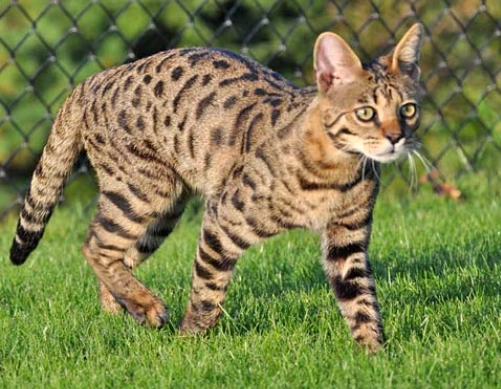
I've been researching and talking to owners for years. The internet is full of glamour shots and breathless hype about these cats being "dog-like" or "exotic." It's not all wrong, but it's desperately incomplete. What you need is the full picture, the good, the bad, the expensive, and the messy. That's what this guide is for. We're going to strip away the mystery and talk about what living with a Savannah cat is actually like.
The Core Concept: A Savannah cat is a hybrid breed, created by crossing a domestic cat with an African Serval (Leptailurus serval). That wild ancestry is the source of everything—their stunning looks, their incredible athleticism, their unique personality, and many of the challenges that come with them.
From the African Plains to Your Home: A Quick History
The story starts in the 1980s. A Bengal cat breeder named Judee Frank managed to cross a male Serval with a Siamese domestic cat. The resulting kitten, a female named "Savannah," became the namesake for the entire breed. The goal wasn't just to make a wild-looking pet, but to capture that Serval elegance and combine it with a manageable domestic temperament.
It took work. Early-generation males were often sterile, a common issue in hybrids. Dedicated breeders like Patrick Kelley and Joyce Sroufe pushed to establish the breed, developing the standards and working towards recognition. The International Cat Association (TICA) was the first major registry to accept them, granting the Savannah championship status in 2012. That TICA recognition is a big deal—it sets the official breed standard and legitimizes responsible breeding practices.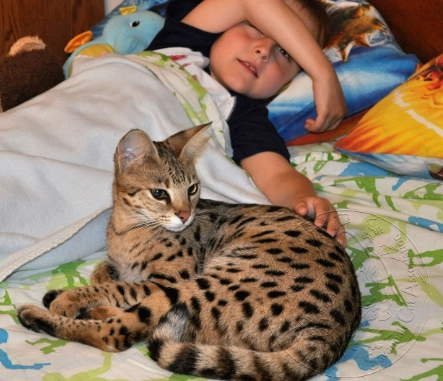
But here's the thing history tells us: creating a consistent breed from a wild ancestor is a generations-long game. Which brings us to the single most important concept you need to understand.
The Generations Game: F1, F2, F3, and Beyond
This is the heart of the Savannah cat discussion. You can't talk about size, price, or personality without knowing the "F" number. It refers to how many generations removed the cat is from its wild Serval ancestor.
Pay Attention Here: This isn't just trivia. The generation directly dictates almost everything about the cat—its potential size, its legal status, its cost, and how much of that wild Serval energy it has. Getting this wrong is how people end up in over their heads.
Let's break it down in a way that actually makes sense.
| Generation | What It Means | Typical Serval % | Key Traits & Considerations |
|---|---|---|---|
| F1 Savannah | First filial generation. Direct offspring of a Serval and a domestic cat. | ~50% | Largest size, most "wild" appearance and instincts. Often challenging as a typical pet. High energy, specific dietary needs. Legal restrictions common. Highest price. |
| F2 Savannah | Second generation. Offspring of an F1 Savannah and a domestic cat (or another Savannah). | ~25% | Still very large and exotic-looking. High energy and intelligence. More adaptable than F1s but still not a beginner's pet. Often subject to legal regulations. |
| F3 Savannah | Third generation. Offspring of an F2 Savannah and a domestic/Savannah. | ~12.5% | A popular choice for experienced owners who want a significant exotic look and personality. More reliably socialized. Legal issues become less frequent but must still be checked. |
| F4 & Beyond | Fourth generation and later (F5, F6, etc.). | ~6.25% or less | Considered "SBT" (Stud Book Tradition) by TICA. Temperament is more consistently domestic. Size is smaller (but still tall). The best choice for most families wanting a Savannah cat experience without the extreme challenges. Legal hurdles are rare. |
See the pattern? The lower the "F" number, the closer to the wild ancestor, and the more intense the experience. An F1 Savannah cat is a project, a lifestyle. An F5 or F6 Savannah cat is much more of a pet—albeit a very active, smart, and demanding one.
I spoke to an owner of an F3 male. She said the cat could open lever-handle doors, demanded walks on a harness, and needed hours of interactive play daily. "It's like having a perpetual toddler with springs for legs and the brain of a mischievous monkey," she laughed, but then added seriously, "I couldn't have handled him as a first-time cat owner. No way."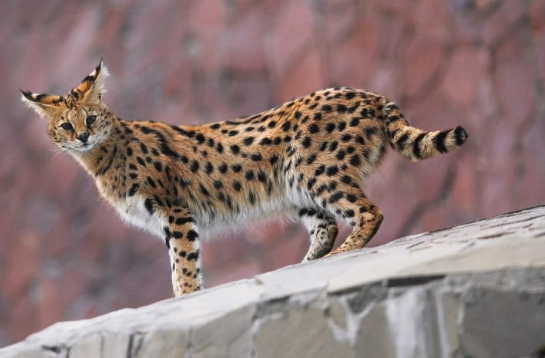
How Big Do They Really Get? Setting Realistic Expectations
This is the other big question. The internet loves to tout "the largest domestic cat breed," and while that's technically true, the numbers get exaggerated. You'll see claims of 30-pound beasts. That's exceptionally rare.
Let's get practical.
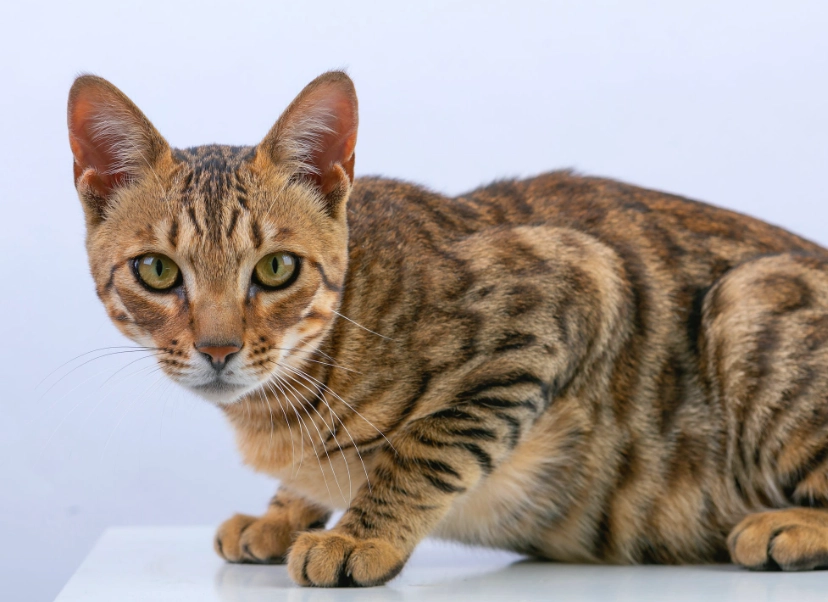
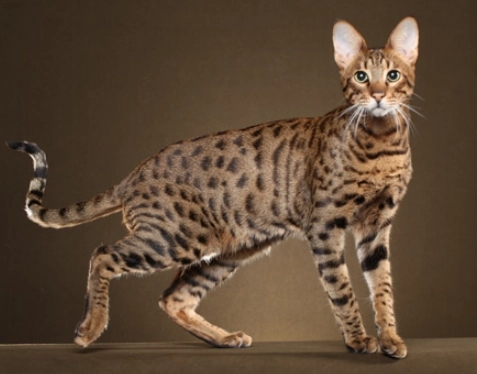
Size is heavily generation-dependent. An F1 or F2 Savannah cat is where you'll see the impressive stats. Males of these generations can commonly reach 15 to 25 pounds. But it's not just weight—it's their build. They are incredibly tall and long-legged. A large male might stand 16-18 inches at the shoulder. When they stretch out, they can be over 4 feet from nose to tail tip. That's what gives them that jaw-dropping, mini-leopard silhouette.
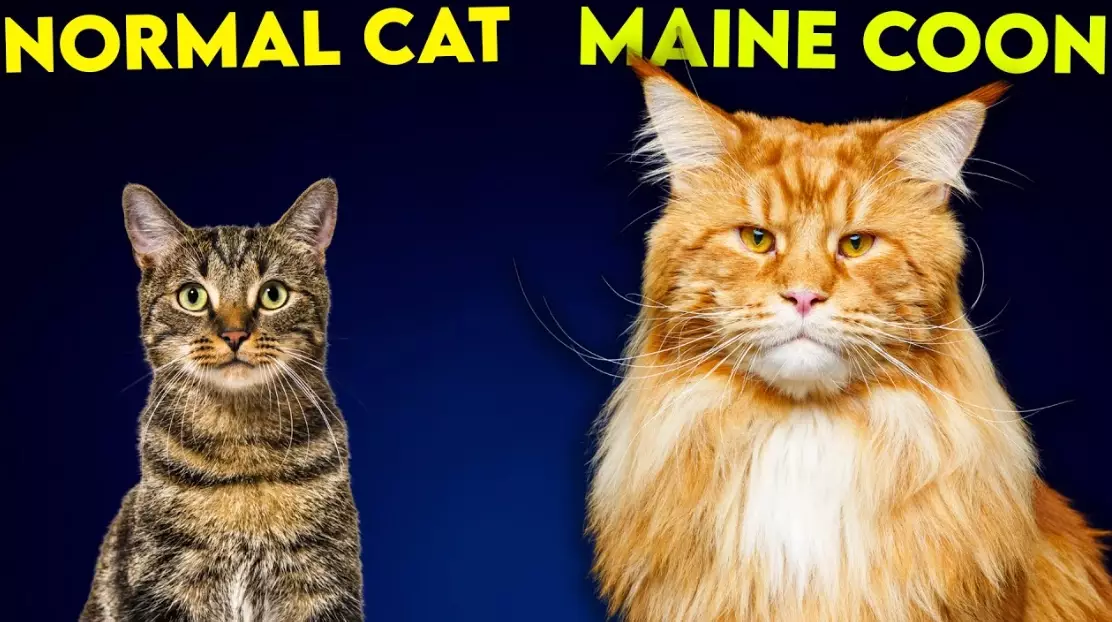
Later generations (F4 and on) are smaller. An F5 Savannah cat might weigh 10-15 pounds, which is similar to a large Maine Coon, but again, with a much leaner, taller frame.
So, if someone is trying to sell you a "huge" F5 kitten for a premium price, be skeptical. The genetics for that massive Serval size dilute with each generation.
A breeder once told me the best way to gauge potential size isn't just the generation, but to ask for the weight of the parents. A 14-pound F4 female and a 16-pound F4 male aren't likely to produce a 22-pound kitten, regardless of what the ad promises.
The Savannah Cat Personality: Not Your Average Lap Cat
Forget the aloof, independent cat stereotype. Most Savannahs shatter it. But what do you get instead?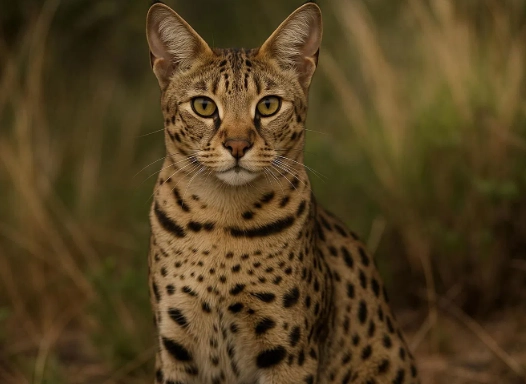
Energy Level: High. Very high. They are not couch potatoes. They need vigorous, daily play sessions—think chasing wand toys, fetch (many love it), and puzzle feeders. A bored Savannah is a destructive Savannah. They will find their own fun, and you might not like their choices (curtains, shelves, your keyboard).
Intelligence & Curiosity: Off the charts. They learn quickly, for better or worse. They can learn to open doors, cabinets, and even faucets. They are intensely curious about everything you do. Expect to have a constant supervisor in the kitchen or bathroom.
Social Bonding: They often form a very strong, dog-like bond with one or two people. They tend to follow their person from room to room. Many enjoy leash training and going for outdoor adventures. They can be chatty, with a range of chirps, meows, and hisses (not always aggressive, sometimes just communicative).
The "Wild" Side: This is more pronounced in earlier generations. They may have a stronger prey drive. Some have a fascination with water, a trait inherited from Servals who fish. They can be more reserved or cautious with strangers. The famous Serval "hop"—a vertical leap—can also appear during play.
Are they good with kids and other pets? It depends heavily on the individual cat's socialization. A well-socialized, later-generation Savannah can do fine in a busy home with respectful children and even dog siblings. Early generations? Much less predictable. I'd be very cautious.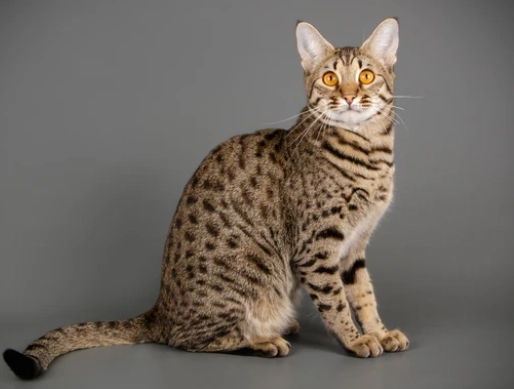
The Real Cost: Breaking Down the Savannah Cat Price
Let's talk money, because this is a major barrier. The initial purchase price is just the entry fee.
Kitten Price: This is where generation matters most.
- F1 Savannah Kittens: $12,000 - $25,000+. Yes, you read that right. The breeding is difficult, and litters are small.
- F2 Savannah Kittens: $5,000 - $12,000.
- F3 Savannah Kittens: $3,000 - $8,000.
- F4-F6 Savannah Kittens: $1,500 - $5,000.
Why such a range? Factors include the breeder's reputation, the kitten's color and markings (traditional spotted patterns are preferred), gender (males are often larger and pricier), and bloodline.
Red Flag Warning: If you see an "F1 Savannah cat for $3000," run. This is almost certainly a scam or a terribly irresponsible situation. Reputable breeders of early-generation Savannahs invest enormous time and resources. They don't sell them at a discount.
Ongoing Costs:
- Food: Many breeders and owners recommend a high-quality, high-protein diet. Some opt for raw or premium grain-free wet/dry food. This can easily cost $80-$150+ per month, especially for a large male.
- Vet Care: Exotic hybrids can sometimes face unique health questions. You need a vet who is comfortable with them. Routine care isn't necessarily more expensive, but you should budget for emergencies. Pet insurance is a very wise consideration.
- Enrichment & Catification: You will spend money on toys (which they destroy), sturdy scratching posts, and most importantly, vertical space. Savannahs love to climb and survey their domain. A large, sturdy cat tree is non-negotiable. Think about installing shelves or catwalks.
- Potential Damage: Be prepared to replace items. Their energy and curiosity can lead to knocked-over lamps, scratched furniture, and more.
Care and Lifestyle: Building a Savannah-Proof Home
Owning one of these cats is an active commitment. Here’s what daily life entails.
Diet and Nutrition
There's debate, but consensus leans towards high animal protein, low carbohydrate diets. Many Savannahs thrive on commercial raw diets or high-quality canned/wet food. Dry food alone is often not recommended, especially for males, due to potential urinary tract issues. Always follow your breeder's specific advice and consult your vet.
Exercise and Mental Stimulation
This is the biggest daily task. You can't just put out a toy mouse and call it a day.
- Interactive Play: At least two dedicated 20-30 minute sessions per day with wand toys, laser pointers (with a caution to always end on a physical catch), or fetch.
- Puzzle Feeders: Make them work for their food. It engages their brain.
- Harness Training: A fantastic outlet for their curiosity and energy. It must be done patiently and positively. Never use a harness as a restraint in an unsafe situation.
- Secure Outdoor Access: A fully enclosed "catio" is the dream scenario for a Savannah cat. It allows them to experience the outdoors safely without the risks to wildlife or themselves.
Grooming
Easy! Their short, dense coat requires minimal grooming. A weekly brush to remove loose hair is usually plenty. They generally keep themselves very clean.
Litter Box
Get a big one. A large, high-sided box is best. Some large males prefer extra-large storage totes with an entrance cut into the side. Keep it impeccably clean. They are fastidious.
Health and Lifespan: What to Expect
Generally, Savannahs are considered a robust and healthy breed. Their hybrid vigor can contribute to this. Responsible breeders screen for common domestic cat issues like Hypertrophic Cardiomyopathy (HCM) and Patellar Luxation. You should always ask for health testing documentation for the parents.
One note: Some Serval hybrids in early generations may have sensitivity to certain anesthesia and medications. It is critical to inform any vet, especially an emergency vet, of your cat's hybrid status. The American Veterinary Medical Association (AVMA) provides resources on veterinary care that can be a good starting point for finding informed care.
Their average lifespan is similar to other domestic cats: 12 to 20 years, with later-generation cats typically living on the longer end of that scale.
The Legal Maze: Can You Even Own One?
This is the most critical step before you even look at breeders. Laws vary wildly and change frequently.
- United States: It's a state-by-state, and sometimes city-by-city, patchwork. Some states (like Hawaii, Massachusetts, and Georgia) ban all generations. Others (like New York) may allow later generations (F5 and beyond) but ban earlier ones. Some have no restrictions. You must check your state and local ordinances. The USDA may have regulations for breeders of early-generation hybrids, which is a good sign a state considers them more exotic.
- Other Countries: Many are stricter. For example, owning a Savannah cat is heavily restricted or banned in Australia, New Zealand, and many parts of Canada (province-dependent). In the UK, owning an F1-F4 Savannah requires a Dangerous Wild Animal License, which is difficult to obtain.
How do you check? Start with your state's fish and wildlife or natural resources department website. Then call your city clerk's office. Do not rely on a breeder's word unless they can provide the specific statute. Your responsibility is to know the law.
Ignorance of the law is not a defense. A confiscated pet is a tragedy.
Finding a Reputable Breeder: Your Most Important Decision
This is where cutting corners leads to heartbreak, poor health, and behavioral nightmares. A good breeder is your partner.
Green Flags:
- They are registered with TICA and actively show their cats.
- They openly discuss the challenges of the breed and ask you as many questions as you ask them.
- They raise kittens in their home, with plenty of human interaction and socialization.
- They provide a detailed contract covering health guarantees, spay/neuter requirements (for pet-quality cats), and a take-back clause.
- They provide proof of health testing (HCM echocardiograms, etc.) for the parents.
- They let you visit (or do a detailed video tour) to see the conditions and the parent cats' temperament.
- They are a wealth of knowledge and offer lifelong support.
Red Flags:
- They have multiple litters available all the time, or "any generation you want."
- They pressure you to pay a deposit immediately.
- They won't let you see where the cats live ("for biosecurity" is a weak excuse for a home-based breeder).
- They sell "pet-quality" kittens unaltered.
- Their prices are significantly below market average.
- They are vague about genetics, generations, or legality.
Common Questions (The Stuff You're Actually Searching For)
Final Thoughts: Is a Savannah Cat Right for You?
Look, I love these cats. They are fascinating, beautiful, and full of personality. But my honest opinion? They are not for most people.
Think hard about this checklist:
- Do you have the significant financial resources for purchase and care?
- Do you have the time and energy for daily, intensive play and interaction?
- Do you have a secure, spacious home you can catify?
- Have you verified it is 100% legal where you live?
- Are you an experienced cat owner who understands feline behavior?
- Are you looking for a companion, not a status symbol?
If you answered yes to all of that, and you're drawn to the later generations (F4+), then you might be on the right path. Start by connecting with the Savannah community, talking to owners, and finding a stellar breeder. The journey to bringing a Savannah cat into your home should be slow, careful, and full of research.
If you hesitated on any of those points, especially the time, money, or legality, listen to that hesitation. There are countless wonderful, energetic domestic cat breeds and rescues that would thrive in an active home without the extreme cost or legal complications.
The allure of the Savannah cat is powerful. Just make sure your decision is powered by reality, not just the dream of a spotted shadow following you around the house.