In This Guide
- From Temple Guardians to Sofa Supervisors: A Royal History
- More Than Just a Pretty Face: Appearance & Breed Standards
- The Personality: Not a Cat, But a Small, Blue-Eyed Person in a Fur Suit
- Daily Life: The Siamese Cat Care Manual
- Health & Lifespan: What to Watch For
- Bringing One Home: Breeder, Rescue, or Kitten?
- Your Siamese Cat Questions, Answered
- The Final Word: Is a Siamese Cat Right for You?
You've seen the pictures. Those stunning blue eyes that look like they hold ancient secrets. That sleek, elegant body in shades of cream and coffee. Maybe you've heard the stories too – about how chatty they are, how smart, how they bond like superglue to one person. The Siamese cat is one of the most recognizable and beloved breeds in the world, and for good reason. But here's the thing no Instagram reel fully prepares you for: living with a Siamese is a full-on, immersive experience. It's less like owning a pet and more like gaining a tiny, furry, extremely opinionated roommate who expects constant conversation and has zero concept of personal space (in the best way possible).
I remember when my friend brought home her first Siamese kitten, Mochi. She was braced for the beauty, but not for the 6 AM operatic performances dedicated to the profound emptiness of the food bowl (which still had food in it, by the way). She wasn't prepared for the cabinet doors he learned to open, or how he'd follow her from room to room, commenting on her life choices. She loves him to bits, but she'd be the first to tell you: a Siamese cat isn't for everyone.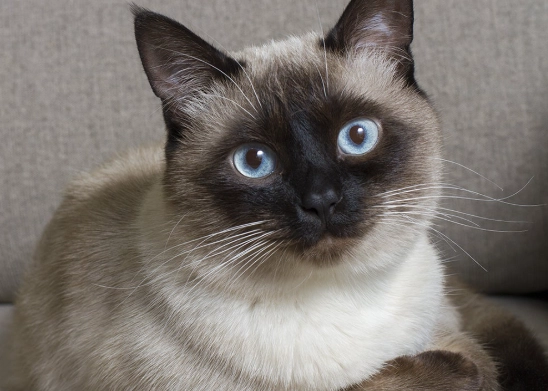
This guide isn't just a list of facts. It's the deep dive I wish I'd had before I got my own Siamese, Luna. We're going to peel back the layers of this incredible breed – from their regal history in Thai palaces to the very real, sometimes messy, always rewarding reality of sharing your home with one. We'll cover what you need to know about their health, their demanding social needs, their grooming, and that legendary personality. By the end, you'll know if your home and heart are ready for a Siamese cat.
From Temple Guardians to Sofa Supervisors: A Royal History
Let's start at the beginning, because it explains a lot about their attitude. The Siamese cat isn't some modern designer breed. Their history is steeped in mystery and reverence. Originating from Siam (now Thailand), they were treasured by royalty and Buddhist monks. Manuscripts like the Tamra Maew (“Cat-Book Poems”) from the Ayutthaya Kingdom (1351–1767 AD) depict pointed cats resembling the Siamese. They weren't just pets; they were considered guardians. Legend says they protected temples and royal palaces, and their souls were believed to receive privileged people in the afterlife. Some tales even claim they were tasked with guarding precious royal vases, and their crossed eyes and kinked tails (once common traits) came from staring at the vases too intently or wrapping their tails around them for safekeeping.
How did they get from Thai temples to Western living rooms? In the late 1800s, they became diplomatic gifts. The first recorded Siamese cat to reach the West was a gift from the King of Siam to the British Consul-General in Bangkok, arriving in England in 1884. They caused an absolute sensation. Their exotic looks were a stark contrast to the stockier British domestic cats. The Cat Fanciers' Association (CFA) recognized the Siamese as one of its founding breeds in 1906. You can see some of the earliest breed standards and historical context on the CFA website, which is a fantastic resource for pedigree breed history.
The look of the Siamese has changed dramatically over the decades. The early imports, sometimes called “Traditional” or “Applehead” Siamese, had a more rounded head and a stockier, less extreme body. From the mid-20th century, selective breeding in the West emphasized a more slender, elongated, and angular look – the “Modern” Siamese with the wedge-shaped head and tubular body we often see today. This shift is a point of contention among fans. Some adore the sleek modern lines, while others, myself included, have a soft spot for the slightly sturdier, less extreme classic look. Both are purebred Siamese cats, just different interpretations of the standard.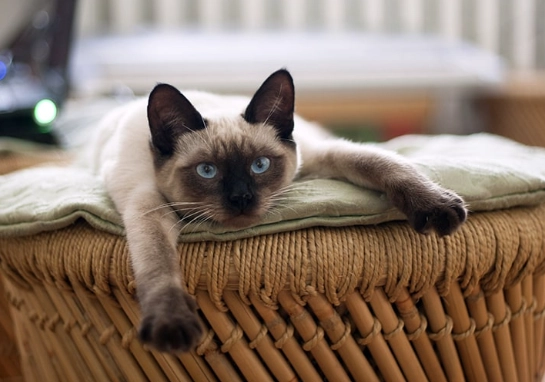
Think about that: your potential couch companion has ancestors who lounged in palaces. It explains the inherent dignity, doesn't it?
More Than Just a Pretty Face: Appearance & Breed Standards
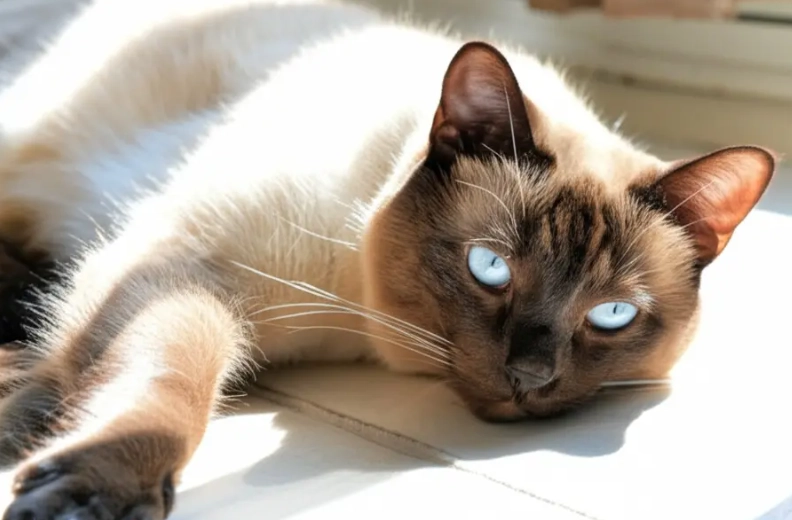
Everyone knows the classic look: a pale body (called the “points”) on the ears, face mask, paws, and tail. But there's more to it. That iconic color pattern is the result of a temperature-sensitive albinism gene. The cooler parts of the body develop the darker pigment. That's why Siamese kittens are born all white – they've been in the uniform warmth of the womb. Their points develop in the first few weeks of life. Interesting side note: if a Siamese lives in a very cold climate, their entire body coat might darken!
While seal point (creamy body with deep brown-black points) is the most famous, Siamese cats come in a beautiful array of colors accepted by major registries like CFA and The International Cat Association (TICA).
| Point Color | Body Color | Point Color (Description) | Nose Leather & Paw Pads |
|---|---|---|---|
| Seal Point | Pale fawn to cream | Deep seal brown | Dark brown |
| Chocolate Point | Ivory | Milk chocolate brown | Cinnamon-pink |
| Blue Point | Bluish white, glacial white | Slate blue | Slate blue |
| Lilac Point | Magnolia white (glacial white with pinkish tone) | Frosty grey with pinkish tone | Lavender-pink |
Beyond color, the modern Siamese cat is a study in elegant angles. The breed standard calls for a long, tubular, and muscular body (they're surprisingly heavy for their size – all muscle). The head is a long, tapering wedge from the nose to the wide-set ears. The eyes are always a deep, vivid blue, almond-shaped and slanted towards the nose. The legs are long and slim, with the hind legs slightly higher than the front, and the tail is long, thin, and tapering like a whip.
I'll be honest, the ultra-slim “modern” look isn't my personal favorite. It can sometimes veer into looking too delicate or extreme. I prefer the moderate, classic type that still has a hint of substance. But there's no denying the grace of any Siamese in motion.
The Personality: Not a Cat, But a Small, Blue-Eyed Person in a Fur Suit
This is the heart of it. The Siamese cat personality is legendary, and for once, the legends are almost all true. If you want an aloof, independent cat that ignores you for days, stop reading now. A Siamese will be up in your business, in your lap, on your keyboard, and in your conversations.
They Talk. And Talk. And Talk.
The Siamese voice is not a delicate meow. It's a loud, low-pitched, raspy yowl often described as sounding like a human baby crying. They use it constantly. They comment on everything. “You're home!” “I'm hungry!” “Why did you close that door?” “The sunbeam moved!” “I'm bored!” It's a running, often hilarious, sometimes frustrating monologue. You don't just feed a Siamese; you have a negotiation about the menu. They are famously one of the most vocal cat breeds. If you need quiet or have thin walls, this is a serious consideration.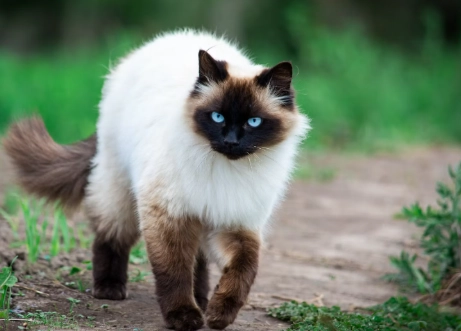
Brain the Size of a Planet
Siamese cats are scarily intelligent. They learn tricks easily (fetch is a common favorite), but more importantly, they learn how to manipulate their environment – and you. They figure out doorknobs, cabinet latches, and faucets. Puzzle toys aren't a luxury; they're a necessity to prevent boredom-induced mischief. A bored Siamese is a destructive Siamese. They need mental stimulation just as much as physical play.
The Velcro Cat Phenomenon
Their loyalty is profound and often singles out one person in the household as “theirs.” They will follow you everywhere. To the bathroom? Of course. To the kitchen? Obviously. They want to be involved in every aspect of your life. This intense bond means they are prone to separation anxiety. Leaving a Siamese alone for long, regular periods is a recipe for a very unhappy, vocal, and potentially destructive cat. They often do best with a companion – another cat (even another Siamese for maximum chaos) or a dog they can befriend.
The Good Side: Affectionate, loyal, entertaining, playful, deeply bonded, communicative, intelligent.
The Challenging Side: Demanding, prone to anxiety if left alone, destructively bored, loud, can be clingy, sometimes too smart for their own good.
Daily Life: The Siamese Cat Care Manual
Okay, so you're prepared for the personality. How do you actually care for this magnificent creature?
Diet & Nutrition: Fuel for the Furry Dynamo
Siamese cats are active and muscular. They need high-quality protein. Look for cat foods where a named meat (chicken, salmon, etc.) is the first ingredient. Be mindful of portions; they love food and can overeat if allowed. I made the mistake of free-feeding Luna for a while, and she started developing a little pouch. Now we're on strict meal times, which she announces loudly 20 minutes in advance. Many Siamese also seem to have sensitive stomachs. A sudden diet change can lead to upset. Transition food slowly over 7-10 days.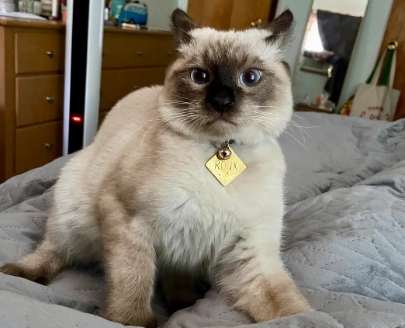
Watch the Weight: Because of their slender build, even a pound of extra weight on a Siamese cat is significant and puts stress on their frame. Regular weigh-ins and portion control are key. Your vet can help you determine their ideal weight.
Grooming: Easier Than You Think
Here's a break: their short, fine, silky coat is low-maintenance. A weekly brush with a rubber grooming mitt or fine-toothed comb is plenty to remove loose hair and distribute skin oils. It's more of a bonding ritual than a necessity. They generally keep themselves very clean. Nail trimming should be done every 1-2 weeks, and dental care is crucial (like for all cats). Start both early so they get used to it.
Exercise & Enrichment: Non-Negotiable
This is critical. A tired Siamese is a happy (and quiet-ish) Siamese.
- Interactive Play: Daily, vigorous play sessions. Wand toys, laser pointers (always end with a physical toy they can “catch”), and chasing games. Think 15-20 minutes, twice a day.
- Puzzle Feeders: Don't just put food in a bowl. Make them work for it. This engages their brain and slows down eating.
- Cat Trees & High Places: Siamese love to climb and survey their kingdom. Tall, sturdy cat trees by windows are perfect.
- Clicker Training: They excel at this. Teaching tricks like “sit,” “high five,” or “spin” is brilliant mental exercise.
- Harness Training: Some Siamese cats can be trained to walk on a harness, providing safe outdoor stimulation. This requires immense patience.
Health & Lifespan: What to Watch For
With good care, a Siamese cat can live a long life – often 15 to 20 years, sometimes longer. They are generally healthy, but like all purebreds, they have predispositions to certain genetic conditions. Being aware is part of responsible ownership.
- Progressive Retinal Atrophy (PRA): A group of genetic diseases that cause the degeneration of the retina, leading to blindness. Reputable breeders test their breeding stock for this. The Orthopedic Foundation for Animals (OFA) maintains a database for feline genetic health, including PRA testing.
- Amyloidosis: A disease where an abnormal protein (amyloid) is deposited in organs, particularly the liver in Siamese cats. It can lead to liver failure. There is no simple genetic test, and it's more common in some lines. Ask your breeder about the health history of their lines.
- Asthma/Bronchial Disease: Siamese seem to be overrepresented in cases of feline asthma. Symptoms include coughing, wheezing, and labored breathing. It's manageable with medication from your vet.
- Dental Issues: They can be prone to gingivitis and periodontal disease. Regular teeth brushing and vet dental check-ups are vital.
- Crossed Eyes & Kinked Tails: Once common traits due to the same gene that creates the points, these are now considered faults in the show ring. They don't affect health or quality of life. My friend's cat has the tiniest kink at the end of his tail – it's just a cute quirk.
Regular vet check-ups (at least annually) are essential. Keep them indoors to protect them from cars, diseases, and other animals. The American Veterinary Medical Association (AVMA) has great resources on general pet care and preventive health that apply perfectly to your Siamese.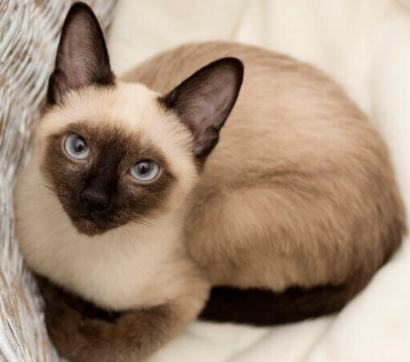
Bringing One Home: Breeder, Rescue, or Kitten?
You're convinced. How do you find your Siamese?
Choosing a Reputable Breeder
This is the route for a predictable, healthy kitten with known parentage and early socialization.
- They Ask YOU Questions: A good breeder will grill you about your home, lifestyle, and why you want a Siamese. They want the best for their kittens.
- Health Testing: They should freely discuss genetic testing done on the parents (for PRA, etc.) and provide documentation.
- They Raise Kittens In-Home: Kittens should be raised underfoot, socialized with people, sounds, and handling.
- Contract & Guarantee: They provide a contract that includes a health guarantee and requires you to spay/neuter unless sold for breeding (which is rare for pet-quality kittens).
- They Are a Resource for Life: They welcome your questions, before and after you take the kitten home.
Be wary of anyone who has multiple litters always available, sells kittens under 12-14 weeks old, or won't let you visit the premises. Check with the CFA or TICA for breeder referrals.
Considering Rescue or Adoption
Adult Siamese cats often end up in shelters or breed-specific rescues. Why? Sometimes their intense personality is too much for an unprepared owner. Sometimes life circumstances change. Adopting an adult is a wonderful option. You skip the kitten crazies, their personality is fully formed, and you're giving a second chance. Breed-specific rescues like those listed on Petfinder or through the Siamese Cat Rescue Center often have cats of all ages. You might find a perfect, chatty companion who needs you.
Kitten or Adult? Kittens are adorable and you shape their upbringing, but they are a tornado of energy. An adult's personality is known, and what you see is what you get. For a first-time Siamese owner, a slightly older cat (1-3 years) can be a fantastic, slightly less intense introduction to the breed.
Your Siamese Cat Questions, Answered
The Final Word: Is a Siamese Cat Right for You?
Let's be brutally honest. A Siamese cat is a high-input, high-reward pet.
Choose a Siamese if: You want a deeply interactive companion, not just decor. You're home a lot or can provide a companion. You enjoy conversation (even one-sided). You have the time and energy for daily play and mental stimulation. You can appreciate a cat with a big personality and occasional demands. You're ready for a 15+ year commitment to a creature who will own a piece of your soul.
Think twice if: You crave a quiet, serene home. You travel frequently or work very long hours without pet care. You want a low-maintenance, independent pet. You're not prepared for potential vocal protests or clever mischief.
For the right person, living with a Siamese cat is an unparalleled joy. They're hilarious, affectionate, loyal, and endlessly entertaining. They'll make you laugh daily, drive you slightly crazy sometimes, and love you with an intensity that's humbling. They're not just cats; they're Siamese. And once you've shared your life with one, no other cat will ever quite compare.
Do your research. Meet some in person if you can. Talk to breeders and rescues. If your lifestyle aligns, take the plunge. That tiny, loud, brilliant, blue-eyed roommate might just be the best decision you ever make.