Quick Guide to Oriental Cats
- What Exactly Is an Oriental Cat? Untangling the Siamese Connection
- The Oriental Cat Personality: More Than Just "Talkative"
- A Body Built for Speed: The Oriental Cat's Physical Traits
- Keeping Your Oriental Cat Healthy: What to Watch For
- The Day-to-Day: Caring for Your Oriental Cat
- Finding Your Oriental Cat: Breeder vs. Rescue
- Oriental Cat FAQs: Answering Your Real Questions
- Final Thoughts: Is an Oriental Cat Right for You?
Let's be honest, you probably stumbled upon a picture of an Oriental cat online. Those enormous ears, that sleek, runway-model body, eyes full of intelligent mischief. It's a look that stops you mid-scroll. I get it. I was you, about eight years ago. I saw one, did a double-take, and fell headfirst into a rabbit hole of research. Now, after living with my own chatty, velcro-like Oriental Shorthair for nearly a decade, I'm here to give you the real story—not just the glossy brochure version.
An Oriental cat isn't just a pet; it's a lifestyle commitment. They're the extroverts of the cat world, the ones who never got the memo about feline aloofness. This guide is for anyone seriously considering welcoming one of these incredible, demanding creatures into their home. We'll cover everything: the stunning good looks, the opera-worthy vocalizations, the specific health stuff you need to watch, and the daily reality of life with a cat that thinks it's part parrot, part dog, and part toddler.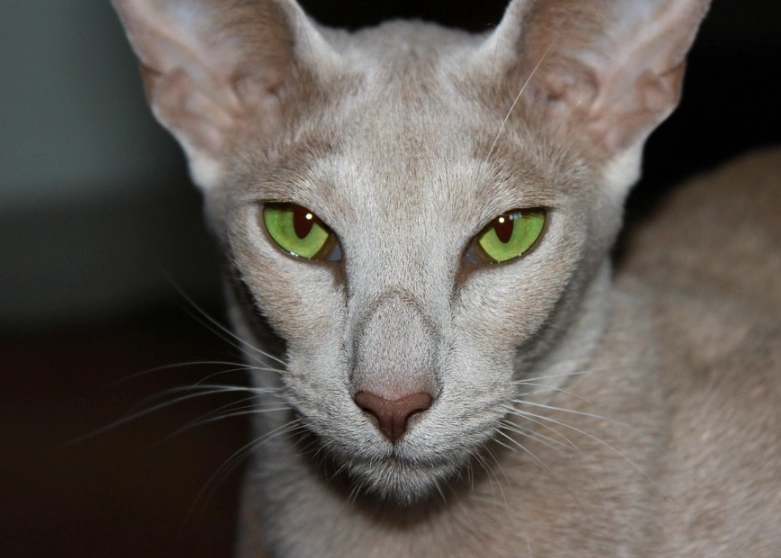
What Exactly Is an Oriental Cat? Untangling the Siamese Connection
This is where it gets interesting, and a bit confusing. People often use "Oriental" and "Siamese" interchangeably, but they're not quite the same. Think of them as very close cousins from the same immediate family.
The modern Oriental cat breed was essentially developed because breeders wanted a cat with all the personality and body type of a Siamese, but wrapped in a much broader palette of colors and patterns. While the Siamese is famous for its specific color points (darker face, ears, paws, and tail on a lighter body), the Oriental says, "Why limit ourselves?"
So, in the mid-20th century, breeders began crossing Siamese cats with other shorthaired breeds (like the Russian Blue and Abyssinian) and even some domestic shorthairs. The goal was to keep that iconic sleek, tubular body and outgoing personality, but introduce a whole rainbow of solid colors, tabbies, torties, and smokes. The Cat Fanciers' Association (CFA) officially recognized the Oriental Shorthair as its own distinct breed in 1977. You can read their detailed breed standard on the CFA website, which is a great resource for understanding the official blueprint of the breed.
The key takeaway? All Oriental cats share the same foundational DNA and temperament as the Siamese. The primary difference is the coat. If it has the color-point pattern, it's registered as a Siamese. If it has any other of the hundreds of accepted colors and patterns, it's an Oriental Shorthair (or Longhair). It's a distinction based almost entirely on fur, not personality.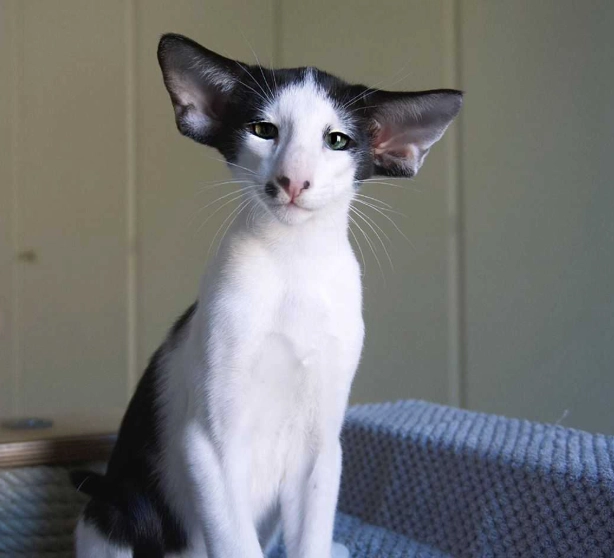
The Two Flavors: Shorthair vs. Longhair
Yes, there's also an Oriental Longhair! Sometimes called the "Javanese" in some registries, the Longhair variety has a medium-length, silky coat that lies flat against the body without a woolly undercoat. It shares the exact same personality and body structure as the Shorthair. The grooming needs are a bit higher—a couple of brushes a week to prevent mats—but they are not as high-maintenance as a Persian. Choosing between the two really comes down to your aesthetic preference for that elegant, flowing tail versus the patent-leather sleek look of the shorthair.
The Oriental Cat Personality: More Than Just "Talkative"
Everyone knows they're vocal. But describing an Oriental cat as merely "talkative" is like describing the ocean as "damp." It's a profound understatement.
They don't just meow. They comment. They narrate. They have opinions on your cooking, your choice of television show, the speed at which you're filling their food bowl, and the existential dilemma of a closed door. Their voice is often louder and more resonant than other cats', a distinctive, low-pitched yowl or a surprisingly soft, chirpy trill. They use this voice to communicate specific needs, yes, but also just to... chat. My own cat, Felix, has a different sound for "I'm hungry," "You're home!," "Why did you stop petting me?," and "I have successfully murdered this toy mouse."
But the personality goes far beyond voice. These are supremely intelligent, curious, and active cats. They get bored easily. A bored Oriental cat is a destructive Oriental cat. They will find ways to entertain themselves, which usually involves opening cabinet doors, knocking things off shelves, or redecorating your living room with toilet paper.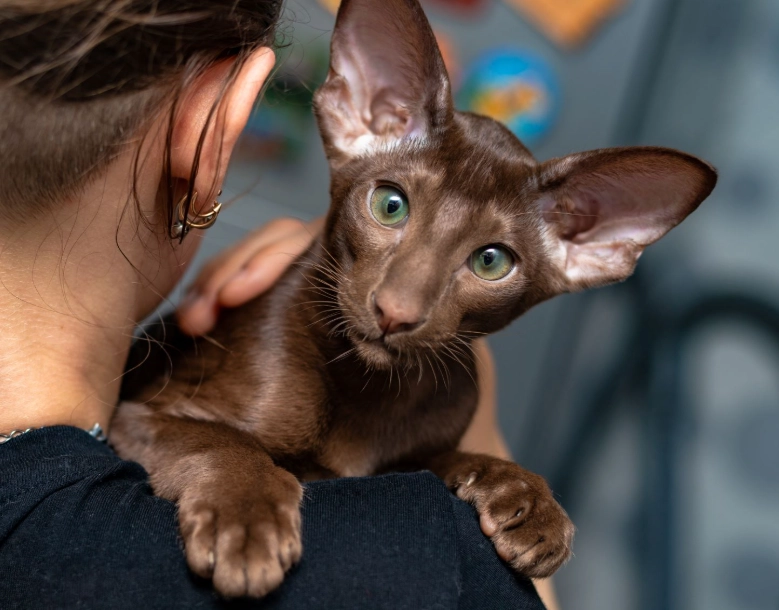
They form intense, dog-like bonds with their people. They are not casual roommates; they are involved participants in your life. They will follow you from room to room, supervise your bathroom activities, and try to help you type on your laptop. This isn't just affection; it's a deep-seated need for companionship and mental engagement. They often do poorly if left alone for long, regular hours. A pair of Orientals can keep each other company, which is something many reputable breeders will suggest.
The Good Stuff (The Pros)
- Unmatched Companionship: You will never feel alone. They are loyal, loving, and deeply attached.
- Endlessly Entertaining: Their antics, intelligence, and vocal dialog are a constant source of amusement.
- Playful into Adulthood: They retain their kitten-like zest for play well into their senior years.
- Often Good with Other Pets/Kids: Their social nature means they usually integrate well into active families, provided they are respected.
- Minimal Shedding (Shorthair): Their short, fine coat doesn't shed much and is easy to care for.
The Real Talk (The Cons)
- The Volume: The constant vocalization can be overwhelming for some people and is not ideal for apartment living with thin walls.
- Demands Attention: They can be needy and may develop behavioral issues if ignored or under-stimulated.
- Prone to Mischief: High intelligence + boredom = trouble. You must cat-proof your home.
- Potential for Separation Anxiety: They truly hate being alone for extended periods.
- Can be Picky/Eaters: Some lines are prone to being finicky about food textures and brands.
A Body Built for Speed: The Oriental Cat's Physical Traits
Their look is unmistakable. This is a cat built on long, elegant lines—the feline equivalent of a sports car.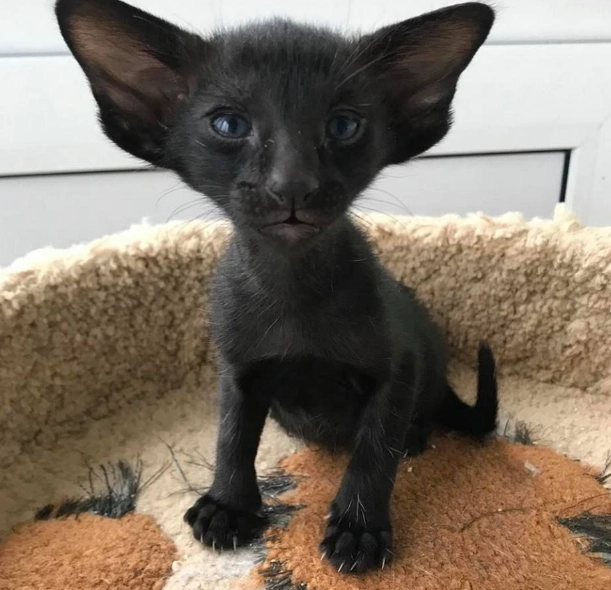
| Feature | Description | What It Means for You |
|---|---|---|
| Body | Long, tubular, and slender. Muscular but fine-boned. They are surprisingly heavy for their size—"dense" is a good word. | They feel solid and muscular in your arms, not fragile. They can squeeze into tight spaces. |
| Head | A long, wedge-shaped head that forms a perfect triangle from the nose to the tips of the ears. Straight profile. | Gives them their distinctive, alert expression. The wedge shape is a key breed hallmark. |
| Ears | Large, wide at the base, and pointed. They are often described as "bat-like" and are disproportionately large for the head. | Their most iconic feature. Makes them excellent listeners (though they may choose to ignore you). |
| Eyes | Almond-shaped, slanted towards the nose. Color is typically a vivid, piercing green. White Orientals can have blue or odd eyes. | Their gaze is intense and intelligent. They watch everything. |
| Legs & Paws | Long, slender legs. Hind legs are slightly higher than the front. Small, dainty, oval paws. | Makes them incredible jumpers. Counters, tops of doors, and high shelves are all fair game. |
| Tail | Long, thin, and tapering to a fine point, often described as a "whip" tail. | They carry it proudly, often straight up like a flagpole when happy. |
| Coat (Shorthair) | Short, fine, glossy, and lying close to the body. No undercoat. It has a satin-like texture. | Very easy grooming. A weekly wipe with a chamois cloth brings out the shine. Minimal shedding. |
One thing that surprises new owners is their weight. They look incredibly light and delicate, but when you pick one up, they are solid and muscular. It's all lean muscle on that long frame.
Keeping Your Oriental Cat Healthy: What to Watch For
Generally, Orientals are a healthy, robust breed with a lifespan of 12-15 years, often longer. However, because they share so much genetics with the Siamese, they are prone to some of the same hereditary conditions. Being an informed owner is your best defense.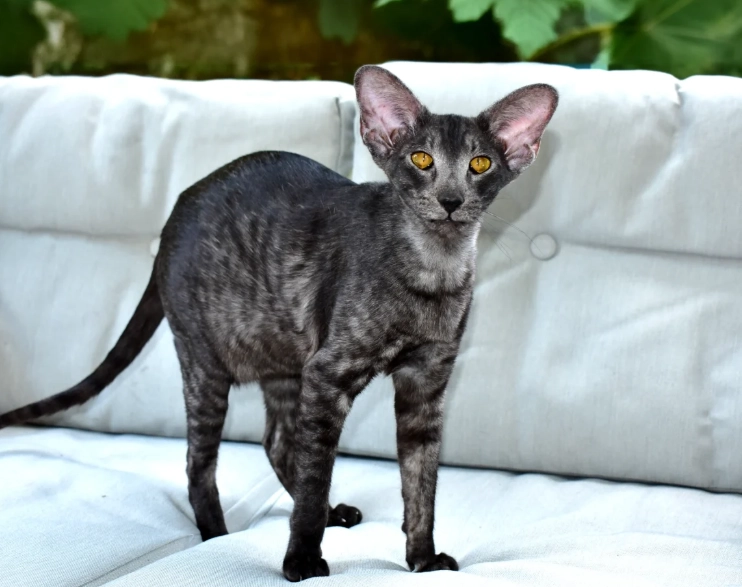
Common Health Considerations
- Amyloidosis: This is a serious disease where an abnormal protein (amyloid) deposits in organs, particularly the liver in Oriental-type cats. It can lead to liver failure. Reputable breeders screen for this. There is no simple genetic test yet, so knowing the medical history of the parents and grandparents is crucial.
- Progressive Retinal Atrophy (PRA): A group of genetic diseases that cause the degeneration of the retina, eventually leading to blindness. A genetic test exists, and responsible breeders test for it. Ask to see the results.
- Cardiac Issues: Some lines may have a predisposition to heart conditions like dilated cardiomyopathy (DCM) or congenital heart defects. A vet can listen for murmurs during check-ups.
- Dental Issues: They can be prone to gingivitis and periodontal disease. Establishing a teeth-brushing routine early is a fantastic idea, even if they hate it at first.
- Respiratory Issues: Their fine bone structure extends to their skulls, and some can be prone to minor upper respiratory infections or snuffly breathing. It's usually not serious but something to note.
- Crossed Eyes & Kinked Tails: These were once common in early Siamese/Oriental lines. Modern breeding has mostly eliminated these traits from quality lines, but you might still see the occasional kink at the end of a tail. It's purely cosmetic and doesn't affect health.
My Felix had a scare with dental issues early on. Despite high-quality dry food, he developed gingivitis by age three. It was a wake-up call. We had to get a professional cleaning and now I use dental gels and specific treats. It's an extra chore, but it's part of the deal.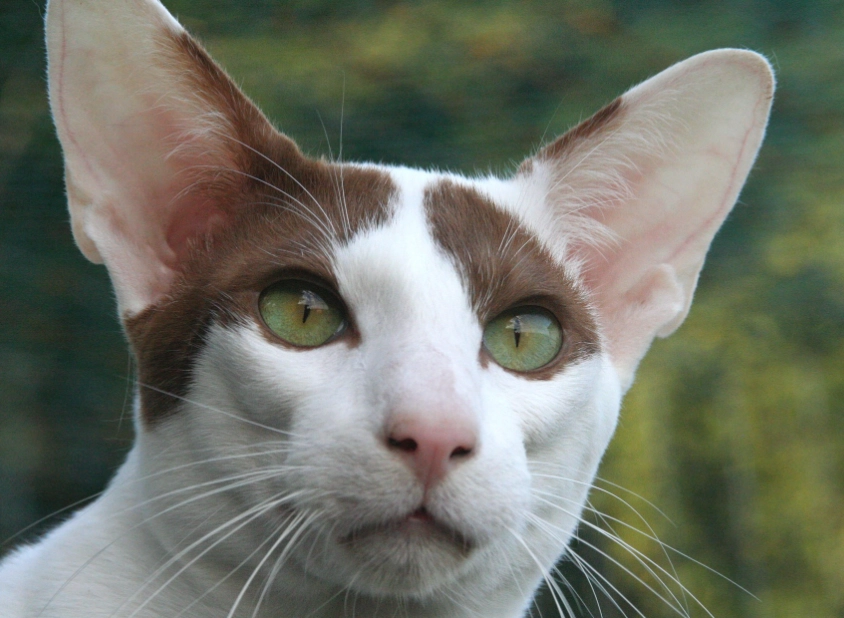
The Day-to-Day: Caring for Your Oriental Cat
Owning an Oriental cat is active, not passive. Their care goes beyond food, water, and a litter box.
Diet and Nutrition
They have high metabolisms to fuel their energy. A high-quality diet rich in animal protein is essential. Many owners find their Orientals do best on a mix of wet and dry food. The wet food helps with hydration (they aren't always great drinkers), and the dry food can help with dental health. Be prepared for finickiness. Felix went through a phase where he would only eat pâté-style food with gravy, and it had to be a specific brand served at room temperature. It was maddening.
Exercise and Enrichment (This is Non-Negotiable)
This is the most important part of their care. A tired Oriental is a happy, well-behaved Oriental.
- Interactive Play: At least two dedicated 15-20 minute play sessions per day. Use wand toys, laser pointers (always end on a physical toy they can "catch"), and toys that mimic prey. They love to jump and chase.
- Puzzle Feeders: Don't just put food in a bowl. Use puzzle toys, snuffle mats, or hide kibble around the house to make them work for it. It engages their brain.
- Vertical Space: They are climbers. A tall, sturdy cat tree is a must. Consider wall-mounted shelves (often called a "cat highway") to give them safe high places to survey their kingdom.
- Clicker Training: Their intelligence makes them excellent candidates for training. Teaching them tricks like "sit," "high five," or to come when called provides mental stimulation and strengthens your bond.
Grooming
For the Shorthair, it's blissfully simple. A weekly brush with a soft rubber grooming mitt or a fine-bristled brush is plenty to remove loose hairs and distribute skin oils. It's more of a bonding activity than a necessity. Wipe them down with a damp chamois cloth for an incredible shine. Trim nails every few weeks and check ears for wax.
Finding Your Oriental Cat: Breeder vs. Rescue
This is a big decision with ethical and financial implications.
Going Through a Reputable Breeder
Expect to pay anywhere from $800 to $2,500+ for a pet-quality Oriental kitten from a show breeder. Why the cost? It covers the extensive health testing, high-quality care for the queen and kittens, vaccinations, microchipping, and the breeder's expertise.
Red Flags in a Breeder: They have multiple litters available at all times. They won't let you visit their home or see the mother cat. They pressure you to pay online without meeting. They don't ask you any questions about your home life. They sell kittens before 12-14 weeks of age. They don't provide health guarantees or vaccination records.
Green Flags: They are registered with a major cat association (CFA, TICA). They ask you detailed questions. They provide health test results for the parents. They have a contract requiring spay/neuter and possibly returning the cat to them if you can't keep it. They are a resource for you for the cat's entire life.
Considering Rescue or Adoption
Purebred Orientals do occasionally end up in shelters or breed-specific rescues. Organizations like Petfinder allow you to search for specific breeds. An adult cat from a rescue is a wonderful option. You often get a clearer sense of their personality, they are usually already vetted and spayed/neutered, and you're giving a home to a cat in need. The adoption fee is significantly lower ($100-$300). The challenge is finding one, as they are less common in rescues.
Oriental Cat FAQs: Answering Your Real Questions
Final Thoughts: Is an Oriental Cat Right for You?
Living with an Oriental cat is a unique experience. It's loud, it's busy, it's sometimes frustrating when they're yowling at a closed door at 3 AM. But it's also filled with more laughter, conversation, and sheer, joyful companionship than I ever thought possible with a pet.
They're not for everyone. You need to be honest with yourself. Do you have the time, energy, and patience for a supremely social, intelligent, and vocal creature? Can you provide the play and mental stimulation? Can you handle the noise?
If you answered yes, then you might just be ready for one of the most rewarding relationships of your life. An Oriental cat won't just share your home; they will insist on being at the center of your world. And if you let them, they'll make it infinitely brighter, noisier, and more interesting.
Do your homework. Find that ethical breeder or check rescues. Prepare your home. And get ready for a wild, wonderful ride.