In This Article
- Unraveling the Mystique: Origin and History
- The Blueprint: Physical Characteristics & Breed Standard
- The Russian Blue Personality: Shy or Social Butterfly?
- Living with a Russian Blue: Care, Health, and Daily Life
- Is a Russian Blue Cat Right for You? The Decision Checklist
- Finding Your Russian Blue: Adoption vs. Reputable Breeder
- Russian Blue Cat FAQ: Your Top Questions Answered
- Final Thoughts: The Velvet Shadow
You know how some cats just have that look? The Russian Blue cat has it in spades. It's not just the stunning silver-blue coat that seems to glow, or those almost unnervingly bright green eyes. It's an aura. A quiet, observant intelligence that makes you wonder who's really in charge of the household. I remember the first time I met one at a friend's place; it didn't come barreling over for attention like my tabby would. It sat on the bookshelf, watching the whole room with this serene, appraising gaze. After about twenty minutes, it gracefully hopped down and presented its head for a single, precise scratch. Then it was gone. I was utterly charmed.
But behind that aristocratic exterior lies a cat that's surprisingly goofy with its family, famously gentle, and wrapped in a layer of mystery (and allegedly hypoallergenic fur). If you're considering welcoming one of these elegant creatures into your home, or if you're just fascinated by them, there's a lot more to unpack than just a pretty face. Let's get into the real, nitty-gritty details of what makes a Russian Blue domestic cat tick, warts and all.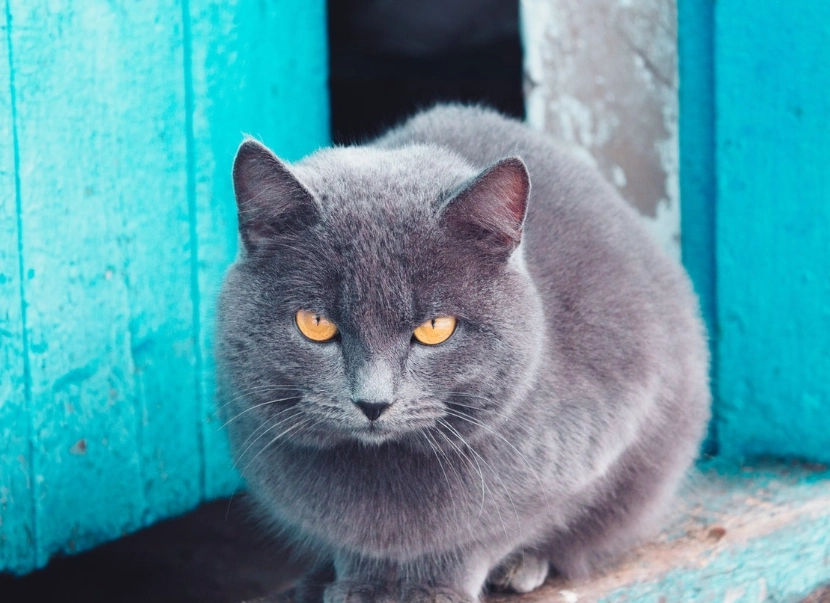
Unraveling the Mystique: Origin and History
Where did this cat come from? The truth is, we're not 100% sure, and that's part of the fun. The most popular tale, of course, is that they originated in the port of Arkhangelsk in Russia (hence the name Archangel Blue). Sailors supposedly brought them to Britain and Northern Europe in the 1860s. They were shown alongside other blue cats initially, but their distinct look—denser coat, greener eyes—set them apart.
World War II nearly wiped the breed out. Post-war, breeders in Britain and Scandinavia worked to revive it, sometimes outcrossing with Siamese cats. This is actually why you might hear about different "types": a heavier, plush British/Russian type and a slightly more slender, elegant Scandinavian type. Modern breeding, guided by organizations like The International Cat Association (TICA) and the Cat Fanciers' Association (CFA), has focused on standardizing that classic, medium-bodied look with the iconic double coat.
The Blueprint: Physical Characteristics & Breed Standard
So, what exactly are you looking at when you see a purebred Russian Blue? It's a specific package.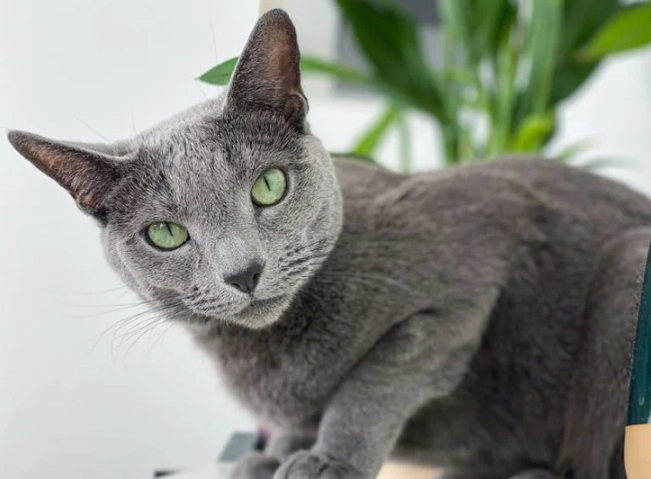
The Coat: More Than Just "Gray"
Calling it gray is a cardinal sin. It's a clear, even blue with distinct silver tipping. This silver tipping is what creates that gorgeous shimmering effect, especially in sunlight. The coat is short, but incredibly dense and plush, standing out from the body because of the thick undercoat. Petting one feels like running your hand through velvet or plush carpet. This double coat was essential for surviving cold Russian winters, and it sheds—let's be real, all cats shed—but perhaps less noticeably than some because the hairs are so fine and get trapped in the dense undercoat.
Eyes, Ears Body: The Full Picture
Those eyes are a journey. Kittens are born with yellow eyes, which gradually turn green as they mature. The green continues to deepen with age, and the pupils can sometimes have a vanishing act against the vivid green iris. It's quite striking.
The body is neither stocky nor rangy. It's a foreign type: medium-sized, elegant, and muscular without being bulky. The legs are long and fine-boned, ending in neat, oval paws. The tail is long but in proportion, tapering to a point.
The Russian Blue Personality: Shy or Social Butterfly?
This is where the breed truly shines, and also where a lot of misinformation floats around. Let's clear the air.
The classic description is "reserved with strangers, devoted to family." And that's pretty accurate. A Russian Blue domestic cat isn't likely to be the life of the party when you have guests over. They often retreat to a quiet spot until the coast is clear. But with their people? It's a different story.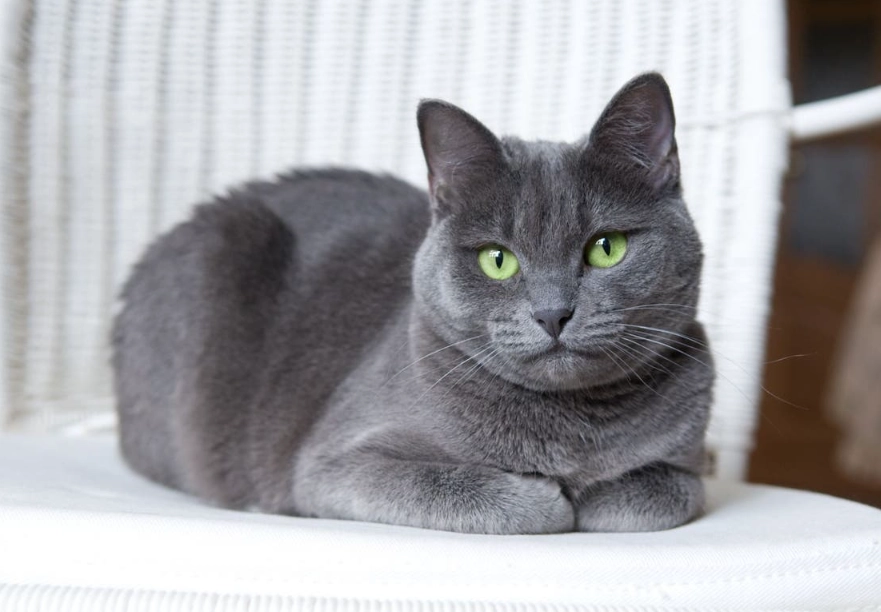
They form incredibly strong, almost dog-like bonds with their favorite human(s). They'll follow you from room to room, not necessarily demanding lap time (though many enjoy it), but just to be near you. They're observers. They're also known for being exceptionally gentle and patient, which makes them a fantastic choice for families with respectful children. I've seen them tolerate the gentle, clumsy pats of a toddler with more patience than I could muster.
They're playful, but not destructively so. They love puzzle toys, feather wands, and games that engage their sharp minds. And yes, they are intelligent. You can teach them tricks—fetch, high-five, even using a human toilet with the right training kit. They learn routines quickly and can even be a bit sensitive to changes in the household schedule.
One slight negative? That sensitivity and devotion can tip over into separation anxiety if they're left alone for very long periods regularly. They really thrive on companionship and routine.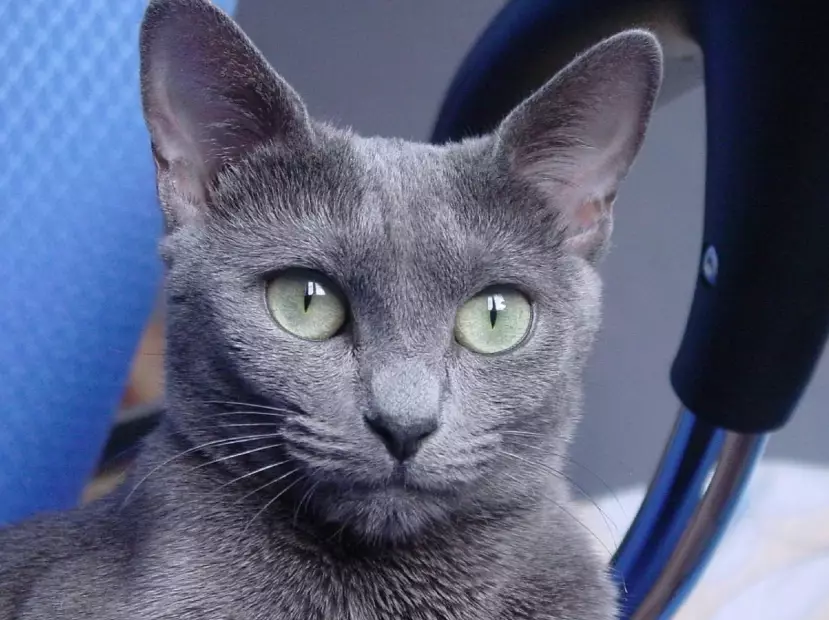
Living with a Russian Blue: Care, Health, and Daily Life
Okay, so you're smitten. What does life actually look like with one of these cats?
Grooming Needs: Low Maintenance?
That beautiful coat does require a bit of attention. The dense undercoat can mat if neglected, though it's less common than in long-haired breeds. A weekly brush with a fine-toothed metal comb or a bristle brush is ideal. This removes dead hair, distributes skin oils, and gives you a chance to bond. They generally enjoy being groomed because it feels good on that plush coat.
Bathing is rarely needed unless they get into something messy. Their fastidious nature means they keep themselves very clean.
Nutrition and Diet
They're not usually picky eaters, but they do best on high-quality cat food that's rich in protein. Because they are a muscular, active breed, they need good fuel. Avoid free-feeding, as they can be prone to gaining weight if they become sedentary. Measured meals twice a day is the way to go. Always ensure fresh water is available; some Russian Blues prefer running water, so a fountain can be a good investment.
Common Health Issues
Here's the good news: Russian Blues are generally considered a robust and healthy breed with a long lifespan (often 15-20 years). They don't have many widespread hereditary problems common in some purebreds. However, responsible breeders screen for the following:
| Health Concern | Description | Prevalence & Notes |
|---|---|---|
| Patellar Luxation | Kneecap dislocation. | Can occur, but not breed-specific. Good breeders screen parent cats. |
| Urinary Tract Issues | Like cystitis or stones. | No higher risk than average, but a high-moisture diet helps prevention. |
| Obesity | Weight gain from inactivity. | A risk for any indoor cat. Manage with play and portion control. |
The best thing you can do is get your cat from a breeder who provides health clearances for the parents (from organizations like the Orthopedic Foundation for Animals (OFA)) and schedule regular vet check-ups.
I'll be honest, the biggest health "issue" I've seen is their sensitivity to stress. Changes in the home, loud noises, or a new pet can sometimes lead to a temporary loss of appetite or hiding behavior. They need a stable, peaceful environment.
Is a Russian Blue Cat Right for You? The Decision Checklist
Let's be practical. This isn't a cat for everyone. Use this list to see if your lifestyle aligns.
You'd be a great match if you...
- Want a gentle, quiet, and undemanding companion.
- Work from home or have a predictable schedule.
- Have a calm, child-friendly (or adult-only) household.
- Appreciate a cat with a dignified, intelligent personality.
- Don't mind a cat that might hide when guests arrive.
- Are prepared for a long-term commitment (15+ years).
You might want to reconsider if you...
- Want a social, outgoing cat that greets everyone at the door.
- Have a very chaotic, loud, or unpredictable home life.
- Are away from home for 10+ hours a day regularly.
- Are looking for a completely hypoallergenic pet (no such thing).
- Prefer a very vocal, "chatty" cat.
Finding Your Russian Blue: Adoption vs. Reputable Breeder
This is a crucial step. While less common in shelters than domestic shorthairs, Russian Blues and Russian Blue mixes do end up in rescue. Check with breed-specific rescues or keep an eye on Petfinder. Adopting is wonderful and often more affordable.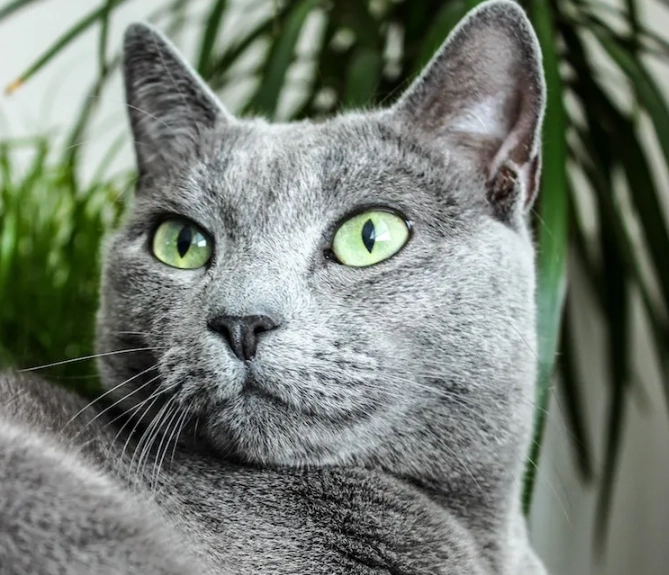
If you choose a breeder, do it right. A good breeder:
- Raises kittens in the home (not a cage).
- Prioritizes health and temperament over everything.
- Provides detailed health records and genetic testing info for parents.
- Is registered with a major cat registry like TICA or CFA.
- Asks you as many questions as you ask them.
- Never lets kittens go before 12-16 weeks of age.
- Offers a health guarantee and is a resource for the cat's life.
Be prepared to wait. Good breeders often have waiting lists.
And be prepared to pay. A Russian Blue kitten from a reputable breeder typically costs between $800 and $2,500.
Russian Blue Cat FAQ: Your Top Questions Answered
As mentioned, no cat is truly hypoallergenic. They are often better tolerated by people with mild cat allergies because they produce less of the Fel d 1 allergen and their dense coat may trap it. It's not a guarantee. Always test your reaction before bringing one home.
They shed, but it's often less noticeable than with other cats. The fine, dense hairs tend to get caught in the undercoat rather than floating around your house. Regular brushing drastically minimizes any shedding.
Yes, their gentle and patient nature makes them generally excellent with respectful children. They are not as fragile or high-strung as some breeds. However, as with any pet, young children must be taught how to interact with them gently and calmly. The cat will appreciate a quiet space to retreat to if needed.
With proper care, a healthy diet, and regular veterinary check-ups, a Russian Blue domestic cat can easily live 15 to 20 years. They are a strong, healthy breed.
Almost never. Aggression is completely contrary to their temperament. They are conflict-avoiders. If stressed or frightened, they will hide, not attack. Their primary response to a threat is to disappear.
They can handle a normal workday alone, but they are social creatures who thrive on companionship. Leaving them alone for very long periods (multiple days) regularly is not ideal and can lead to anxiety or depression. They do much better in homes where someone is around a good part of the day or with a feline companion.
Final Thoughts: The Velvet Shadow
Owning a Russian Blue cat is a unique experience. It's not the in-your-face, comedic clowning of some breeds. It's a quieter, deeper bond. They become a soft, observant presence in your life—a shadow that follows you, not out of neediness, but out of quiet devotion.
They are low-maintenance in terms of grooming and health but high-maintenance in their need for a stable, loving, and predictable environment. If you can provide that, you'll be rewarded with a companion of unparalleled gentleness, intelligence, and beauty for many, many years.
Just be prepared for the green-eyed stares. They see everything.