Your Quick Guide to Russian Blues
- Where Did the Russian Blue Cat Come From? A Slice of Feline History
- Spotting a True Russian Blue: More Than Just a Gray Cat
- The Russian Blue Cat Personality: Shy Ghost or Velcro Companion?
- Living With a Russian Blue: Daily Care and the Truth About Maintenance
- The Hypoallergenic Myth and Reality of Russian Blue Cats
- Health and Lifespan: What to Expect Long-Term
- Making the Decision: Is a Russian Blue Your Perfect Cat?
So you're thinking about getting a cat, and you keep coming back to pictures of this elegant, silver-blue creature with mesmerizing green eyes. The Russian Blue cat has a way of doing that—capturing your attention with an air of quiet mystery. I remember the first time I met one at a friend's house. It wasn't like other cats that might ignore you or demand immediate pets. This one just watched, perched on a bookshelf, its plush coat looking almost like velvet. It felt like being sized up by a tiny, furry aristocrat.
But what's it really like to live with one? Are they as aloof as they seem? And what's the deal with everyone calling them "hypoallergenic"? If you're asking these questions, you're in the right place. Let's ditch the fluffy breed descriptions and talk about the real Russian Blue cat—the good, the challenging, and the utterly charming.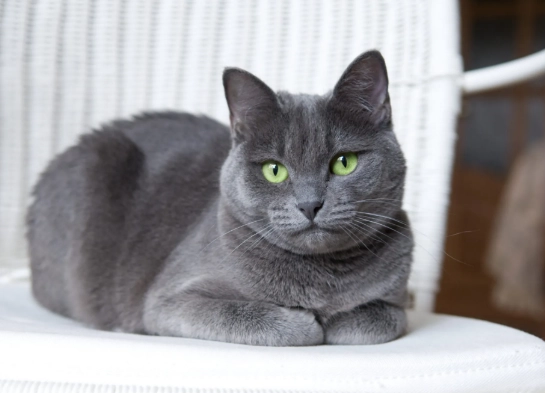
Where Did the Russian Blue Cat Come From? A Slice of Feline History
That sleek, blue-gray coat isn't a modern designer creation. The history of the Russian Blue cat is wrapped in as much mystery as its personality. Most folks in the cat fancy agree they probably originated in the port city of Arkhangelsk in northern Russia (which is why you might hear the old name "Archangel Cat"). Sailors likely brought them on ships to Great Britain and Northern Europe in the 1860s, prized as good luck charms and expert rodent catchers. Think about it—a hardy cat from a cold climate, smart enough to earn its keep on a ship. That tells you something about their intelligence and resilience right from the start.
They were shown at one of the very first modern cat shows at London's Crystal Palace in 1875, categorized simply as "Archangel Cats." For a while, they were grouped with other blue cats (like the British Blue), which almost led to the breed disappearing. Dedicated breeders after World War II worked to refine the specific traits we know today, crossing them with Siamese cats briefly to solidify the vivid green eyes and elegant body type. Modern cat registries like The Cat Fanciers' Association (CFA) and The International Cat Association (TICA) now maintain strict standards to preserve what makes a Russian Blue unique. It's a breed that was nearly lost, saved by people who fell for its particular magic.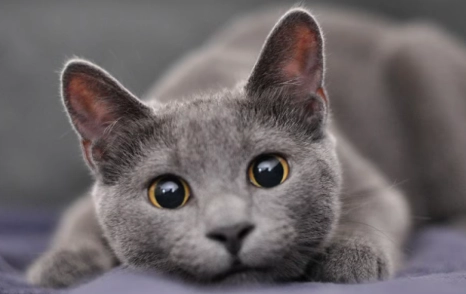
Spotting a True Russian Blue: More Than Just a Gray Cat
Not every gray cat is a Russian Blue. In fact, that's a common mix-up. A purebred Russian Blue has a specific, coordinated look where every feature works together. It's the difference between a nice suit and a bespoke tuxedo.
The most obvious feature is, of course, the coat. It's a consistent, even blue-gray color from root to tip, with each hair having a silvery tip that gives the whole cat a shimmering, luminous glow in the light. This "silver tipping" is a hallmark. The coat itself is double-layered—a dense, plush undercoat topped with a finer, softer topcoat. When you pet a Russian Blue cat, it feels incredibly dense and silky, almost like running your hand over velvet or sealskin. It's a unique texture.
Then there are those eyes. Kittens are born with yellow eyes, which gradually change to a vivid, striking green as they mature. In a well-bred adult, the eyes are a deep, emerald green, wide-set, and rounded. They use those eyes to communicate a lot. The body is foreign-type—meaning long, graceful, and muscular without being bulky. They're surprisingly heavy when you pick them up, all solid muscle under that soft exterior. Their legs are long and fine-boned, with neat, oval paws. And a fun detail: they often have a subtle, mysterious smile, thanks to the contour of their muzzle.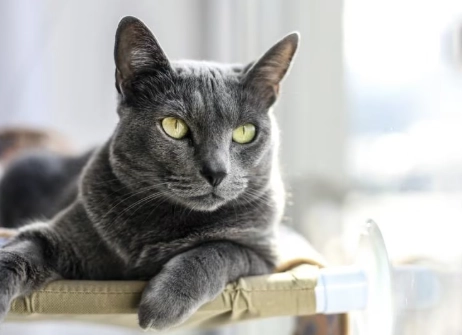
Here’s a quick table to separate the ideal Russian Blue from common look-alikes or poorly-bred examples:
| Feature | Ideal Russian Blue Standard | Common Variations/Mix-Ups |
|---|---|---|
| Coat Color & Texture | Even, bright blue-gray with distinct silver tipping. Double coat, very dense and plush to the touch. | Solid gray without silver sheen, patchy coloring, or a single, thin coat. |
| Eye Color | Vivid, deep green in adults. Wide-set and round. | Yellow, hazel, or pale green eyes in an adult cat. Blue eyes (unless a kitten). |
| Body Type | "Foreign" type: long, graceful, and muscular. Firm and heavy for its size. | Cobby (stocky) body like a British Shorthair, or overly slender and delicate frame. |
| Head Shape | Wedge-shaped (seven planes), with large, wide-set ears and a straight profile. | Round head, small ears, or a pronounced nose break/stop. |
| Personality Clue | Reserved with strangers, quietly observant, forms a deep bond with family. | Immediately outgoing with everyone or consistently fearful/hiding. |
If you're looking at a kitten from a breeder, a reputable one will be registered with organizations like CFA or TICA and will happily discuss how their cats meet this breed standard. If someone is just selling "gray cats" as Russian Blues, that's a big red flag.
The Russian Blue Cat Personality: Shy Ghost or Velcro Companion?
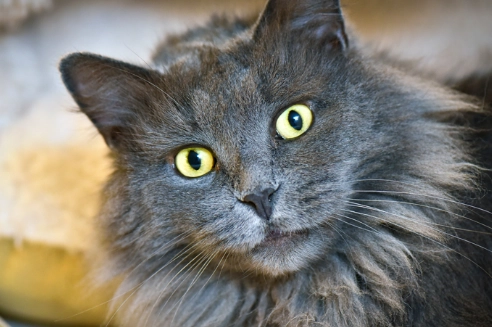
This is where people get the most confused. The Russian Blue cat has a reputation for being shy, aloof, a "gray ghost" that vanishes when company comes over. And yeah, that part is often true, especially at first. They tend to be cautious with new people and loud noises. My friend's cat I mentioned? It took three visits before he decided I was acceptable and deigned to sniff my hand.
With their chosen people—their family—a Russian Blue cat is often profoundly loyal, affectionate, and deeply bonded. They just show it differently than, say, an outgoing Siamese. Their love language is quieter. It's the cat that follows you from room to room, not necessarily to be on your lap, but to be near you, often in the same chair or on the same bed. They're known for being gentle and polite, rarely using their claws in play. They're playful but not destructively so, often enjoying fetching small toys or solving puzzle feeders well into adulthood.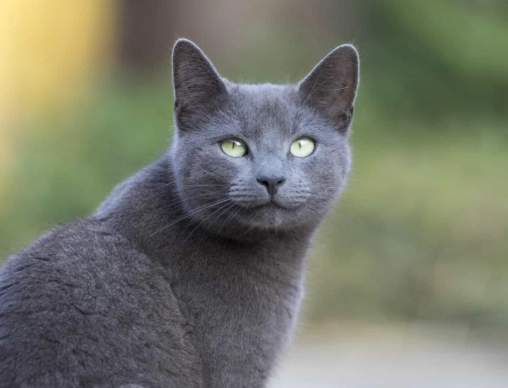
They're also famously smart. This intelligence means they can learn routines, open doors (a frustrating talent if you have lever handles!), and figure out where you've hidden the treats. It also means they need mental stimulation. A bored Russian Blue isn't a happy one.
Let me break down their key personality traits, the good and the less-good:
- The Loyal Shadow: They form intense attachments. You are their person. This can border on being velcro-cats, which is wonderful if you want a constant companion, but it can also lead to separation anxiety if left alone for very long periods regularly.
- The Quiet Observer: They watch everything. You'll feel those green eyes on you while you work, cook, or read. They're not always demanding attention; they're just... involved.
- The Sensitive Soul: They thrive on routine and a peaceful home. Loud arguments, chaotic environments, or constant streams of new visitors can stress them out. They're not the best choice for a rowdy family with young kids who haven't learned gentle handling, or for someone who throws big, loud parties every weekend.
- The Gentle Player: Their play style is often soft-mouthed and careful. They're great with older, respectful children and other pets (especially if introduced properly). Their low aggression level is a big plus.
Living With a Russian Blue: Daily Care and the Truth About Maintenance
Okay, so you're drawn to the personality and the looks. What does day-to-day life actually entail? Let's talk care, which is surprisingly straightforward for such a fancy-looking cat.
Grooming: The Easy Part (Mostly)
That gorgeous double coat is lower maintenance than you'd think. It doesn't mat easily. A thorough brushing once or twice a week with a fine-toothed metal comb or a soft bristle brush is usually enough to remove loose hair and distribute skin oils. They shed, yes, but in my experience, it's less than many other breeds, and the hair tends to clump together rather than float everywhere. The big grooming win is during seasonal changes (spring and fall) when they "blow" their undercoat. During those times, daily brushing for a week or two will save your furniture and your sanity.
Other basics are standard: trim claws every couple of weeks, check ears weekly for dirt, and brush teeth regularly if you can. Getting them used to all this as kittens is key.
Diet and Nutrition: Fueling an Athlete
Remember, these are muscular, active cats. They need high-quality food with plenty of animal-based protein. Look for named meat sources (chicken, turkey, fish) as the first ingredients. Whether you choose wet, dry, or a combination is a personal and veterinary decision, but ensure it's nutritionally complete. A common issue with Russian Blues is that they can be prone to obesity if they become sedentary. They love their food, so portion control and encouraging play are crucial. An automatic feeder can help regulate meals if you're prone to over-treating those pleading green eyes (it's hard to resist, I know).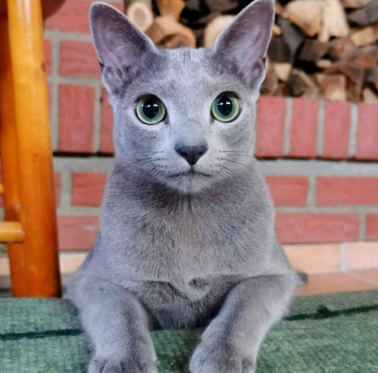
Exercise and Environment: Keeping the Mind Busy
They're not hyperactive, but they need daily interactive play. A wand toy, laser pointer (always end with a physical toy they can "catch"), or a ball in a track will do. More importantly, they need vertical space. Cat trees, shelves, and high perches are non-negotiable. A Russian Blue cat feels secure up high, where they can survey their kingdom. A window perch with a bird feeder outside is kitty TV. Puzzle feeders are also fantastic—they turn mealtime into a brain game, which satisfies their intelligence.
Overall, their care isn't overly complex. It's about consistency, quality food, and understanding their need for both quiet security and mental engagement.
The Hypoallergenic Myth and Reality of Russian Blue Cats
This is the big one. You've probably read that Russian Blue cats are "hypoallergenic." I need to be very clear here: no cat is 100% hypoallergenic. The term is misleading and can set up allergic people for heartbreak.
What's true is that many people with mild to moderate cat allergies report reacting less severely to Russian Blues. Here's the science behind the anecdote: most people are allergic to a protein called Fel d 1, which is produced in cat saliva and sebaceous (skin) glands. When a cat grooms itself, the saliva (and the allergen) dries on its fur and becomes airborne. Russian Blues are said to produce lower levels of this Fel d 1 protein. Additionally, their dense double coat may trap the allergen closer to their skin rather than releasing it into the environment as readily as a cat with a continuously shedding, single coat.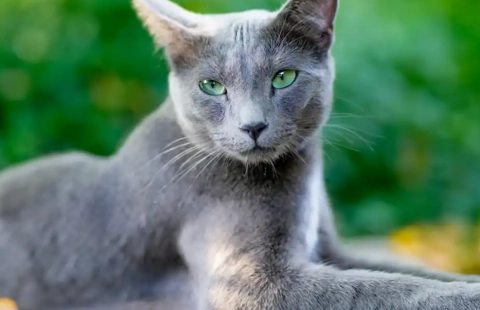
However, individual reactions vary wildly. One Russian Blue might trigger an allergic person, while another might not. The only way to know for sure is to spend extended time (like multiple visits) with the specific cat you're considering. Do not buy a Russian Blue kitten online based solely on the "hypoallergenic" claim. Reputable breeders understand this and will often allow allergy testing visits.
If you have allergies, here's a realistic action plan:
- Test First: Spend time with an adult Russian Blue cat, ideally in a home environment, before committing.
- Manage the Environment: Use HEPA air purifiers, wash bedding frequently, and have a "cat-free" bedroom sanctuary.
- Groom Regularly: Brushing the cat frequently (outside, if possible) can reduce loose hair and dander. Some even wipe their cat down with a damp cloth.
Think of them as potentially "allergy-friendly," not a magic cure. It's a major reason people seek out this breed, but it requires cautious, realistic expectations.
Health and Lifespan: What to Expect Long-Term
Russian Blues are generally considered a robust and healthy breed with a long lifespan, often living into their late teens or even early twenties with good care. They don't have a long list of severe, breed-specific genetic disorders like some purebreds. That said, responsible breeding is key to maintaining this.
There are a few health considerations that pop up more in this breed than others:
- Obesity: As mentioned, their love of food and sometimes sedentary nature can lead to weight gain, which brings a host of other problems like diabetes and joint stress.
- Urinary Tract Issues: Some lines may have a slightly higher predisposition to conditions like cystitis or bladder stones. Feeding a wet-food diet, ensuring ample water intake (a cat fountain can help), and providing a low-stress environment are good preventative measures.
- Genetic Diversity: Because the breed was rebuilt from a small gene pool post-WWII, it's crucial to get a cat from a breeder who performs genetic health screening and outcrosses responsibly to maintain genetic health. Ask breeders about tests for common issues and the health history of their lines.
Routine veterinary care—annual check-ups, vaccinations, and dental cleanings as recommended—is your best defense. Pet insurance for a purebred cat is rarely a bad idea, as it helps manage unexpected costs and encourages proactive care.
Your Russian Blue Cat Questions, Answered
Making the Decision: Is a Russian Blue Your Perfect Cat?
Let's wrap this up. The Russian Blue cat isn't for everyone, and that's okay. Its very specific qualities are what make it so special to the right person.
You might be the perfect home for a Russian Blue if:
- You appreciate a quiet, observant companion over a boisterous clown.
- You have a generally calm, predictable household.
- You're home a fair amount or can provide a feline companion (another calm cat) if you're out long hours.
- You want a deeply bonded, "one-person" or "one-family" cat.
- You have mild allergies and are willing to test and manage your environment.
- You're ready for a 15-20 year commitment to a sensitive soul.
You should probably consider a different breed if:
- You want an outgoing, social butterfly cat that loves all your friends.
- Your home is loud, with young children or frequent visitors.
- You are gone for 10+ hours a day regularly with no plan for companionship.
- You have severe cat allergies and are banking on a "cure."
- You're looking for a low-maintenance pet in terms of attention; while grooming is easy, their emotional needs are significant.
Choosing a cat is about matching lifestyles. The Russian Blue offers an unparalleled combination of stunning beauty, quiet intelligence, and profound loyalty. They're not the life of the party, but they might just become the quiet, steady heartbeat of your home. If your life aligns with their needs, welcoming a Russian Blue cat can be the beginning of an incredibly rewarding, decades-long friendship with one of the feline world's most elegant and enigmatic characters.
Do your homework, meet some in person, and talk to reputable breeders or rescues. The right cat is out there. Maybe it's a sleek, silver ghost waiting to step out of the shadows and into your life.