Quick Navigation
I remember the first time I saw a Savannah cat in person. A friend of a friend had one, an F3 if I recall correctly. It was stunning—like a miniature leopard pacing gracefully along the back of a sofa. But the question hanging in the air, unspoken but felt by everyone in the room, was the same one thousands of people type into Google every month: are Savannah cats dangerous?
The owner laughed it off. "He's just a big goofball," she said, as the cat chirped at a bird outside. But later, she showed me a scratch on her arm, a deep one, from a particularly energetic play session. "You have to learn their language," she explained. That stuck with me. It's never a simple yes or no.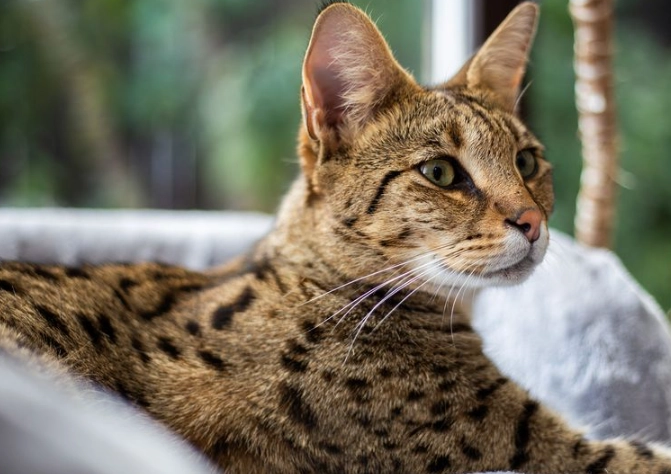
So, let's cut through the hype and the fear. Are Savannah cats dangerous? The short, honest answer is this: they have a far greater potential for causing problems—scratching, biting, destructive behavior—than your average domestic shorthair if their needs aren't met. But labeling them as inherently "dangerous" is misleading and does a disservice to what are often incredibly intelligent, loyal, and fascinating animals. The real danger lies in unprepared ownership.
The Core Issue Isn't Danger, It's Mismatch. Most problems labeled as "dangerous" Savannah cat behavior stem from a colossal mismatch between the cat's innate needs (driven by its wild Serval ancestry) and a standard domestic cat lifestyle. Boredom and frustration are the real culprits.
Why the "Dangerous" Label Sticks to Savannah Cats
You don't hear people asking if Ragdolls or Persians are dangerous. So why Savannahs? It boils down to a few key factors that look scary on paper.
First, the obvious one: they're part wild. The Savannah cat is a hybrid cross between a domestic cat and the Serval, a medium-sized wild African cat. That Serval DNA brings along a suite of traits not commonly found in your living room tabby. We're talking about a prey drive that's through the roof, energy levels that can seem boundless, and a need for mental stimulation that would put a chess champion to shame.
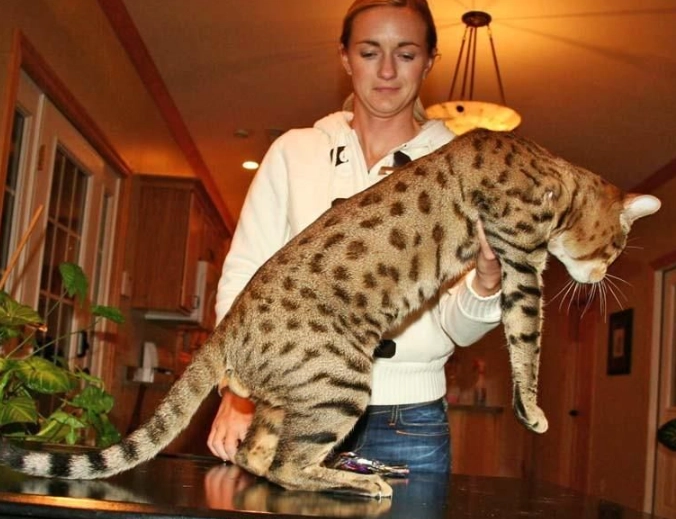
Then there's the size. Especially in the early generations (F1, F2), Savannahs are big. An F1 Savannah can weigh over 20 pounds, with long, powerful legs. A swat from a cat that size carries more force. A playful bite from powerful jaws can break skin easily, even if no aggression was intended. It's not malice; it's physics.
Their intelligence is another double-edged sword. A bored domestic cat might scratch your couch. A bored Savannah cat might figure out how to open cabinet doors, turn on faucets, or unlatch simple gates. This problem-solving ability is amazing, but when directed at the wrong targets, it feels invasive and, yes, potentially destructive or risky (what if they get into cleaning supplies?).
Finally, there's the rumor mill. A few viral videos of a Savannah cat acting aggressively or stories of one being surrendered to a shelter get amplified. People see "wild blood" and think "dangerous predator." It's a narrative that's easy to sell but hard to substantiate with balanced facts.
The Key Factors That Actually Determine Risk
If you're trying to figure out if a Savannah cat is dangerous, you're asking the wrong question. The right question is: Under what conditions does risk increase? Let's break down the real determinants.
Generation (F-number) - This is The Biggest Deal
This is the most critical factor, period. The "F" stands for filial generation, indicating how many generations removed the cat is from its wild Serval ancestor. The percentage of Serval blood drops with each generation, and with it, many of the more challenging traits.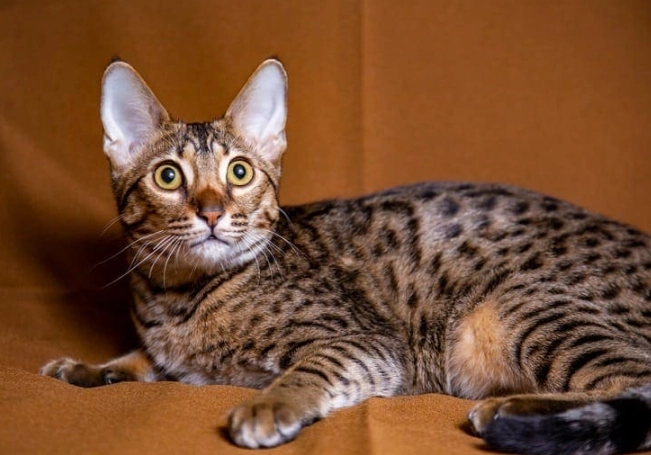
| Generation | Approx. Serval % | Typical Size | Key Temperament Notes | Potential for "Dangerous" Behaviors* |
|---|---|---|---|---|
| F1 Savannah | ~50% | Very Large (15-25+ lbs) | Most "wild" in behavior. Often bonds strongly with one person. High prey drive, high energy. May not use a litter box reliably. Can be vocal with unique chirps/hisses. | Highest. Due to size, strength, and instinctual drives. Requires expert-level ownership. |
| F2 Savannah | ~25-35% | Large | Still very energetic and intelligent. More likely to accept multiple family members than F1s. Strong hunting instincts. | High. Still not a beginner's cat by any stretch. Needs vast amounts of engagement. |
| F3 Savannah | ~12-20% | Medium to Large | Often considered the "sweet spot" for experienced owners wanting exotic looks with more manageable behavior. Playful, dog-like, trainable. | Moderate to High. Behaviors are more predictable, but boredom can still lead to destructive outcomes. |
| F4-F5 & SBT | Medium | Behaviorally much closer to active domestic breeds (like Bengals or Abyssinians). Can be excellent family pets for active homes. Recognized by TICA for championship status. | Low to Moderate. Risk is comparable to other high-energy domestic breeds. The "danger" is mostly in inadequate play and stimulation. |
*"Dangerous" here refers to potential for injury (scratches/bites) or property damage due to natural behaviors, not inherent aggression.
See the pattern? Asking "are Savannah cats dangerous" is useless without specifying the generation. An F5 is a world apart from an F1. Many states and countries have laws restricting ownership of early generations (F1-F3) precisely because of the increased care challenges and strength, which lawmakers often equate with danger. The International Cat Association (TICA), which recognizes the breed, provides breed standards that primarily apply to later generations (SBT).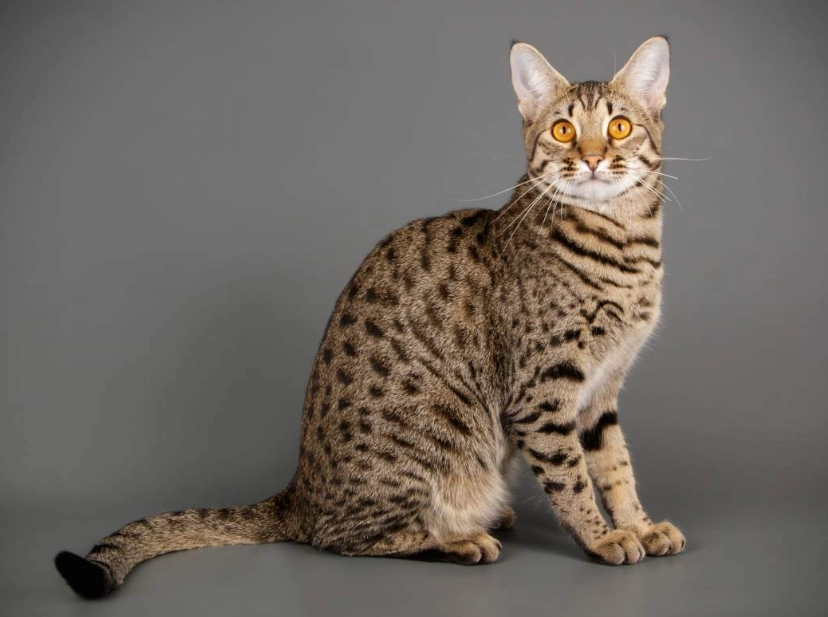
Socialization and Upbringing
A Savannah kitten raised in a busy, positive home environment with gentle handling, exposure to various sounds, people, and experiences is going to be worlds apart from one raised in isolation or with inconsistent treatment. This is especially crucial for early-generation cats. A well-socialized F3 might be safer and more predictable than a poorly socialized F5.
Reputable breeders are worth their weight in gold here. They start handling kittens from day one, introducing novel stimuli and ensuring they have positive interactions with humans. Skipping this step is a one-way ticket to having a fearful, skittish, and potentially defensive cat—traits that can be misinterpreted as dangerous.
Owner Knowledge and Environment
This is the human factor, and it's massive. A Savannah cat placed in a small apartment with an owner who works 12-hour days is a recipe for disaster. The cat will find its own fun, and you won't like it.
These cats need:
- Space to run and vertical territory: Cat trees, shelves, and secure outdoor enclosures (catios) are non-negotiable, not luxuries.
- Mental and physical exercise: Daily interactive play sessions (think feather wands, laser pointers, puzzle feeders) are mandatory. I'm not talking five minutes. I'm talking until the cat is panting.
- Consistent, positive training: Savannahs are highly trainable. You can teach them to walk on a harness, fetch, and follow commands. You must teach them what appropriate play is (toys, not hands).
Fail on these points, and you'll likely see the behaviors that make people ask are Savannah cats dangerous: aggression born from pent-up energy, destructive scratching, and inappropriate elimination.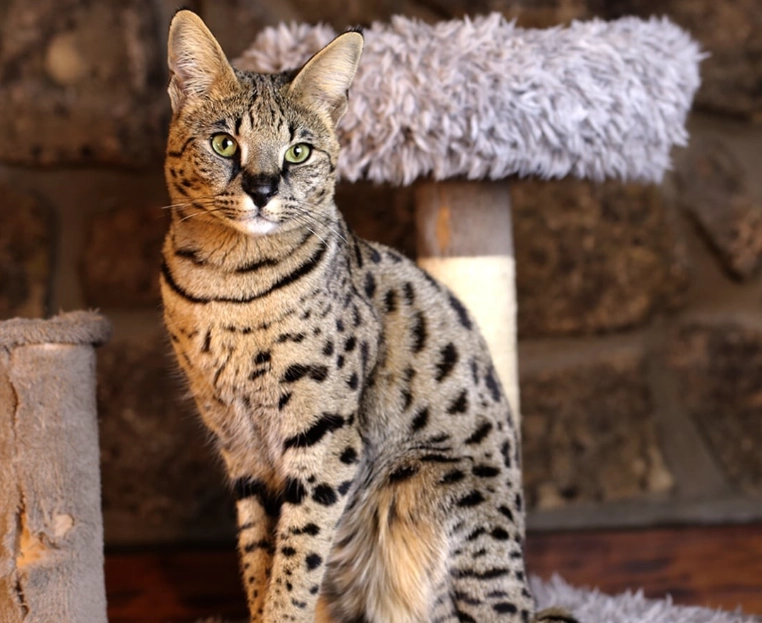
A Hard Truth: The most "dangerous" element in the Savannah cat ownership equation is often an uninformed or unrealistic owner. Expecting a cat with Serval instincts to act like a lap-loving Persian is where the real risk begins.
So, How Do You Live Safely (and Happily) with a Savannah?
Let's get practical. If you're committed, here's how you mitigate risks and build a fantastic relationship with your Savannah.
Choose the Right Generation for Your Life
Be brutally honest with yourself. If you're a first-time cat owner, only consider F5 or later (SBT). Even F3s and F4s demand significant experience with active, intelligent cat breeds. F1 and F2 cats should be left to specialists, sanctuaries, or educational facilities with the proper resources and expertise. The USDA's Animal Welfare Act has specific requirements for breeders dealing with wild hybrids, which hints at the level of care involved.
Invest Heavily in Socialization and Training
Start the day you bring them home. Use positive reinforcement (treats, praise) for everything. Get them used to having their paws handled (for nail trims), being brushed, and entering a carrier. Harness train them early for safe outdoor exploration. Teach a solid "leave it" command. This isn't just cute; it's risk management.
Create a Savannah-Proof Environment
Think like a zoologist designing an enclosure.
- Provide outlets for natural behaviors: Scratching posts (tall and sturdy), digging boxes, puzzle toys that dispense food, and safe places to climb and perch.
- Secure your home: Childproof latches on cabinets. Ensure windows have secure screens. No toxic plants. Put away fragile items.
- Build or buy a "catio": This is the single best investment for a Savannah owner. It gives them safe access to fresh air, sunlight, and the stimulation of watching birds and bugs, satisfying their wild curiosity without the risks of free roaming.
Understand and Redirect Their Prey Drive
That intense stare at your smaller pet or a toddler's quick movements? That's the Serval's prey drive. It's instinctual, not malicious. This is a critical point when people wonder are Savannah cats dangerous around other pets or kids.
You must manage introductions carefully and never leave them unsupervised with small animals (rabbits, rodents, birds). With dogs and other cats, slow, controlled introductions are key. With children, teach the kids to be calm and respectful, and always supervise interactions. A Savannah may see a running, squealing child as prey-like stimulus. It's your job to manage that environment.
Your Savannah Cat Questions, Answered
The Final Word: Danger or Misunderstanding?
Look, after talking to owners, breeders, and reading more studies and breed club resources than I can count, here's my take.
Savannah cats aren't ticking time bombs or secret killers. They are incredibly demanding, intelligent, and sensitive animals that express their wild ancestry in obvious ways. The perceived danger—the scratches, the bites, the chaos—is almost always a symptom of an unmet need. It's a cry for more space, more play, more challenge, or clearer communication.
So, are Savannah cats dangerous? In the hands of a dedicated, educated, and active owner who provides a species-appropriate environment, they are no more dangerous than any other powerful, intelligent pet. They are a profound responsibility and a privilege.
But in the wrong home—a sedentary one, a small one, an impatient one—the potential for problematic and yes, potentially dangerous, behaviors skyrockets. Not because the cat is evil, but because it's a wild heart in a cage that doesn't fit.
The question shouldn't be "Is this cat dangerous?" It should be "Am I capable of providing the life this cat requires to be safe and fulfilled?" Answer that honestly, and you'll know if a Savannah is right for you.