Explore This Guide
So you're wondering, what's bigger, a Maine Coon or a Savannah cat? It's one of the most common questions I get from people fascinated by giant house cats. You see pictures online of these majestic beasts that look like they could walk a dog, and the curiosity is real. Is it the fluffy, lion-maned Maine Coon, or the sleek, exotic Savannah with its wild ancestry that takes the crown?
The short, somewhat frustrating answer is: it depends. Seriously, it's not just a simple A versus B. But don't worry, we're going to dig into every single factor—official breed standards, real-world measurements, genetics, and even some myths that need busting. By the end of this, you'll not only know which one can be bigger, but you'll understand why size isn't even the most important thing to consider if you're thinking of bringing one home.
I've chatted with breeders, owners, and even my vet (who has seen some shockingly large cats) to get the full picture. Let's settle this.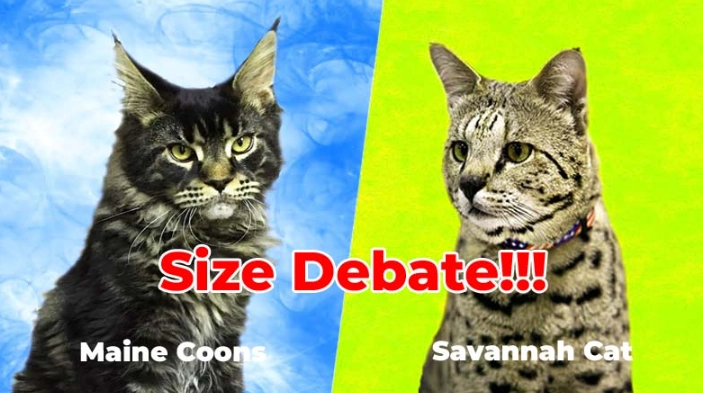
The Core Question: When people ask "What's bigger, a Maine Coon or a Savannah cat?", they're usually picturing maximum potential. In terms of sheer mass and bulk, a male Maine Coon often takes the prize for heaviest domestic cat. But for a combination of height and leggy length that creates an incredible visual presence, the later-generation Savannahs (F2, F3) can be absolutely breathtaking and often look taller and longer. The early-generation Savannahs (F1, F2) are a different story—often lighter but incredibly athletic.
Breaking Down the Numbers: Weight, Height, and Length
Let's get into the specifics. Breed standards from organizations like The International Cat Association (TICA) and the Cat Fanciers' Association (CFA) give us a framework, but real cats often live outside those lines.
| Metric | Maine Coon | Savannah Cat | The Verdict |
|---|---|---|---|
| Average Weight (Male) | 13-18 lbs (5.9-8.2 kg), often 18-22+ lbs is possible | 12-20 lbs (5.4-9 kg) *highly dependent on generation (F1-F7) | Maine Coon tends to be heavier on average. A big male Coon is pure, solid mass. |
| Average Weight (Female) | 8-12 lbs (3.6-5.4 kg) | 9-13 lbs (4-6 kg) | More comparable, but Savannah females can be leaner. |
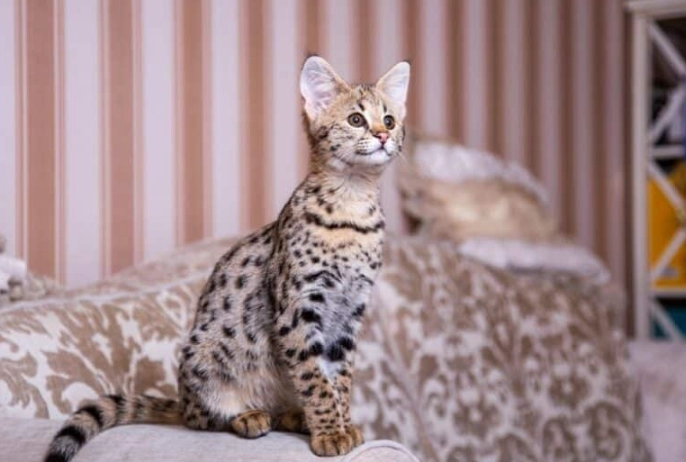
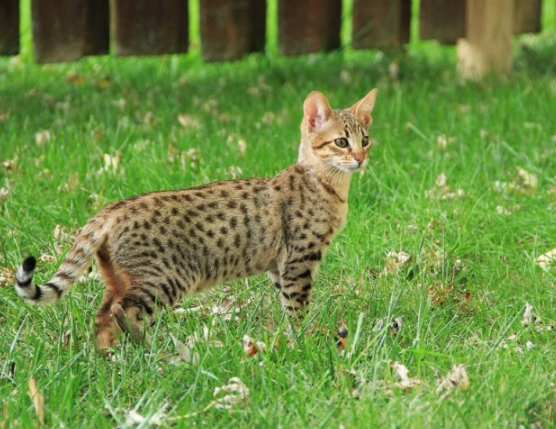
| Height at Shoulder | 10-16 inches (25-40 cm) | 14-17+ inches (35-43+ cm) for later gens | Savannah Cat often wins here. Those long legs from the Serval ancestor give them a stilt-like stature. |
| Body Length (nose to tail base) | 19-40 inches (48-101 cm) – they are LONG | 20-24+ inches (51-61+ cm) | Maine Coon is famously long-bodied, sometimes called "the rectangle cat." |
| Overall Length (with tail) | Up to 48 inches (122 cm) or more | Up to 42+ inches (107+ cm) | Maine Coon. That magnificent, bushy tail adds serious inches. |
| Build & Frame | Substantial, muscular, broad-chested, rectangular. Heavy bone structure. | Lean, athletic, long-legged, angular. Graceful but powerful. | Different. Coon = powerful linebacker. Savannah = elite basketball player. |
See what I mean? Asking "What's bigger, a Maine Coon or a Savannah cat?" is like asking if a football player is bigger than a marathon runner. The football player might weigh more, but the runner might be taller. Which "big" matters to you?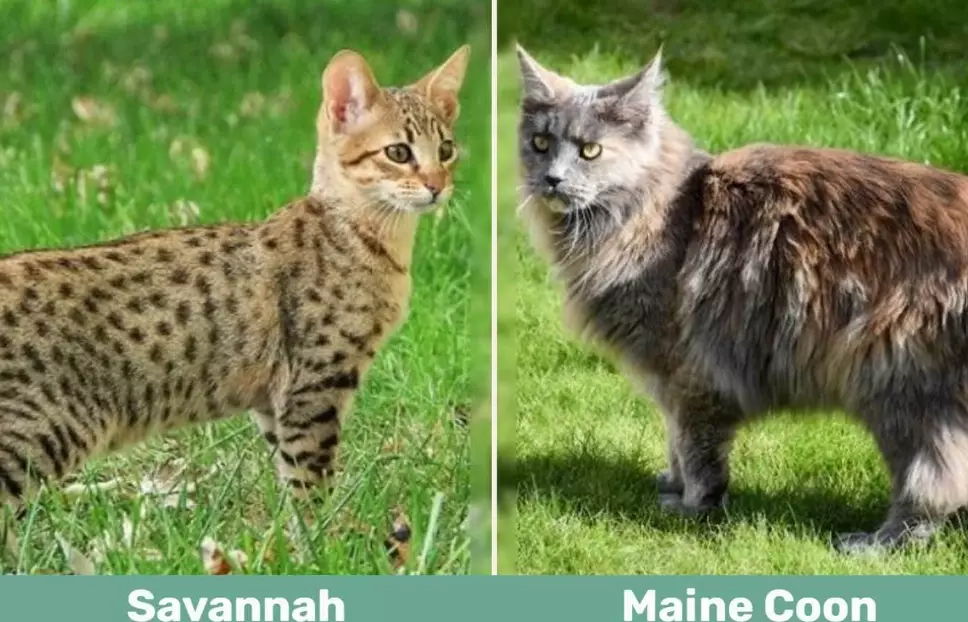
The Savannah's height advantage is no joke. I once met an F3 Savannah male who could easily rest his chin on my kitchen counter without jumping. It was unnerving in the coolest way possible. My friend's Maine Coon, on the other hand, couldn't do that, but when he jumped onto your lap, you felt it—a gentle, furry weight that made you check if a small dog had joined you.
The Savannah Cat Wild Card: Generations Matter (A Lot)
This is the single biggest complication in the size debate. A Savannah cat's size is directly tied to its "filial" generation—how many generations removed it is from its wild Serval ancestor.
- F1 (First Generation): One parent is a Serval. These are the largest in terms of potential height and leg length, but they are often not the heaviest. They are exotic hybrids with significant restrictions on ownership. Their weight can be 15-25+ lbs, but it's on a very lean frame.
- F2 (Second Generation): Grandparent is a Serval. Still very tall and exotic-looking, often hitting the upper end of the height range.
- F3, F4, etc.: As you go down the generations, they become more manageable in energy and legality, but they can still retain impressive height. An F5 Savannah might be taller than a Maine Coon but weigh 5 pounds less.
- SBT (Stud Book Tradition): Usually F5-F7 and beyond. Considered "purebred" Savannahs. These are the ones you'll see in most homes and shows. They are consistently tall and leggy but have a more predictable, domestic temperament.
So, when someone brags about their "huge Savannah," your first question should be, "What generation?" An F2 Savannah will be a different animal—literally and figuratively—than an SBT Savannah in terms of size potential and care needs.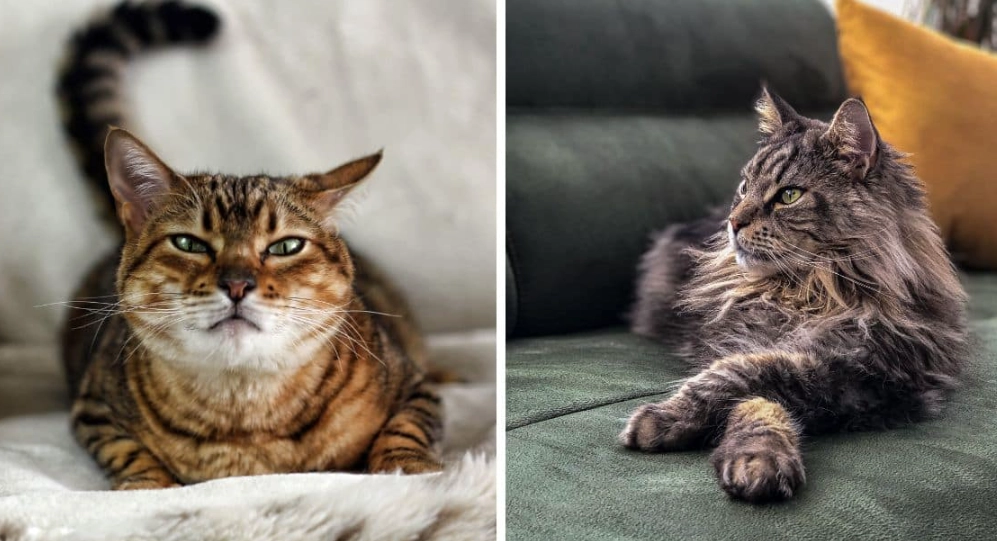
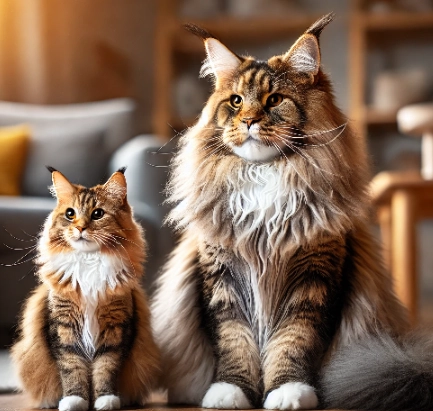
Mythbuster Time: You'll sometimes hear that Savannahs are always bigger than Maine Coons. This usually comes from seeing a stunning photo of a tall, early-generation Savannah. In terms of overall physical volume and weight, a top-tier male Maine Coon is almost always "bigger" in the sense of taking up more space on your scale and your couch. The Savannah's size is more about verticality and a lean, stretched silhouette.
Beyond the Tape Measure: Personality, Care, and Real-Life Impact
Okay, so we've measured them. But which one *feels* bigger in your life? That's about personality, energy, and the sheer amount of cat you have to manage.
The Maine Coon Vibe
- The Gentle Giant: Their reputation is 100% earned. They are typically calm, affectionate, and dog-like. They follow you, chirp at you, and might even play fetch.
- Lower Energy (Generally): They have bursts of kitten-like play, but they are more prone to long, majestic naps. A 20-pound lap cat is a wonderful thing.
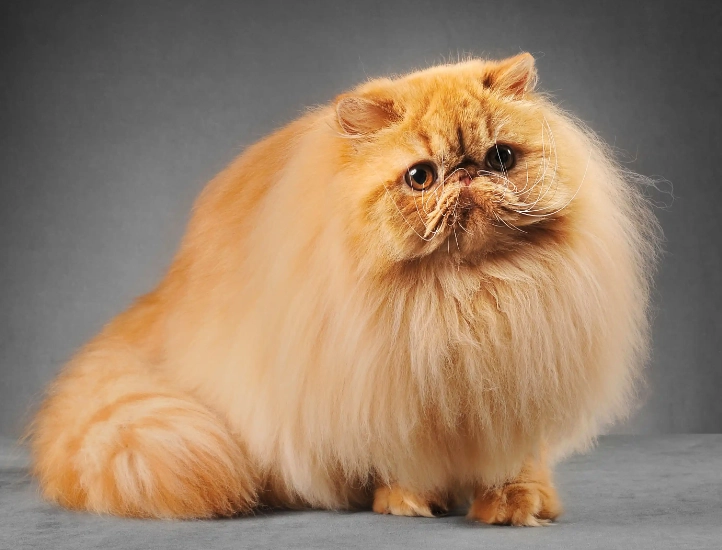
- The Fur Factor: This is a huge part of their apparent size. That long, water-resistant coat and magnificent ruff make them look even more massive. It's also a commitment—regular brushing is non-negotiable to prevent mats.
- Health Watch: Being a large, purebred cat, they can be predisposed to hypertrophic cardiomyopathy (HCM) and hip dysplasia. Reputable breeders screen for these. Their large size doesn't necessarily mean a shorter lifespan (12-15 years is common), but it's something to be aware of.
The Savannah Cat Vibe
- The Intelligent Athlete: They are SMART. And I mean, "figure out how to open doors and cabinets" smart. They have boundless energy and need intense play and mental stimulation. Boredom is your enemy.
- High Energy Demand: This isn't a couch potato. They need vertical space (tall cat trees), interactive toys, and possibly even leash training for walks. An under-stimulated Savannah can be destructive.
- The Exotic Pet Reality: Especially for earlier generations, they may have litter box quirks, a stronger prey drive, and vocalizations that sound more like chirps or hisses than meows. Ownership laws vary wildly by state and country. Always, always check your local regulations.
- Health: Generally robust, but their hybrid vigor can come with sensitivities. Some lines may be prone to certain deficiencies. A high-quality, protein-rich diet is critical.
See the difference? One feels big and solid, like a comforting presence. The other feels big and electric, like a live wire in a sleek package.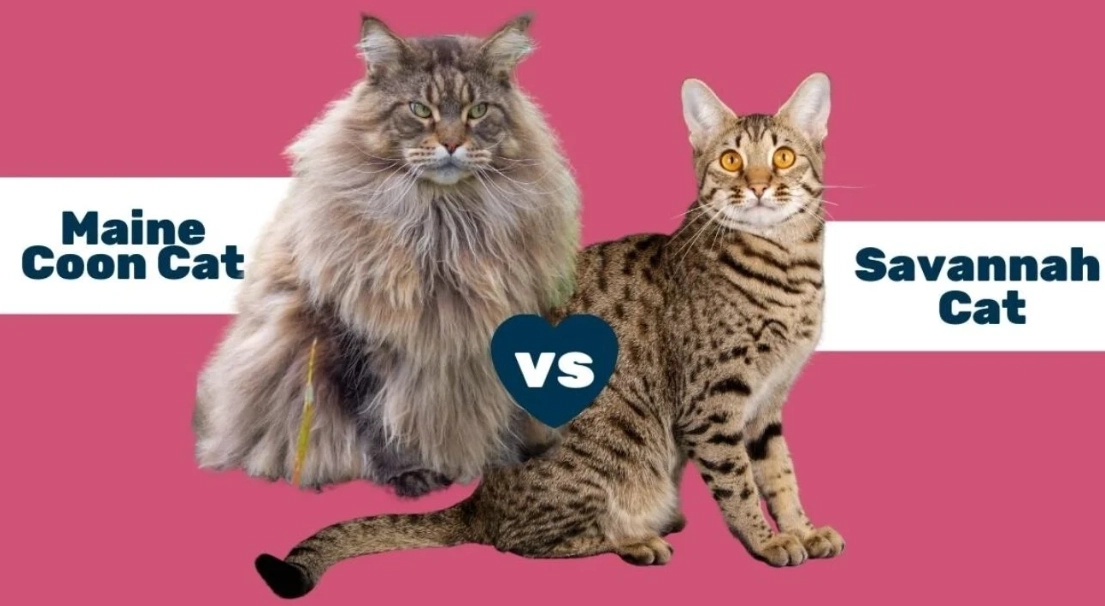
So, Which One Should You Choose? (It's Not Just About Size)
If you're trying to decide between these breeds based solely on which is bigger, you're asking the wrong question. The better questions are:
- What does "big" mean to you? Is it a heavy, snuggly companion or a tall, interactive performer?
- What is your lifestyle? Do you have hours for active play and training, or do you prefer a more relaxed companion?
- What is your budget? Both are expensive, but Savannahs, especially early generations, can be astronomically priced ($1,500 to $20,000+). Maine Coons from reputable breeders also command a high price ($1,000 to $3,000+). Don't forget ongoing costs: premium food, large litter boxes, giant cat trees, and potential vet bills for size-related issues.
- Are you prepared for the grooming or the energy? The Maine Coon's coat vs. the Savannah's mind—both require significant, but different, investments of time.
Here's my take, for what it's worth. I love Maine Coons. There's something profoundly peaceful about a giant, fluffy cat who just wants to be near you. But I have a friend with an F4 Savannah, and the sheer joy and chaos that cat brings into their home is incredible to watch—from a distance. I know I don't have the energy or the right house layout (read: not enough high shelves) to keep one happy. It's a humbling realization.
Quick Decision Checklist
- Choose a Maine Coon if: You want a large, affectionate, and relatively calm companion. You don't mind daily grooming. You love a classic, rugged look and a sweet, dog-like personality.
- Choose a Savannah Cat (SBT, later gen) if: You want an interactive, high-energy, and strikingly tall companion. You can provide tons of play and vertical space. You are fascinated by exotic looks and canine-like loyalty (they often bond intensely with one person).
- Think very, very carefully (and check laws) about early-generation Savannahs (F1-F3). They are not for novice cat owners and often require specialized care and containment.
Common Questions (And Straight Answers)
Savannahs: This is highly individual and generation-dependent. SBT Savannahs can be great with respectful children and pets they are raised with, but their high prey drive means small animals (rodents, birds, sometimes small cats or puppies) are at risk. Early socialization is absolutely critical. Never leave them unsupervised with very small children—their play can be rough.
- For Maine Coons, look for breeders registered with CFA or TICA who perform genetic health testing (HCM, HD) and raise kittens in-home.
- For Savannahs, use the TICA breeder directory. A good Savannah breeder will be transparent about generations, provide lineage paperwork, and interview you thoroughly about your home and experience. They should also be knowledgeable about state laws.
The Final Tally: Who Wins the "Bigger" Title?
Let's wrap this up. If we're talking about the cat most likely to tip the scales at over 20 pounds of solid feline, the Maine Coon is your winner. They are the heavyweight champions of the domestic cat world, combining immense bone structure, muscle, and that glorious coat into a package of pure, gentle magnitude.
If we're talking about the cat that will make you do a double-take because it looks like a small cheetah stalking across your living room floor, the cat that can reach the top of your refrigerator from a standing jump, then the Savannah cat (particularly F2-F4) wins for sheer impressive, leggy height and exotic presence.
So, what's bigger, a Maine Coon or a Savannah cat?
The Maine Coon is bigger in mass and volume. The Savannah cat is often bigger in height and limb length. But "big" is a feeling. It's the Maine Coon's substantial purr vibrating through your chest as he sleeps on you. It's the Savannah's large, attentive ears tracking every sound in the house, its wild eyes watching you with uncanny intelligence.
Choosing between them isn't about picking the largest specimen. It's about deciding which kind of "big" experience you want to live with for the next 12-15 years. Do you want a gentle giant or an elegant dynamo? Your answer to that tells you everything you need to know.
Whichever you lean towards, do your homework. Visit breeders, meet adult cats of both breeds if you can, and be brutally honest about your lifestyle. Bringing home a cat, big or small, is a commitment to its wellbeing. And when you get it right, there's nothing better than sharing your home with a truly magnificent animal.
Good luck! And maybe invest in a bigger couch now. You're going to need it.