You look at your cat—that silky, flowing coat, those intelligent eyes, the graceful way it moves. A thought crosses your mind: "Could this be a Turkish Angora?" It's not just about having a pretty white cat. Identifying a true Turkish Angora involves piecing together a puzzle of specific physical traits, a distinct personality, and sometimes, a bit of historical detective work. I've been around cats, specifically rare breeds, for over a decade, and the number of times I've seen a stunning Domestic Longhair mistaken for an Angora is staggering. Let's cut through the confusion. The short answer is: check for a combination of a single-layer, silky coat (not just white), a plumed tail carried like a banner, a wedged-shaped head with large, almond-shaped eyes, and an assertive, people-oriented personality. If you're missing even two of these, you're likely looking at another beautiful feline.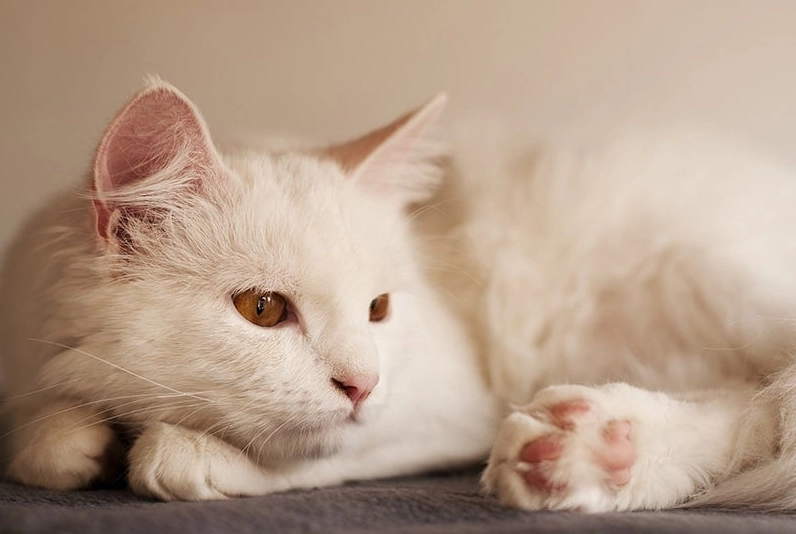
What You'll Discover in This Guide
- The Turkish Angora's Signature Look: Beyond Just White and Fluffy
- Personality and Temperament: The 'Dog-Like' Companion
- A Glimpse into History: The Ankara Connection
- The Golden Standard: Getting Official Confirmation
- Common Misconceptions and Pitfalls in Identification
- Your Turkish Angora Questions, Answered
The Turkish Angora's Signature Look: Beyond Just White and Fluffy
Forget the generic "white longhair" image. That's where most people get it wrong. A purebred Turkish Angora has a blueprint, and deviating from it is a strong sign you have a mixed-breed or a different cat altogether.
Coat and Color: The Feel is Everything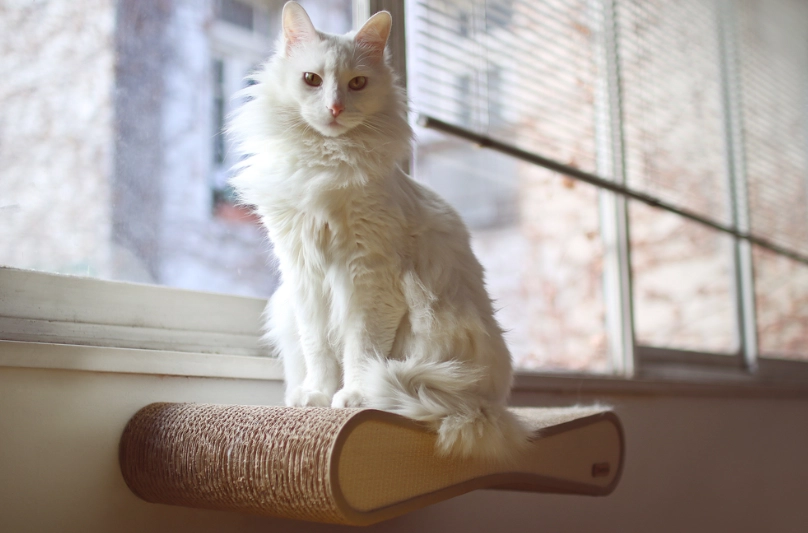
The coat is the most telling sign, but not for the reasons you think. It's not the length first, it's the texture and structure.
A true Angora coat is single-layered. Run your fingers against the grain. You should feel silky, fine hair all the way down to the skin, without a dense, woolly undercoat. This is why they're often described as having "water-shedding" fur—it doesn't mat as easily as a Persian's coat. It lies flat against the body, with a slight ripple along the flanks. The tail is a full, flowing plume.
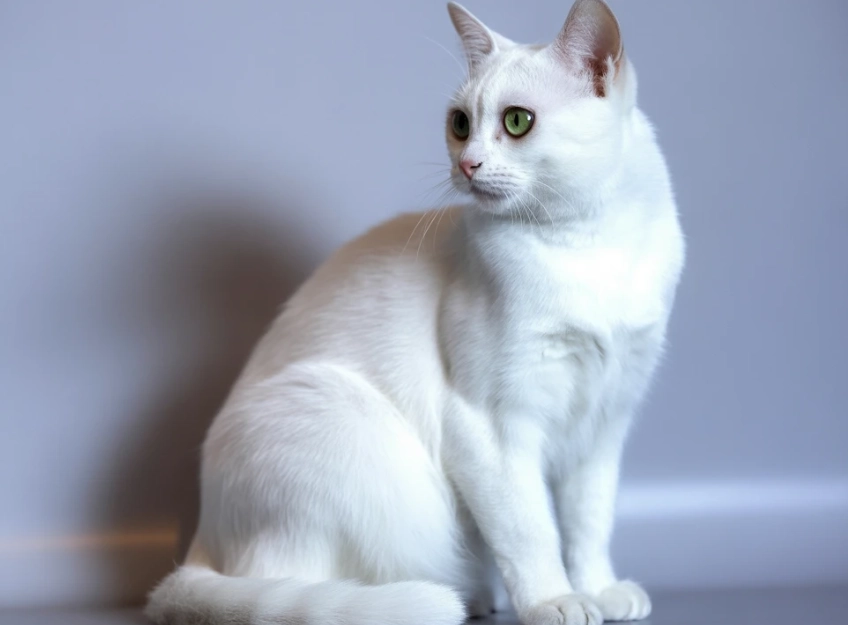
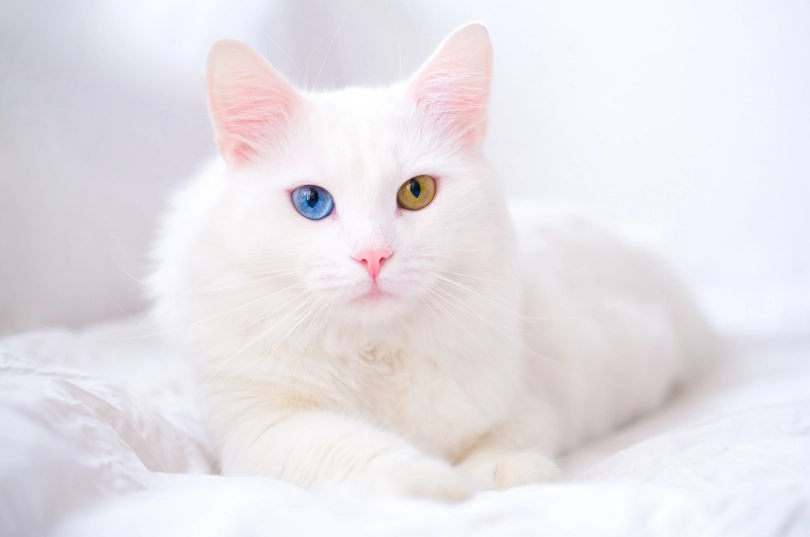
Now, about color. The classic image is the pure white Angora with odd eyes (one blue, one amber or green). This is iconic and historically significant. However, modern breed standards from registries like The Cat Fanciers' Association (CFA) and The International Cat Association (TICA) accept a wide array of colors and patterns—black, blue, tabby, tortoiseshell, everything except pointed patterns like Siamese. So a colored cat can absolutely be a Turkish Angora. The white-with-blue-eyes variant, however, has a higher incidence of congenital deafness, a well-documented trait in feline genetics.
Eyes: Windows to an Ancient Breed
The eyes are large, almond-shaped, and set at a slight slant. They convey a constant look of alert intelligence. The color can be blue, green, gold, amber, or odd-eyed. There's no "standard" eye color for all, but the shape and expression are consistent.
Body Structure and Head: Elegance Defined
This isn't a stocky cat. The body is long, slender, and finely boned, but with a muscular feel. They're surprisingly heavy when you pick them up—dense muscle, not fat. The legs are long, with the hind legs slightly longer than the front, giving them a poised, tip-toe appearance.
The head is a modified wedge, not round like a Persian or a blunt wedge like a Siamese. It's elegant, with a firm chin and a straight profile. The ears are large, pointed, and set high on the head, often with lynx-like tufts.
Let's put this in a quick-reference table, comparing key traits to a common look-alike, the Domestic Longhair.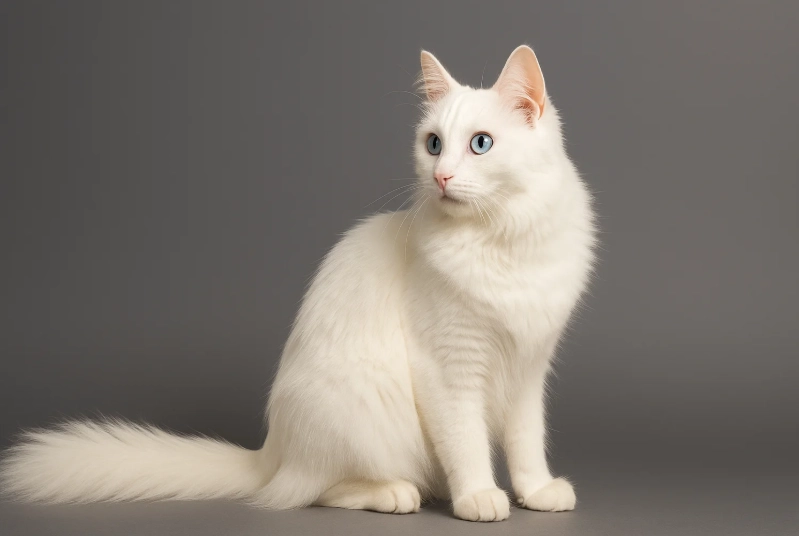
| Trait | Turkish Angora | Domestic Longhair (Common Look-alike) |
|---|---|---|
| Coat Structure | Single-layer, fine, silky, lies flat. Minimal undercoat. | Usually double-layered with a dense, woolly undercoat. Can feel thicker. |
| Coat Texture | Consistently silky-smooth from root to tip. | Can be silky, but often coarser or cottony, especially the undercoat. |
| Body Type | Long, slender, fine-boned but muscular. "Dense" feel. | Varies widely; can be medium to stocky. Build is less uniform. |
| Tail | Long, tapering, carried high like a plume or banner. | Full and bushy, but carriage varies (often lower). |
| Head Shape | Modified wedge, straight profile, large ears. | Often rounder or less defined in shape. |
Personality and Temperament: The 'Dog-Like' Companion
If the physical traits are a maybe, the personality is often the clincher. Turkish Angoras are not wallflowers. They are intensely people-oriented, often choosing one favorite person to shadow around the house. They want to be involved in everything you do—reading your book, helping with the dishes (or at least supervising).
They are highly intelligent and playful well into adulthood. Fetch isn't uncommon. They're vocal, but not in a loud, demanding yowl like some breeds. It's more of a conversational chirp and trill. They're agile jumpers and love high vantage points. A top-of-the-fridge view is prime real estate for an Angora.
Here's the subtle error few mention: their sensitivity. They tune into your mood like a seismograph. A stressed household can make a sensitive Angora anxious. They thrive on routine and intelligent interaction, not just passive petting.
A Glimpse into History: The Ankara Connection
Why does this matter? Because history impacts genetics and legitimacy. The Turkish Angora is one of the oldest natural breeds, originating in the Ankara region of Turkey (historically Angora). They were treasured for centuries, and in the mid-20th century, breeding programs were established to preserve the breed, both in Turkey and abroad. The Ankara Zoo maintains a conservation program for the classic white Turkish Angora.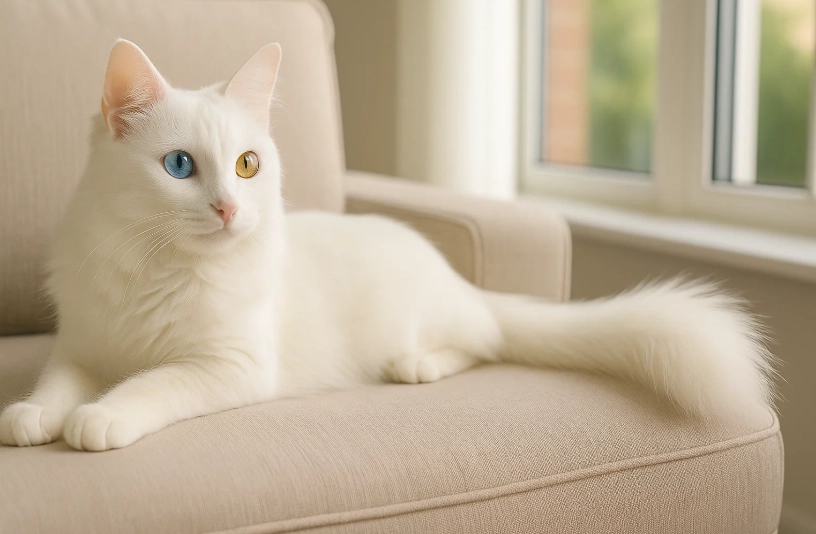
This history means a few things. First, if your cat comes from a lineage completely unknown, with no connection to established breeders or import lines, the probability of it being a purebred plummets. Second, it explains the robust health and natural elegance of the breed—they weren't engineered by humans for extreme traits.
The Golden Standard: Getting Official Confirmation
You can be 99% sure based on traits, but in the cat fancy world, proof is paperwork.
Pedigree Papers: This is the only definitive proof. If you acquired your cat from a reputable breeder registered with TICA or CFA, you should have received a pedigree document tracing its lineage back several generations. No papers, no official breed status, regardless of looks.
DNA Tests: Companies like Basepaws and Wisdom Panel now offer feline breed detection. The science is evolving and its accuracy for rare breeds is improving but is not yet as precise as for dogs. It can indicate strong genetic markers associated with Turkish Angoras, which is compelling evidence, especially for rescue cats. It won't replace a pedigree for show purposes, but for a pet owner, it can be a satisfying answer.
Consultation with a Breeder or Judge: An experienced Turkish Angora breeder or a cat show judge can give you an educated opinion. They see hundreds of cats and can spot the nuances amateurs miss. Many are happy to look at photos or videos.
Common Misconceptions and Pitfalls in Identification
Let's clear the air on the biggest mistakes I see.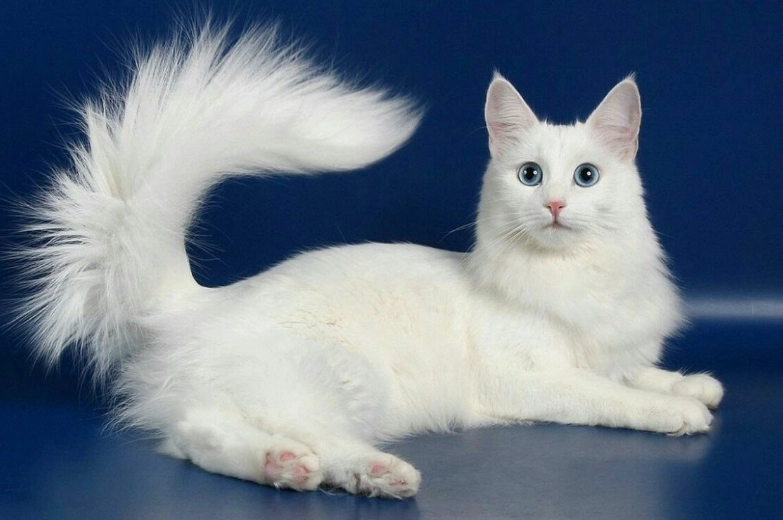
"All white, long-haired cats are Turkish Angoras." This is the most pervasive myth. Most white, fluffy cats are Domestic Longhairs. The coat texture and body type are usually wrong.
"My cat is shy, so it can't be an Angora." While they are typically outgoing, early socialization is key. A rescue Angora from a traumatic background might be initially reserved, but its core intelligence and desire for connection will eventually surface.
"It must be purebred because it looks exactly like the pictures online." The internet is full of mislabeled photos. Rely on the official breed standards from CFA or TICA, not random social media posts.
Overvaluing one trait. Getting hung up on eye color while ignoring the bulky body, or loving the silky coat but missing the shy, non-interactive personality. You must look at the whole picture.
Your Turkish Angora Questions, Answered
Call her a "Turkish Angora-type" or "Angora-like" Domestic Longhair. This is accurate, respectful to the breed, and honestly reflects her unknown ancestry. She likely has some Angora in her lineage, giving her those beautiful traits, but without documentation, she's not a pedigreed Turkish Angora. That doesn't make her any less wonderful. In fact, you might have the best of both worlds—the stunning looks without the potential genetic bottlenecks of some purebred lines.
They're a useful tool, not a final verdict. The databases are growing, and they can detect strong genetic signatures common in Turkish Angoras. If the test comes back showing a high percentage or strong markers for Turkish Angora, it's very strong supporting evidence, especially paired with matching physical and behavioral traits. However, for official breeding or showing, cat registries still require a verified pedigree. For a pet owner's curiosity and peace of mind, a DNA test is a great step.
 What's one non-obvious health clue that might hint at my cat being an Angora?
Listen for it. Congenital deafness is strongly linked to the gene for blue eyes and white coat in cats, including Turkish Angoras. If you have a white, blue-eyed cat that doesn't startle at loud noises or only responds when it sees you, have a vet check its hearing. This isn't a breed identifier on its own (many white cats can be deaf), but it's a known association within the breed. On the flip side, Turkish Angoras are generally a robust, healthy breed with few other major hereditary issues, which is a good sign.
Expect $800 to $2,500 USD, sometimes more for rare colors or show-quality lines. The price reflects ethical breeding costs: genetic health testing for parents (to screen for issues like hypertrophic cardiomyopathy), premium veterinary care, high-quality food, socialization efforts, and the breeder's expertise in preserving a rare breed's integrity. A very low price is a major red flag for a backyard breeder who isn't investing in the breed's health or future.
At the end of the day, identifying a Turkish Angora is a mix of forensic observation and understanding the breed's soul. It's about the silky slip of the coat, the intelligent gleam in the eye, the confident arch of the tail, and the creature that insists on being your central life companion. Whether your feline friend turns out to be a pedigreed treasure or a magnificent look-alike, the journey of discovery deepens the bond you share. You learn to see them not just as a pet, but as an individual with a story written in their very bones and behavior.