Quick Navigation
- First Things First: What Even Is a Tabby Cat?
- The Real Factors That Decide If a Cat Is Cuddly
- Okay, But Let's Talk About Tabby Cat Personality Stereotypes
- How to Tell If Your Tabby Cat Is Happy to Cuddle (Their Love Language)
- How to Encourage Your Tabby Cat to Be More Cuddly
- Common Questions About Tabby Cats and Cuddliness
- Final Thoughts: So, Are Tabby Cats Cuddly?
So you're thinking about getting a cat, maybe you've already got one, and this question pops into your head: are tabby cats cuddly? You see pictures online of people snuggling with their purring feline friends, and you wonder if your striped buddy will ever be like that. Let's be real, it's a big deal. You want a companion, not just a piece of moving furniture that ignores you.
I've lived with cats my whole life, and a few of them have been proud tabbies. My current cat, Milo, is a classic brown mackerel tabby. Some days he's a velcro cat, glued to my side on the couch. Other days, he looks at me like I've suggested the most ridiculous thing in the world if I try to pick him up. It's a mixed bag, and that's the first truth we need to get straight.
The quick answer? Many tabby cats can be incredibly cuddly and affectionate, but "tabby" isn't a breed—it's a coat pattern. Their cuddliness depends far more on their individual personality, upbringing, and breed than on their stripes and swirls. Asking "are tabby cats cuddly" is like asking "are brunettes friendly?". The pattern doesn't dictate personality.
But that's the simple answer. If you're here, you probably want the deep dive. You want to know what actually makes a cat want to cuddle, how to encourage it, and whether choosing a tabby gives you a better shot at a lap cat. We're going to get into all of that, no fluff (well, maybe a little cat fluff).
First Things First: What Even Is a Tabby Cat?
This is where a lot of confusion starts. People talk about tabbies as if they're a specific breed like a Siamese or a Maine Coon. They're not. The term "tabby" refers to a distinctive coat pattern that can appear in many different cat breeds, and even in your standard domestic shorthair (the fancy term for a moggy or mixed-breed cat).
The pattern is characterized by stripes, dots, lines, or swirling patterns, usually with a distinctive "M" marking on the forehead. The genetics behind it are pretty cool—it's the default pattern for cats, linked to the same gene that gives tigers their stripes. Organizations like The International Cat Association (TICA) have detailed breed standards where the tabby pattern is accepted or even required for certain breeds.
So when you ask, "are tabby cats cuddly?", you're asking about a huge group of cats with one visual thing in common. It's not a useful predictor of behavior on its own. A tabby Persian and a tabby Bengal will have wildly different personalities, even though they both wear stripes.
The Real Factors That Decide If a Cat Is Cuddly
Forget the coat for a second. If you want to predict cuddliness, you need to look at these things. This is the stuff that really matters.
1. Genetics and Breed (The Blueprint)
This is the starting point. Some cat breeds are famous for being velcro cats, while others are known for their dignified independence. Since tabbies can be any breed, you need to know the breed (or mix) behind the pattern.
Think of it this way: a dog's breed tells you a lot about its energy and temperament. It's similar with cats, though often less extreme. A Ragdoll (which can be a tabby) is bred to be placid and floppy when held—the name says it all. An Abyssinian (often a ticked tabby) is typically energetic, playful, and may prefer interactive games to long cuddle sessions.
If you're getting a purebred tabby kitten, research the breed's general temperament. If you're adopting a mixed-breed tabby from a shelter, look at the individual, not just the stripes.
2. Early Socialization (The Foundation)
This is arguably the biggest factor for any cat, tabby or not. Kittens who are gently handled by multiple humans between 2 and 7 weeks old are much more likely to grow up comfortable with people, touch, and yes, cuddles. This critical window shapes their future view of the world.
A kitten from a busy, loving home where kids gently played with it is a different prospect than a feral kitten who had little human contact. The latter can become a wonderful pet, but they may always be a bit more reserved with physical affection. Resources from the ASPCA provide great guidance on socializing cats of all ages.
My cat Milo was socialized early, and it shows. He's confident. The one before him was a rescue found later in life, and she was sweet but on her own terms—always her terms.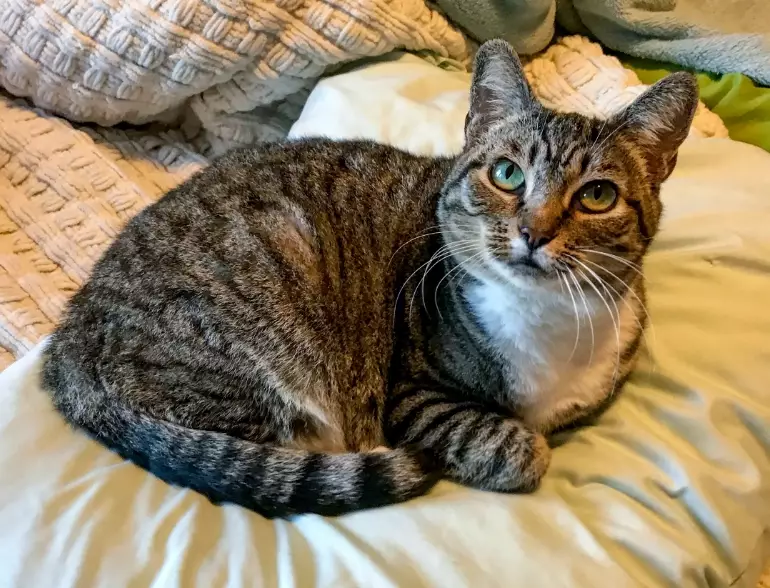
3. Individual Personality (The Wild Card)
Just like people, cats have their own innate personalities. You can have two kittens from the same litter, raised identically, and one will be a lap cat while the other is an explorer who hates being confined. Some cats are just more physically demonstrative.
This is the part you can't control, and you have to respect it. Forcing a non-cuddly cat to cuddle is a surefire way to make them avoid you. It's about reading their cues.
4. Your Behavior and the Home Environment (The Ongoing Story)
How you interact with your cat daily sets the tone. Do you only pet them when they seek it out? Do you respect when they've had enough? A calm, predictable home where the cat feels safe is a home where affection can bloom. A chaotic, loud, or stressful environment can make any cat, tabby or otherwise, skittish and less likely to relax into a cuddle.
Let's put some of this breed info into a table. Remember, these are general tendencies—individual cats will always surprise you.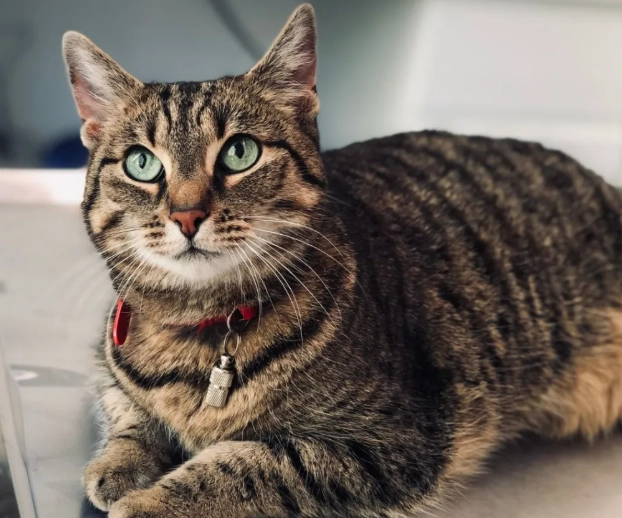
| Breed (Commonly Seen in Tabby) | General Temperament | Cuddle Potential |
|---|---|---|
| Maine Coon | Gentle, friendly, dog-like. Often follows owners. | High. They are often "people cats" who enjoy companionship, though may not always be lap-sitters due to size. |
| British Shorthair | Calm, easygoing, dignified. Not overly active. | Medium-High. They enjoy being near you and are placid, but can be independent. They accept affection gracefully. |
| Abyssinian | Active, curious, playful. "Busy" cats. | Medium-Low. They form strong bonds but show affection through play and following you. They often dislike being held for long. |
| Domestic Shorthair (Mixed Breed) | Varies wildly! The ultimate wild card. | Anywhere from very low to very high. It's all about the individual cat's mix and history. |
| Ragdoll | Docile, sweet, relaxed. Known for going limp when held. | Very High. They are literally bred for this trait. A tabby Ragdoll is a cuddle champion. |
See what I mean? The breed behind the tabby pattern tells you much more than the pattern itself.
Okay, But Let's Talk About Tabby Cat Personality Stereotypes
Even though science says coat color/pattern doesn't dictate personality, any cat lover will tell you anecdotes. And there's a persistent stereotype that orange tabbies (often male) are especially friendly and goofy—the "Garfield" effect. Brown or grey tabbies are sometimes thought of as smart and resourceful.
Is there any truth to it? Some studies have tentatively suggested links between coat color and behavior, possibly due to linked genes, but the evidence is far from conclusive. The Cornell Feline Health Center notes that while these associations are popular in folklore, reliable scientific data is limited. Most experts agree that individual experience and breed are far more significant.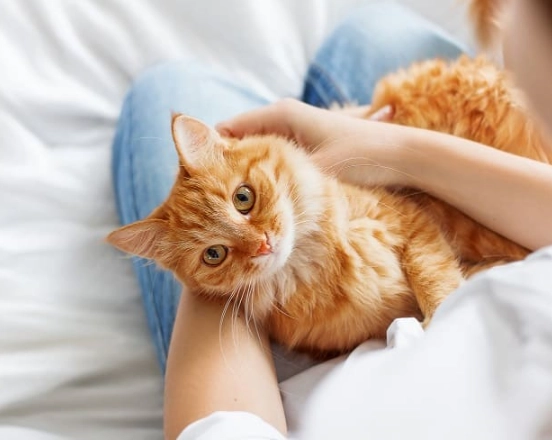
So, your sweet orange tabby might fit the stereotype perfectly, but it's not a guarantee. It's more likely confirmation bias—we notice the friendly orange cats because the stereotype primes us to.
How to Tell If Your Tabby Cat Is Happy to Cuddle (Their Love Language)
Cats don't always show affection like dogs do. A cat cuddle might not look like a Hollywood cuddle. Here's how to know if your tabby is actually being affectionate, even if they're not sitting on your lap:
- The Slow Blink: This is cat for "I love you." If you slow blink back, you're having a conversation.
- Head Bunting: When they bump their head against you, they're marking you with their scent glands. You're family.
- Kneading: Making biscuits on your lap or a soft blanket is a leftover kitten behavior associated with comfort and contentment.
- Following You: A cat that just wants to be in the same room as you is seeking companionship. It's a low-key cuddle.
- Presenting Their Belly (Carefully!): This is a sign of trust, not always an invitation for a belly rub. It can mean "I feel safe."
- The Purr: A relaxed purr while in your vicinity is a good sign. Context matters, though—cats also purr when stressed.
My tabby Milo does the slow blink from across the room. It feels more meaningful sometimes than when he's just sleeping on me out of convenience.
How to Encourage Your Tabby Cat to Be More Cuddly
You can't force it, but you can create an environment where cuddles are more likely to happen. Think of it as an invitation, not a demand.
- Let Them Come to You. This is rule number one. Forcing contact builds negative associations. Sit quietly and let them approach. Have treats or a toy to make your presence positive.
- Respect Their Boundaries. Watch for signs they've had enough: tail twitching, ears flattening, skin rippling, turning their head away. Stop petting before they get to the point of biting or scratching. This teaches them that you listen, making them more likely to initiate contact again.
- Find Their Preferred Petting Spots. Most cats like the base of the ears, under the chin, along the cheeks. The belly and base of the tail are often no-go zones. Learn your cat's map.
- Associate Yourself with Good Things. Be the one who provides food, treats, and gentle play. Play is a huge bonding tool. A tired, happy cat is more likely to settle down with you.
- Create Cozy, Safe Spaces Near You. Put a soft bed or blanket on the couch next to you. A heated cat bed can be pure magic in winter. They'll learn that your vicinity is comfortable.
- Be Patient, Especially with Rescues. It can take months or even years for a shy or traumatized cat to fully trust. Celebrate small victories, like them sitting a foot closer than last week.
I tried the "cozy space" trick with a fluffy blanket on my desk. Now, when I work, Milo is right there, napping. It's not a lap, but it's togetherness.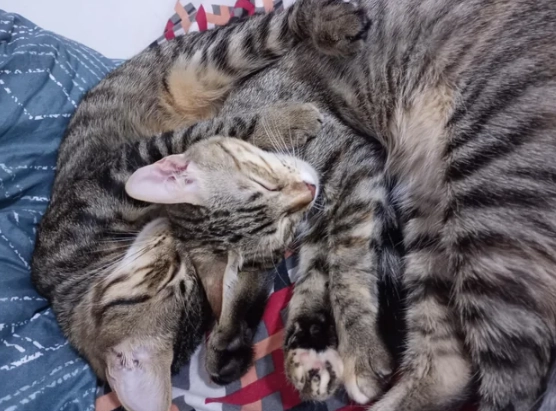
Common Questions About Tabby Cats and Cuddliness
Are male or female tabby cats more cuddly?
There's no consistent rule. Personality varies more by individual and upbringing than sex. Neutered males can sometimes be very laid-back and affectionate, but a well-socialized female can be just as much of a lovebug.
My tabby kitten was cuddly but now isn't. What happened?
This is super common! Kittens are often cuddly, but as they hit adolescence (around 6-18 months), their energy skyrockets and their priority becomes exploring and playing. They often mellow back into more affectionate adults around age 2-4. Don't panic—it's probably just a phase.
Is it true that orange tabbies are the cuddliest?
As mentioned, it's a popular stereotype, not a fact. Many orange tabbies are wonderfully friendly, but it's not a guarantee. I've met aloof orange cats and super cuddly grey tabbies. Rely on the individual cat's behavior, not the color lore.
Can an older tabby cat learn to be cuddly?
Absolutely. Older cats can become more affectionate, especially if they've settled into a safe, calm home. It requires immense patience, respect for their space, and positive association. Let them set the pace. An older cat's trust, once earned, is deep and rewarding.
Why does my tabby cat follow me everywhere but run away when I try to pet him?
This is classic cat behavior! He clearly likes you and your company—following is a sign of that. The running away might mean he's not in the mood for physical touch at that moment, or he might have a negative association with being reached for (maybe you've pet him too hard or in a spot he dislikes in the past). Try sitting down and letting him approach your hand on his terms.
Final Thoughts: So, Are Tabby Cats Cuddly?
We've taken the long way around, but here's the honest summary. The question "are tabby cats cuddly" doesn't have a yes/no answer for the whole group.
A cat's cuddliness is a recipe with several ingredients: a dash of breed tendency, a huge scoop of early socialization, a heaping portion of individual personality, and a steady simmer of a loving, respectful home environment. The tabby coat is just the plate the meal is served on—it doesn't affect the flavor.
If you want a cuddly cat, look beyond the stripes. Spend time with the individual cat, ask about their history (if possible), and understand the general traits of their breed mix. Be the kind of owner that a cat would want to cuddle with: patient, gentle, and attuned to their needs.
So, can a tabby cat be cuddly? Absolutely, many are wonderfully so. But are all tabby cats cuddly? Definitely not. The stripes promise beauty and character, but the cuddles come from the heart of the cat inside—and that's something you have to discover together.